
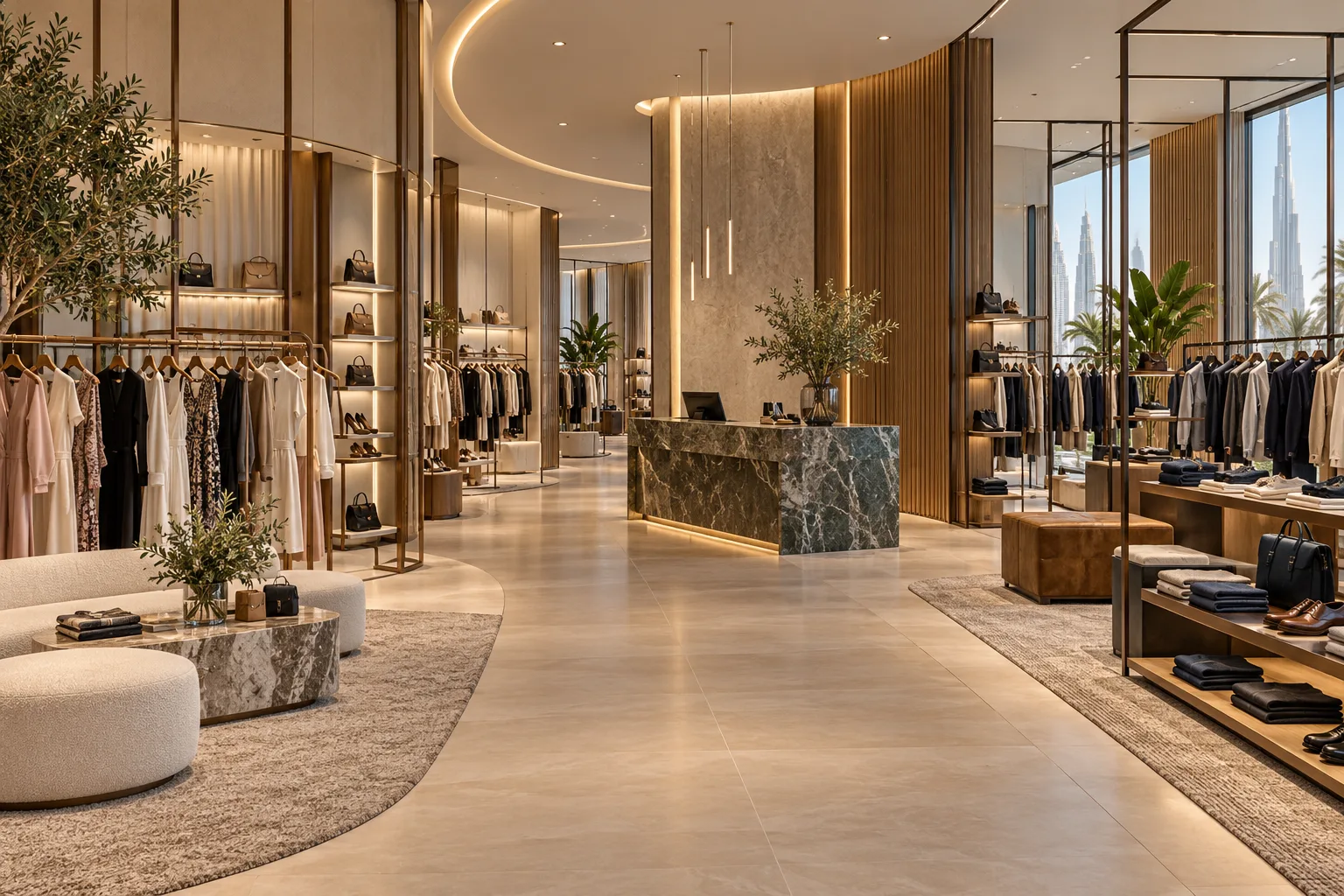
AI-generated illustrative design concept; not a completed CBD Projects project, approved drawing or technical compliance detail.
A store carrying several brands must give each collection an identity while remaining easy to shop and operate. A commercial interior design company in Dubai should establish shared rules for fixtures, lighting and services before individual brands develop their own displays.
Define what is shared and what each brand controls. Use one coordinated customer route and operating plan, then allow distinct merchandising within agreed boundaries.
Set the common design rules
Agree the overall circulation, finish palette, signage hierarchy and service provisions. Identify where brand-specific fixtures may vary and what must remain consistent. Include height, mounting and maintenance interfaces for review by the responsible designers.
The aim is not identical displays. It is to prevent separate design packages from competing for the same route, ceiling service or customer attention.
Map the customer and checkout journey
Test browsing between collections, comparing products and completing purchases. Confirm whether there is one checkout or several and how returns are handled. Use the checkout design guide to coordinate counter tasks.
For an illustrative shared checkout, packaging for different brands may require more organised storage than the counter length suggests. Include the actual bags and materials in the mock-up.
Coordinate stock responsibilities
Establish who receives stock, where each brand’s inventory is held and how replenishment occurs. Plan any operator-defined separation of returned, damaged or reserved goods. Avoid using the sales floor as temporary storage because ownership is unclear.
Review the retail stockroom guide against the combined delivery pattern, not just one brand’s normal day.
Control supplier interfaces and refreshes
Ask every display supplier for dimensions, fixing requirements, loads, electrical information and delivery dates. Coordinate these with the fit-out drawings before release. Record what can be moved or replaced without changing permanent construction.
A later brand change may need a new technical review even if the retail unit stays open. Keep final fixture and services information so updates can be assessed reliably.
Review the whole store before opening
Inspect lighting, signage, routes and counter operation with all collections installed. Test a purchase and a return involving different brands. Record incomplete supplier work separately from the general fit-out snag list where ownership differs.
A commercial fitout company in Dubai should help the operator receive one functioning store rather than several individually finished displays with unresolved gaps.
Frequently asked questions
Should every brand appoint its own fit-out team?
That is a procurement choice, but all packages need a common coordination process, shared rules and clear scope boundaries.
Can fixtures change after opening without review?
Some changes may be straightforward; assess their fixing, services, access and permission implications before proceeding.
Plan your retail and hospitality fit-out project with one accountable team
Share your brand list, operating model and unit plan with CBD Projects for a coordinated multi-brand retail concept.
Send Your Project BriefBack to BlogRelated ServiceView Real ProjectsContact CBD Projects