
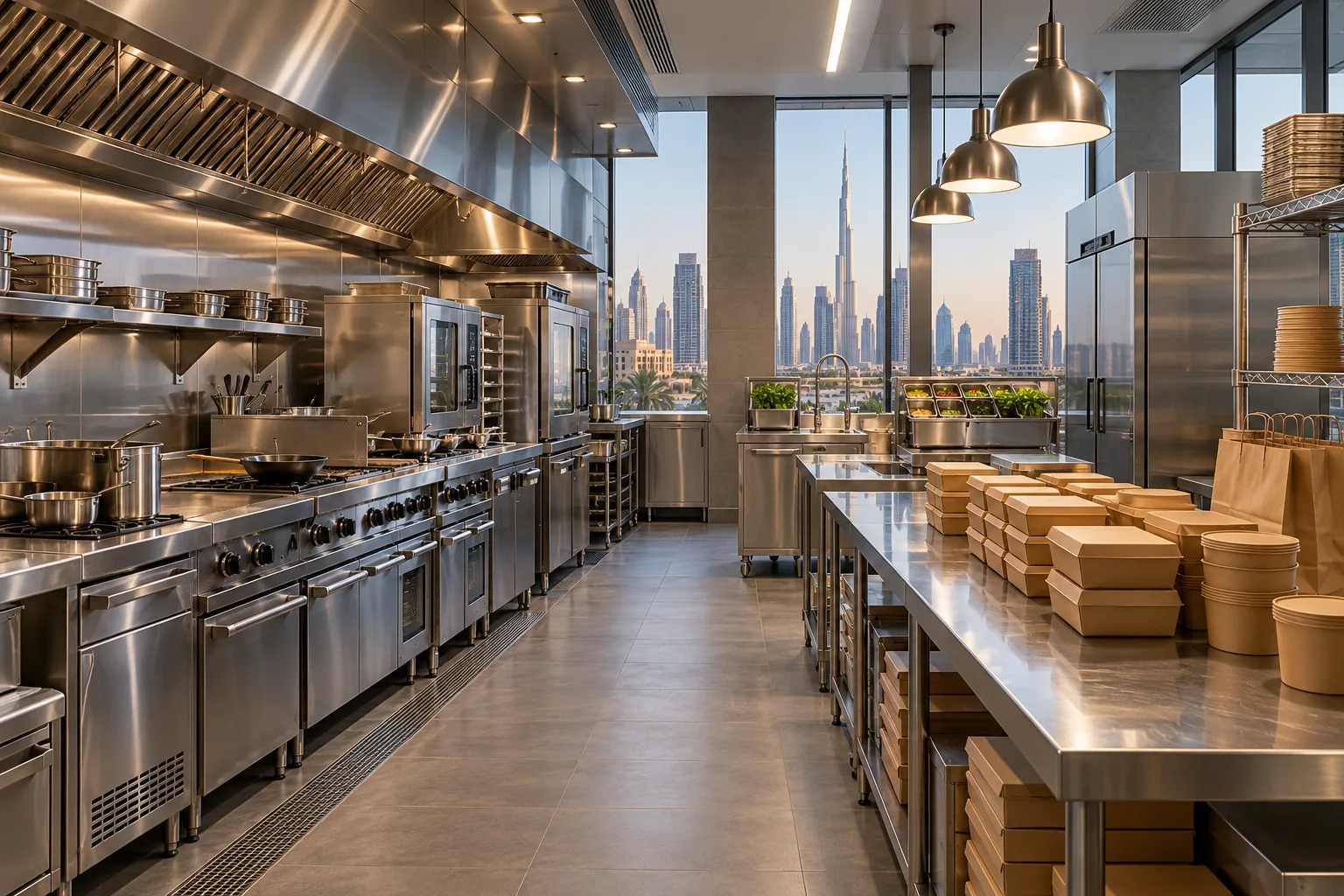
AI-generated illustrative design concept; not a completed CBD Projects project, approved drawing or technical compliance detail.
Removing the dining room does not remove the need for a carefully coordinated restaurant operation. A delivery-only kitchen may manage several menus and simultaneous dispatch deadlines. A commercial fitout company in Dubai should establish that operating model before calculating equipment positions.
Define the brands, production processes and peak dispatch pattern. Check the premises and services against those requirements, with a clear separation between production, packing and courier collection.
Map menus and shared resources
Identify which ingredients, equipment and staff are shared between menus and which need separate provision under the operator’s procedures. Review the busiest overlap, not only average order volume.
For an illustrative two-brand operation, sharing a machine may save capital but create a production bottleneck. The operator should test the schedule before the design assumes simultaneous use is possible.
Establish premises feasibility
Confirm the intended activity, building constraints and approval route with the appointed specialists. Obtain equipment data and assess available services through the relevant MEP and kitchen teams.
Use the restaurant feasibility guide. A unit without customer seating can still have substantial ventilation, utilities and support-space requirements.
Give packing a defined workspace
List containers, labels, bags and checking tasks. Provide storage and surfaces sized to the dispatch method, including the operator’s approach to incomplete or queried orders. Keep those items out of preparation routes.
Trace completed orders to collection without routing couriers through production. The delivery pickup guide helps define that interface.
Coordinate replenishment and cleaning
Test deliveries, inventory storage, washing and waste handling against production hours. The operator’s qualified team should establish food-safety procedures and any required separation.
Record who replenishes packaging and resets dispatch surfaces during peaks. A large cooking line does not compensate for a packing area that cannot keep pace.
Compare full scope and operating readiness
Separate equipment supply from enabling work, installation, connections, commissioning and permissions coordination in the budget. Identify which party provides each item and its required information date.
After technical acceptance, rehearse several simultaneous orders through production, packing and collection. A fit-out company in Dubai should resolve physical bottlenecks before the operator relies on the space for live trading.
Frequently asked questions
Does no dining area mean a simpler approval process?
Do not assume so. The proposed activity, equipment, premises and applicable authority requirements determine the review.
Can multiple menus share one kitchen layout?
Potentially, but the operator and specialists must validate capacity, workflow and the applicable handling requirements.
References and scope
References checked on 23 October 2026. Confirm current requirements and product instructions for the actual project; these links do not constitute project approval.
Plan your retail and hospitality fit-out project with one accountable team
Share your menus, brand structure, equipment list and peak dispatch assumptions with CBD Projects for a cloud-kitchen feasibility review.
Send Your Project BriefBack to BlogRelated ServiceView Real ProjectsContact CBD Projects