
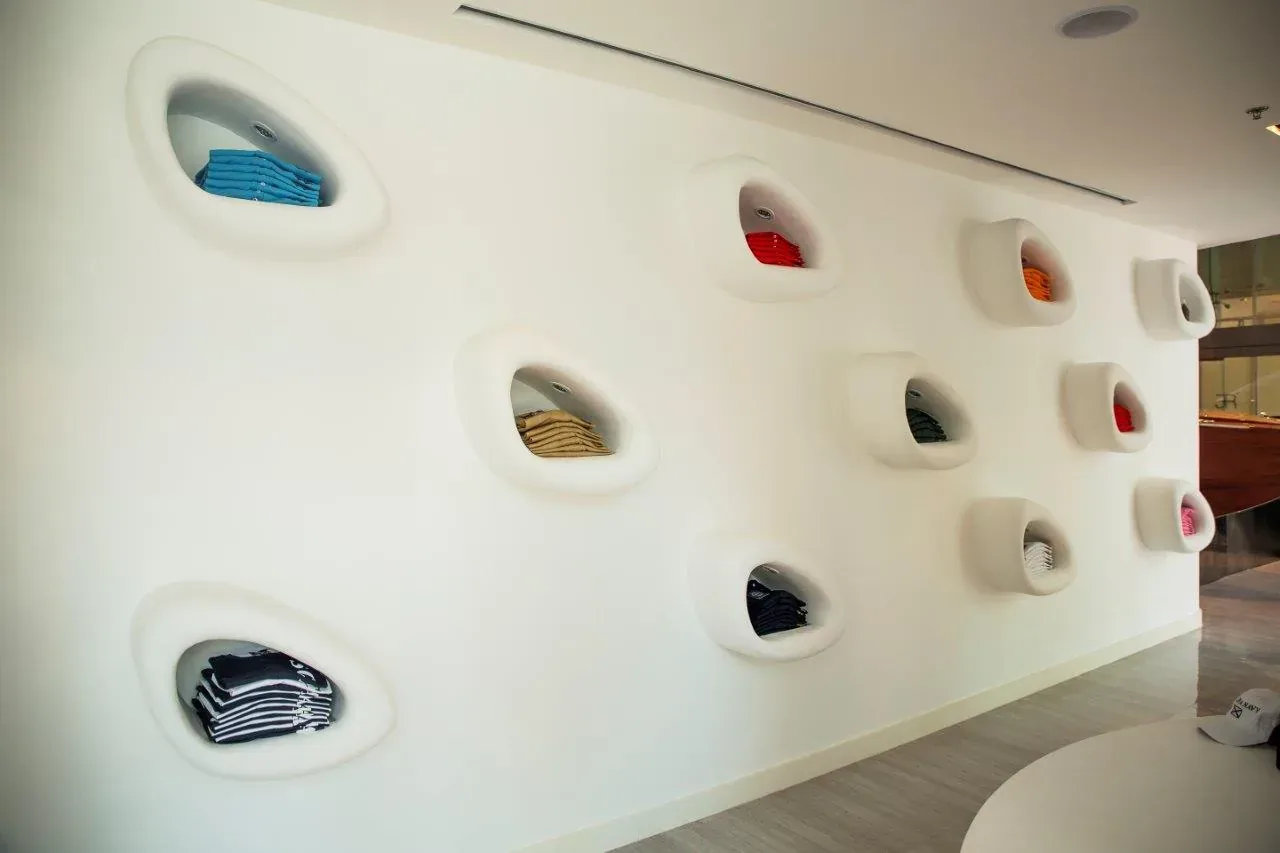
Retail interior reference for the design review.
Moving a retail kiosk can appear to be a straightforward way to retain investment: dismantle the counter, transport it and reconnect it in a new position. In practice, the useful question is not whether the kiosk can be moved as an object. It is whether its components, condition and technical interfaces suit the receiving location well enough to justify recovery, adaptation and reinstallation.
This guide explains how a client can frame that decision before commissioning the work. It concerns an existing kiosk and a proposed move, rather than a new kiosk concept or a general retail fit-out quotation. CBD Projects LLC can discuss the interior construction interfaces within a defined appointment. Equipment suppliers, competent technical specialists and the relevant property teams should confirm the matters that fall within their responsibilities. No reuse decision should depend only on the fact that the kiosk looked good at its original opening.
Jump to a section 12 topics
Begin with two measured positions
Record the kiosk's existing position and the proposed receiving position as separate sets of information. The new footprint, service points, access routes and surrounding circulation may differ even within the same venue. A counter that appears compact on a plan may have doors, overhangs or display elements extending beyond the dimensions somebody first reported.
Obtain current location information from the responsible property team and arrange the appropriate survey. Compare the accepted envelope with the actual assembly rather than a marketing image or an old design. This gives the appointed designers and fit-out contractor a factual starting point. It also prevents the client from committing to a move before discovering that a key display must be reduced, a service access panel becomes inaccessible or a customer-facing side now faces a wall.
Create a component inventory before asking for a moving price
Break the kiosk into identifiable components: primary structure, counter sections, display units, signs, lighting, loose equipment and serviceable systems. Photograph each part and record its position, approximate dimensions, material and known condition. Identify which components belong to the client and which may be leased or supplied under a separate arrangement.
A useful inventory is specific enough to support discussion with the responsible installers. It should show whether a panel is removable, whether several sections share a continuous finish and whether an apparently separate unit contains connections to another part. Retail fit out companies in Dubai can give a more informed assessment when the client presents that record rather than asking for a single transport figure based on the kiosk's overall footprint.
Find out how the original assembly was built
Ask for the available fabrication drawings, installation photographs and supplier information. These records can reveal joints, concealed fixings and the intended method of access. If they are missing, a competent assessment may need to establish what can be inspected without damaging the assembly. Avoid assuming that every seam visible on the surface is a safe dismantling joint.
The original maker or installer may be able to explain which parts were assembled on site and which arrived as completed units. That information can change the proposed sequence and the amount of making good required. Record uncertainty explicitly. An interior fit-out company should not be expected to promise complete recovery before it knows whether adhesives, concealed connections or continuous finishes make particular components difficult to separate intact.
Judge condition and usefulness separately
A component can be physically sound yet unsuitable for the next operating brief. Review the product range, storage needs, payment equipment and customer interaction planned at the receiving location. A counter designed for one trading pattern may require substantial alteration to support another. Do not allow the effort already spent on it to become the only reason for keeping it.
Assess visible wear alongside the likely consequences of dismantling and transport. Discuss whether repair can be local, whether a finish can be matched and whether replacement parts remain available. The decision should compare the recovered component's real usefulness with the work needed to adapt it. A reused unit deserves the same clear acceptance criteria as a newly made one; it should not enter the next fit-out as an undefined collection of salvaged materials.
Check the new service interfaces before dismantling
Map the receiving location's available services and obtain the actual requirements of the equipment that will be reused. Existing cable routes, ventilation openings or service compartments may not suit the new positions. The responsible electrical and technical specialists should determine the connection, testing and other requirements applicable to the proposed installation.
Record the boundaries between disconnection, transport, reinstallation and recommissioning. These activities may involve different parties, and a transport contractor should not be assumed responsible for specialist equipment acceptance. A well-defined interface schedule lets the client see which components can be retained, which need alteration and which remain unresolved. It also avoids moving an entire assembly only to discover that adapting its service enclosure requires dismantling much of it again.
Separate venue permissions from the reuse decision
The fact that a kiosk was accepted at its original location does not establish acceptance at the next one. Ask the receiving venue's responsible team for current requirements relating to the proposed activity, position, signage and construction work. Identify the relevant professional and authority review route for the actual intervention rather than relying on another tenant's experience.
Keep the old-location obligations visible as well. The client may need to agree removal arrangements and reinstatement of the former position. A reuse assessment should distinguish those matters from the new installation, with an owner for each task. The fit-out programme can then connect permission, access and specialist information without suggesting that a physically reusable kiosk automatically carries its previous approvals to a different premises.
Compare three realistic options
Once the condition and receiving requirements are understood, compare recovery with adaptation, selective reuse within a new assembly, and a new kiosk. Each option should describe the same intended trading function. Comparing an old kiosk moved as found with a fully developed new design can otherwise conceal a significant difference in what the operator will receive.
For each option, note the construction work, specialist interfaces, transport, repair, storage and outstanding design decisions. Consider future maintenance as well as the immediate move. Reuse may be attractive where components are well documented and suit the new position; it may be less convincing where alteration touches nearly every visible surface. The purpose is to make the decision transparent, not to presume that either reuse or replacement is always the better commercial answer.
When comparing fit out companies in Dubai for this assignment, ask which recovery uncertainties they have priced and which require further investigation. A proposal that identifies those limits can be more useful than an unconditional reuse promise made without examining the assembly or its receiving position.
Plan dismantling as a controlled construction activity
Agree a sequence that identifies the competent parties responsible for isolation and disconnection before components are disturbed. The relevant specialists should establish the appropriate safety and technical procedures. The client's planning role is to ensure those responsibilities are assigned and that the programme allows them to be carried out.
Use component labels and a simple record that follows the inventory. Keep fixings and accessories associated with the parts to which they belong. Record condition at agreed stages, including any damage revealed during access. This helps the installer distinguish a pre-existing defect from an issue arising during recovery. A controlled sequence also allows the client to review an unexpected condition before the team continues dismantling components that may no longer be worth recovering.
Treat packing, transport and storage as separate scope
A component's journey does not end when it leaves the original kiosk position. Check the route through the building, loading arrangements and the receiving access before deciding the practical size of recovered sections. The responsible logistics team should confirm suitable handling and packing for the materials and equipment involved.
If storage is required, agree its location, duration and conditions with the relevant suppliers. Identify who holds the components, who can authorise access and how their condition is recorded on receipt and release. These details affect both programme and accountability. An attractive reuse allowance can become difficult to assess if transport, temporary holding and replacement of damaged pieces are left outside every party's defined scope.
Prepare adaptation details before the new installation
Translate the reuse decision into drawings and a component schedule for the receiving position. Identify retained, modified and new parts rather than issuing a general instruction to make the old kiosk fit. Coordinate new panels, trims or service openings with accepted dimensions and samples so that the final result is coherent.
Review signage and brand content as part of that information. Reused elements may need different orientation or support, while a change in the trading frontage can affect their usefulness. The appointed designers and relevant suppliers should assess these changes before production. The interior fit-out contractor can then plan a defined installation, reducing the need to improvise visible junctions or cut access openings after the kiosk has been assembled in its new setting.
Accept the relocated kiosk through its present use
Inspect the reassembled kiosk against the agreed scope, current drawings and component record. Open doors and drawers, check display access and review the condition of visible surfaces. Specialist suppliers should complete the relevant technical testing and demonstrations within their appointments. A successful transport operation does not by itself establish that the trading environment is ready.
Test representative staff actions with the intended products and equipment. Confirm that the move has not created inaccessible storage or an awkward working arrangement. Record incomplete construction, equipment matters and merchandising tasks separately. This helps the operator understand what remains before occupation without turning every opening-day preparation into a contractor defect or allowing an unresolved construction item to disappear inside a broad readiness checklist.
Keep a clear record for the next change
Update the available drawings and component inventory after adaptation. Record new parts, accepted repairs, supplier references and the service information needed for future maintenance. If the kiosk now has an agreed dismantling approach, retain that record with the operator's property and equipment information. Do not assume that the next team will remember the decisions made during this move.
A relocation can be a useful moment to improve the assembly's documentation, even where only selected components survive. For a new or adapted commercial kiosk, explore our kiosk fit-out service. Send the existing inventory, receiving location information and intended trading brief through the project brief so that CBD Projects can discuss the construction interfaces and identify the specialist input the proposed move requires.
Frequently asked questions
Is a relocated kiosk always cheaper than a new one?
No. The comparison depends on condition, recoverability, adaptation, transport, storage and the receiving location. Compare options that deliver the same agreed function and finish expectations. A low moving figure may exclude repair, service changes or replacement components that are necessary before the kiosk can be used again.
Can we move first and decide on changes afterwards?
That approach can create avoidable uncertainty. Review the receiving position and principal interfaces before dismantling. Some details can be resolved later, but the client should understand which unresolved decisions could make recovered components unsuitable or require significant alteration after transport.
Who confirms whether equipment can be reused?
The responsible equipment suppliers and competent technical specialists should assess the products within their appointments. The fit-out team coordinates surrounding construction and agreed interfaces. Ownership, condition, disconnection, reinstallation, testing and warranty implications should be addressed explicitly rather than assumed covered by a general relocation instruction.
What evidence should a client collect first?
Gather current photographs, dimensions, available fabrication drawings, the component inventory and supplier information. Obtain the proposed receiving position and venue requirements. Add the intended trading activity, timing and known equipment changes. This gives the relevant teams a practical basis for deciding what can be retained and what needs further investigation.
References and scope
References checked on 19 November 2026. Confirm current requirements and product instructions for the actual project; these links do not constitute project approval.
Plan your retail kiosk relocation planning project with one accountable team
Discuss the existing kiosk and its receiving location with CBD Projects before committing to recovery, adaptation or replacement.
Send Your Project BriefBack to BlogRelated ServiceView Real ProjectsContact CBD Projects