
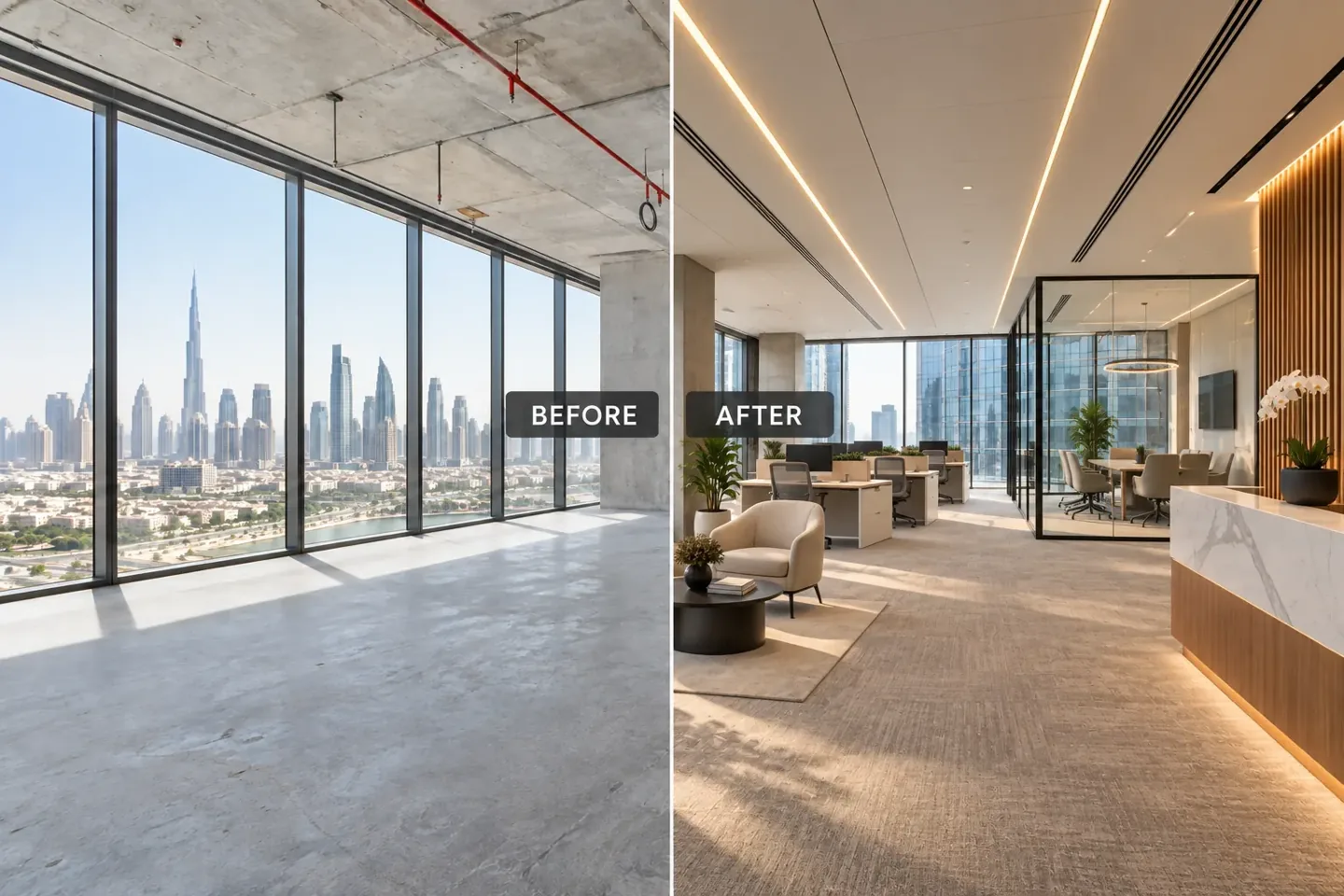
Workplace interior reference for the design review.
A retail fit-out can be carefully designed and still begin with a difficult handover: the contractor arrives, but the shop is full of stock that nobody has agreed to move. Goods occupy the proposed work area, fixtures cannot be dismantled and the operator is trying to count items while construction access is being negotiated. The issue belongs in a retail stock decant plan for fit-out, prepared alongside the building programme rather than on the first site morning.
Decanting means moving the contents out of the area needed for work, keeping them identifiable and arranging their controlled return. This article concerns the client's saleable goods and their temporary custody. It does not prescribe product-storage standards or replace logistics, insurance or specialist advice. A retail fit-out contractor can coordinate construction access, but the operator needs a clear stock plan with named people and accepted boundaries.
Jump to a section 12 topics
Start with the stock that is actually present
Create a current inventory for the affected areas before estimating how many cartons or storage positions will be needed. Record the way goods are identified, their handling units and any items that need specialist review. Separate saleable stock from display props, samples, packaging and shop equipment. These groups may leave through the same door but have different owners and destinations.
Choose an inventory cut-off method with the operator's stock-control team. If sales or deliveries continue during preparation, the list needs a defined way to reflect changes. A photograph of a shelf can support the record, but it does not replace a count or identify every item inside a carton. The purpose is a working inventory that the receiving storage team can reconcile, not an administrative exercise disconnected from the actual move.
Separate the construction area from the storage decision
Ask the fit-out team to identify the work boundary and the date each part must be available. The operator can then decide which goods leave the premises, which move to an unaffected approved area and which remain in normal trading circulation. Do not assume an unused corner is suitable temporary storage simply because it lies outside the first drawing revision.
Retained areas need review for access, protection and the proposed activities. They must not prevent construction or interfere with the building's required arrangements. Retail fit out companies in Dubai should understand the practical boundary of their appointment, while the operator confirms the suitability of stock storage through the relevant responsible parties. Keep that decision separate from the contractor's general obligation to protect the works.
Choose temporary storage from the product requirements
The goods determine what the storage arrangement needs to provide. Fragile, high-value, sensitive or unusually shaped products may require specialist handling or conditions. Obtain the relevant advice from suppliers, logistics providers and the operator's own product team. A standard warehouse bay or sealed carton should not be described as adequate for every product without checking its requirements.
Review the proposed storage destination before the move is booked. Confirm access arrangements, who can receive goods and how locations will be recorded. Ask how stock can be retrieved if the business needs an item during the fit-out. The best arrangement is not always the nearest available space; it is the one whose conditions and management fit the actual goods and the planned duration of custody.
Put responsibility at each handover in writing
Identify who counts the goods, who packs them, who carries them and who accepts them at the destination. The same company may perform several tasks, but the responsibilities still need to be clear. Record the agreed point at which custody changes and what information accompanies the transfer. Discuss loss or damage procedures with the relevant provider and insurance adviser rather than assuming that a construction contract covers every stock movement.
The fit-out contractor should know who can authorise access and when the area is being released. If the client appoints a separate mover, nominate a coordination contact on each side. This avoids a common gap in which everyone agrees that goods must leave but nobody has authority to approve the final collection or sign the receiving record.
Label cartons for retrieval as well as counting
Use identifiers that connect a carton or handling unit with the inventory and its temporary location. Include the information needed by the people handling it, without displaying sensitive commercial details unnecessarily. A label should remain understandable if the person who packed the goods is unavailable. Agree how opened or repacked cartons will be recorded during the storage period.
Consider the return sequence when organising the packing. Stock intended for one display area may be easier to retrieve as a defined group, while goods needed for continuing online orders may require a different arrangement. The operator's stock-control method should lead. A well-labelled move reduces avoidable searching when the shop is ready, but it does not eliminate the need for a receiving check.
Keep a small set of representative labels with the move record. The return team can use them to understand the coding method without asking the original packer to reconstruct it from memory. Record any changes to the method during storage.
Check the physical route before collection day
Walk the route from each stock area to the collection point. Review doors, turns, lifts, steps and the property arrangements affecting access. Discuss the actual handling units and equipment with the appointed mover. Identify items that need a different route or specialist method before packing them into a form that cannot pass through the available opening.
Coordinate access bookings and restrictions with the property manager through the responsible party. The construction team may also need deliveries, so agree how the two operations will be sequenced. Do not fill the only practical construction route with packed goods waiting for a vehicle. The decant programme should show when packing finishes, when collection occurs and when the area becomes available for the next activity.
Agree what a released work area looks like
A room or sales area should have a defined release condition. State which goods, loose fixtures and packaging must be removed, which items remain and who has accepted the boundary. Use a brief inspection and record the condition with photographs where appropriate. The contractor can then plan from an identifiable point rather than a vague assurance that most of the stock has gone.
If anything remains, give it a named owner and a practical protection arrangement agreed by the responsible parties. Avoid leaving valuable goods in the construction zone without an accepted reason and custody plan. An interior fit-out company needs access to execute the work, while the client needs confidence about its property. A recorded release helps both sides understand that distinction.
Control deliveries arriving during the fit-out
Stopping new stock from arriving unexpectedly can be as important as moving existing goods out. Review open purchase orders and expected returns with the operator's commercial team. Decide which deliveries are redirected, deferred or received at a separate location. Notify the relevant suppliers through the client so that a familiar delivery address does not continue operating by habit.
The site team should know the agreed rule for an unplanned arrival and whom to contact. Construction staff should not become default stock receivers simply because they are present at the premises. This is particularly important where a delivery note appears to require commercial acceptance. Put the procedure into the client coordination brief and update it if the fit-out sequence or stock destination changes.
Keep count changes traceable during storage
A temporary store may remain active while the shop is closed or partially trading. Goods can be retrieved for customer orders, returned by customers or moved to another location. Nominate the person responsible for recording these movements and maintaining a usable inventory. Otherwise, the original move-out count will no longer be a reliable basis for the final return.
Agree how discrepancies will be investigated and when they are escalated. Retain delivery and receipt records in a place the client team can access, rather than distributing the only copies across several personal messages. The contractor does not need routine access to confidential stock values or sales data; it needs the information that affects work access, delivery timing and the space being handed back.
Release stock return through a readiness decision
Do not book the entire stock return solely from a planned construction finish date. Ask the relevant teams to confirm which areas are ready for goods, what work remains and whether fixtures can accept the intended loading. Include the state of cleaning, service access and any specialist installations affecting the display. A room can look complete while still needing work that makes stock return inconvenient.
The operator and fit-out team should agree an area-by-area return sequence where useful. It may be sensible to bring some goods back after a particular fixture or zone has been accepted rather than reopening the whole store at once. Keep the decision grounded in the actual premises and tasks. A readiness check is a coordination point, not a promise that every commercial opening requirement has been completed.
Reconcile goods at the point of return
Check the returned handling units against the current inventory and receiving record. Identify missing, damaged or uncertain items through the agreed process before they are mixed into normal stock. The appointed storage or moving provider should have a clear contact for resolving discrepancies. Record any goods that go to a different destination instead of quietly altering the original return list.
Allow time for unpacking, stock placement and the operator's own merchandising checks. These activities are distinct from fitting the display joinery or finishing the sales floor. When comparing interior design and fit out companies in Dubai, ask how the construction programme accommodates the client's return activities. Clear interface dates can be more useful than a broad statement that everything will be ready for opening.
Include decant costs in the overall project decision
The fit-out quotation may exclude packing, moving, off-site storage, retrieval and stock handling. Identify these costs in the client's project budget even when they are paid directly to another provider. The duration of storage, frequency of retrieval and complexity of handling can affect the commitment. Ask for assumptions that can be compared rather than treating the move as an incidental task.
Bring the stock plan into the initial project brief alongside the construction scope. For a commercial delivery discussion, explore our retail fit-out service. CBD Projects can discuss the construction boundaries and return interfaces, while the operator appoints the appropriate stock, logistics and insurance advisers. That division makes the shop's physical transformation easier to coordinate without confusing construction completion with stock management.
Frequently asked questions
Does the fit-out contractor automatically insure the stock?
Do not assume this. Review the actual contract, moving and storage arrangements with the relevant providers and insurance adviser. State who has custody at each stage and what records are needed. A construction appointment and a stock-storage arrangement may allocate responsibilities differently.
Can goods remain in the shop while work takes place?
Only an assessed and agreed arrangement should be relied upon. Review the construction boundary, access, product requirements and protection responsibilities with the responsible parties. An apparently empty corner may still be needed for work or property access, so identify and accept the retained area explicitly.
When should the decant plan be prepared?
Begin while the work sequence and access requirements are being developed. Inventory, storage selection and collection bookings can affect the construction start. Waiting until mobilisation leaves less time to resolve unsuitable storage, access conflicts or products requiring specialist handling.
What information belongs in the fit-out brief?
Include the affected stock areas, intended move-out and return stages, access restrictions and the person responsible for coordination. Provide the construction team only the stock information needed for its interface. Confidential product values and sales records can remain within the client's appointed stock-management arrangements.
References and scope
References checked on 19 November 2026. Confirm current requirements and product instructions for the actual project; these links do not constitute project approval.
Plan your retail stock decant planning project with one accountable team
Share your retail plans, stock-move constraints and proposed work sequence through the CBD Projects project brief.
Send Your Project BriefBack to BlogRelated ServiceView Real ProjectsContact CBD Projects