
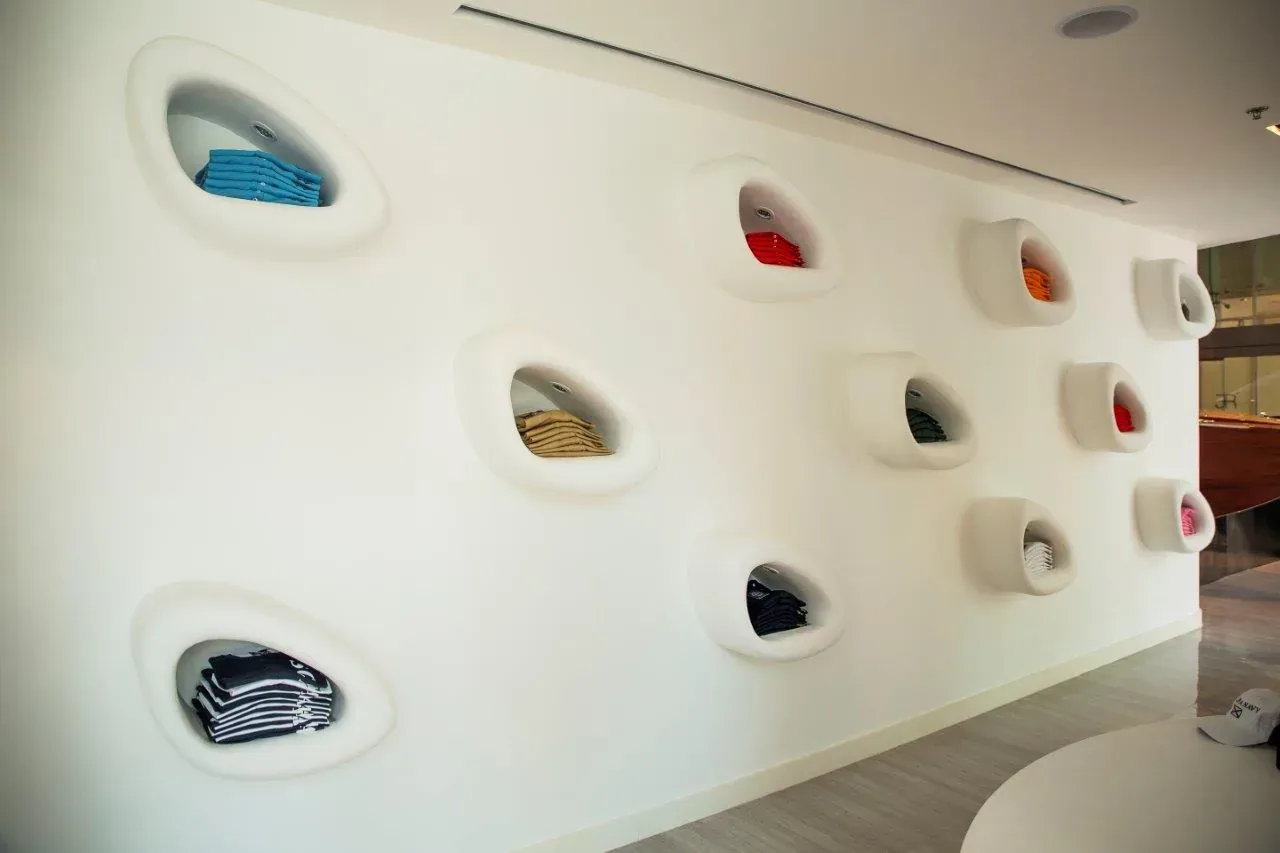
Retail interior reference for the design review.
A store can need a different arrangement without requiring a complete refurbishment. A product launch may change the balance between display and consultation; a seasonal range may introduce different package sizes; a short campaign may need a temporary demonstration setting. These possibilities are easier to evaluate during interior design, before every fixture and connection is treated as permanent.
Seasonal retail interior planning in Dubai begins with a realistic description of those changes. This guide concerns the brief for merchandise and display resets, rather than a construction programme for renovating a shop while it continues to trade. The aim is not to make every fixture movable or predict future sales. It is to identify which changes are likely, what they require and which parts of the interior should remain stable. Clients comparing retail fit out companies in Dubai can use the same brief to assess whether a proposed layout supports their actual operating plans.
Jump to a section 13 topics
Describe a real change rather than ask for total flexibility
Start with two or three credible trading scenarios. Explain what changes between the ordinary range and a seasonal or campaign range: product dimensions, display quantities, customer questions, supporting equipment and staff assistance. Use actual examples where available. A request for flexibility means little if nobody can identify the adjustment the interior is expected to support.
Keep the scenarios proportionate to the business. A rare event should not necessarily determine every permanent fixture. Ask what must remain available during the change and which customer tasks need continuity. The design team can then compare the proposed reset against the ordinary trading arrangement, rather than develop a room that is theoretically adaptable but inconvenient for the store’s most frequent use.
Separate the stable interior from the changing presentation
Identify the elements that the operator expects to keep in place. These may include the main sales counter, essential support areas, fixed service interfaces and a recognisable route through the store. Then describe the displays or furniture that may change. This gives the design team a starting hierarchy instead of treating every component as equally temporary.
Consider the relationship between the two layers. A movable unit still needs space to stand, a route to reach its new position and a storage arrangement when it is not required. CBD Projects can help connect an interior brief to those practical relationships. The objective is to make foreseeable changes understandable within the design, while leaving substantial technical alterations subject to their own review.
Use product information to test display capacity
A seasonal range can occupy a different volume from the range used to prepare the first layout. Provide representative packaging, dimensions and the way products are presented. Explain which items should be compared together and which need staff assistance. The design should be tested with these actual requirements rather than an empty shelf or a generic product symbol.
Ask the team to show the ordinary arrangement and the proposed changed arrangement using the same drawings. Review customer reach, standing space and how the products are returned to their intended positions. Retail fit-out in Dubai becomes more reviewable when display capacity is connected to a particular range and operating scenario. An apparently generous fixture may be less useful if its shelves cannot accommodate the products that prompted the seasonal change.
Keep the customer’s route understandable during a reset
A new display should not make the store difficult to understand. Trace a complete visit: approach, orientation, comparison, consultation, payment and departure. Consider whether a campaign setting draws people into a useful route or creates a concentration of waiting customers around an already busy point. The answer depends on the service model and the assistance involved.
Use occupied conditions in the review. People may carry bags, pause to discuss a purchase or accompany someone receiving advice. A clear circulation line on an unoccupied plan does not fully describe those situations. An interior design consultant can compare the proposed change with the same customer tasks used for the original layout, keeping the assessment grounded in use rather than the visual impact of the campaign alone.
Plan the practical work behind the changeover
Describe how the old presentation is removed and the new one arrives. Identify who carries out the change, which areas can be used temporarily and where products, packaging and spare components are placed. A reset that appears simple in the customer view may involve several staff tasks that have no agreed space or sequence.
Consider what happens to items removed from display. They may return to storage, be packed for another use or need careful handling by an appointed supplier. Record the assumed route and the support arrangements needed. This is different from preparing a construction method, but it gives the appointed team useful information for planning the work and avoids describing a change as effortless simply because the fixtures have castors or removable shelves.
Give spare display parts an actual home
Adaptable fixtures often depend on additional shelves, panels, rails, brackets or accessories. Include these components in the storage brief. Explain their size, frequency of use and the information staff need to identify the correct part. A system becomes less useful when the parts required for the next arrangement cannot be found or have no suitable place to be kept.
Review retrieval and return as part of the design. Staff should understand which component belongs to which fixture and what supplier guidance applies. When considering joinery fit out companies in Dubai, ask how an adjustable display will be documented and what the operator will receive. A useful proposal explains the intended configurations and support information, rather than treating a broad modular label as proof that every future range can be accommodated.
Review services before moving a display
Displays can contain lighting, screens, payment equipment or other devices. Changing the furniture position may affect connections and the way cables or technical equipment are managed. Obtain the relevant product information and ask the responsible specialists to identify which changes are permitted within the proposed arrangement and which require further work.
Do not assume that a visual reset is free from technical consequences. A supplier’s furniture flexibility does not establish that every connected system can move in the same way. Interior fit out consultants in Dubai should make those interfaces understandable within the appointment. The client needs to know the assumptions behind the design, the limits of the proposed adjustment and the specialist information required before an altered configuration is used.
Test lighting against both merchandise scenarios
Review the ordinary range and the seasonal range in relation to the proposed lighting. A fixture that presents one product clearly may need a different arrangement when the colour, surface or height of the merchandise changes. Consider reflections, shadows and the way customers compare products, alongside the intended visual emphasis of the store.
The appointed lighting or electrical specialists should advise on technical matters and relevant product information. The interior design firm can coordinate the display and material decisions with those inputs. Where an adjustable fitting or display system is proposed, ask how the operator will understand its intended use. An attractive rendering does not explain whether a later staff-led adjustment remains within the agreed technical arrangement.
Keep pricing and product information connected to the display
A change in merchandise can also affect the information customers need. Consider where pricing, product details and campaign messages will appear, how they are updated and which elements should remain consistent. An interior with no agreed place for changing information can become cluttered even when the display furniture itself is carefully designed.
Discuss the relationship between temporary messages and permanent brand elements. The operator should identify who approves the information and how staff apply it without covering important details or interfering with products. The design package can show the intended positions and attachment principles while leaving content accuracy and any relevant permissions with their responsible owners. This supports a coherent store without turning the interior into an inflexible arrangement of fixed messages.
Choose finishes that suit repeated handling
A changing display may receive contact at edges, corners and connection points more frequently than a permanent wall. Review how components are lifted, assembled, stored and returned to use. Ask suppliers about appropriate care, maintenance and repair for the proposed system. A finish selected for a protected surface may not suit a component that staff regularly handle.
The interior decoration company should coordinate the visible design with those use conditions. Discuss representative samples and the complete detail rather than judge only the colour of a flat swatch. Record approved references and the information needed to review a replacement. This makes later repairs or substitutions easier to assess against the original design purpose, without claiming that a material is universally durable or suitable for every display application.
Make approval boundaries clear before treating a change as routine
Identify the current property-management, authority and specialist requirements relevant to the actual premises and proposed work. Some changes may remain within an agreed furniture arrangement, while others can affect technical systems or regulated work. The responsible team should establish the appropriate route. A previous display reset is not sufficient evidence that a different alteration has the same status.
DDA publishes a fit-out permit service for premises within its jurisdiction; that example should not be presented as the process for every Dubai shop. Keep client acceptance, fit-out approvals and any required fit-out work permit distinct. The design brief should identify who reviews a proposed change and what information they need, rather than assume every seasonal request can be implemented without further consideration.
Compare the cost of adaptability with the change it supports
An adaptable system can involve different furniture details, storage, supplier information or specialist coordination. Ask what is included in the initial proposal and what the operator will need to provide during a later reset. The comparison should relate to the credible scenarios in the brief, rather than an unlimited promise of future flexibility.
When assessing fit out companies in Dubai, review the same display requirements and responsibility schedule. Identify optional components, additional supplier visits and information still needed before changes can be priced. A lower initial figure may describe fewer available configurations or exclude necessary support. The client can then choose an appropriate level of adaptability, understanding the practical trade-off instead of buying a feature whose future use has never been defined.
Close the brief with a reviewable change scenario
Before the design is fixed, ask the team to explain one representative reset from the ordinary arrangement to the proposed alternative. Review products, customer movement, staff tasks, spare parts, storage, connections and information updates. Identify the decisions that are settled and those still dependent on supplier or specialist input. The result should be a clear account of the intended change, not merely a second attractive rendering.
Use our retail interior design service or send a project brief to discuss the store and its likely changes with CBD Projects. If your question concerns carrying out actual refurbishment while customers remain, our retail refurbishment while trading guide addresses that separate planning issue. Keep the two briefs connected without treating merchandise resets and construction phases as the same task.
Frequently asked questions
Should every retail fixture be movable?
Not necessarily. Identify the changes the business is likely to make, then assess which elements need to adapt and which should remain stable. Movement without a clear use, storage plan or technical arrangement can create additional work rather than useful flexibility.
Does an adjustable display avoid the need for specialist review?
No. Review the actual furniture, connected equipment and proposed change. Supplier guidance, technical requirements and property or authority procedures may still affect what can be altered and how the change should be undertaken.
Can this brief be used before a product range is final?
Use representative scenarios and clearly record assumptions. Identify the missing product information and when it must be confirmed. The team should distinguish options being explored from a configuration ready for procurement or use.
Will seasonal planning guarantee better retail sales?
No. It helps the client define practical interior requirements and compare proposed arrangements. Commercial results depend on many factors beyond the interior, and the design brief should not be presented as a sales or ranking guarantee.
References and scope
References checked on 14 November 2026. Confirm current requirements and product instructions for the actual project; these links do not constitute project approval.
Plan your retail project with one accountable team
Share your retail premises, ordinary product range and one realistic seasonal change to discuss a focused interior design brief with CBD Projects.
Send Your Project BriefBack to BlogRelated ServiceView Real ProjectsContact CBD Projects