
Replacing a gym equipment range across several UAE clubs creates a construction programme with a particular challenge: the new machines, existing surfaces and club operating plan must meet at the same moment. A floor renewal may depend on removing retained equipment first. A delivery may require a route that is normally occupied by members. Changes that appear minor on an equipment list can therefore affect the sequence of an entire training area.
CBD Projects can discuss the interior works around a defined multi-club equipment refresh. We prepare agreed design details, shop drawings and application inputs in house and coordinate construction interfaces with appointed suppliers. The purpose here is to develop club-specific work packages from a shared equipment change, rather than repeat the general single-facility gym fit-out scope. Proposed locations, local appointments and delivery suitability are assessed before confirming an appointment; equipment performance and specialist sign-off retain their own responsible parties.
Start with the fleet change rather than a new colour scheme
Ask the operator to identify the reason for the equipment refresh and the clubs affected. A replacement of cardio machines has different construction dependencies from introducing a new strength area. Record the intended activities, the items staying and the equipment being retired, without assuming that every club is receiving the same intervention.
Give each club a local contact and each training zone an identifiable reference. The shared brief should describe what the operator wishes to standardise and what it expects to retain locally. This provides a starting point for surveying and pricing the works, rather than treating a purchase order for machines as a complete instruction to rebuild their surroundings.
Create an installed-equipment record for each club
List the existing items by location and note the information available about their installation. Distinguish machines that remain in position, those that move within the club and those leaving the premises. Use the operator's records and supplier investigation where appropriate; an old layout may not describe the equipment currently on the floor.
Identify fixed accessories, screens, storage and services affected by each move. Photograph the relevant interfaces with the client's permission and keep private operational information within the agreed project team. A reliable installed record helps separate removal, temporary relocation and new construction, so retained assets are not accidentally treated as available space or included in a disposal allowance.
Obtain the next equipment revision before setting out
Request the selected models and the manufacturer's relevant installation information through the equipment supplier. Keep model revisions identifiable. A substitute that occupies a similar footprint may require different user movement, service access or supporting construction, so a category description such as treadmill is insufficient for final setting out.
Record which dimensions and technical conditions the supplier has confirmed and which remain provisional. Relevant engineers establish structural and building-service requirements within their appointments. The interior drawings should use the accepted information and show outstanding dependencies. Where an equipment decision is delayed, explain which floor, service or joinery detail cannot yet be released instead of silently fixing an assumption into the construction package.
Survey the removal route as well as the arrival route
Trace the route used by the outgoing equipment and the route proposed for replacements. Consider the assembled item, its transport arrangement and any disassembly the supplier proposes. Building doors, lifts, changes of level and turning points need actual review; the machine's final position does not establish that the route is workable.
Assign responsibility for dismantling, handling and removing each equipment package. The contractor's finish protection and temporary works, where included, should relate to that handling plan. Ask the responsible specialists to assess any lifting or loading questions. A route accepted for an earlier installation should be rechecked against current obstructions and the actual items now being moved.
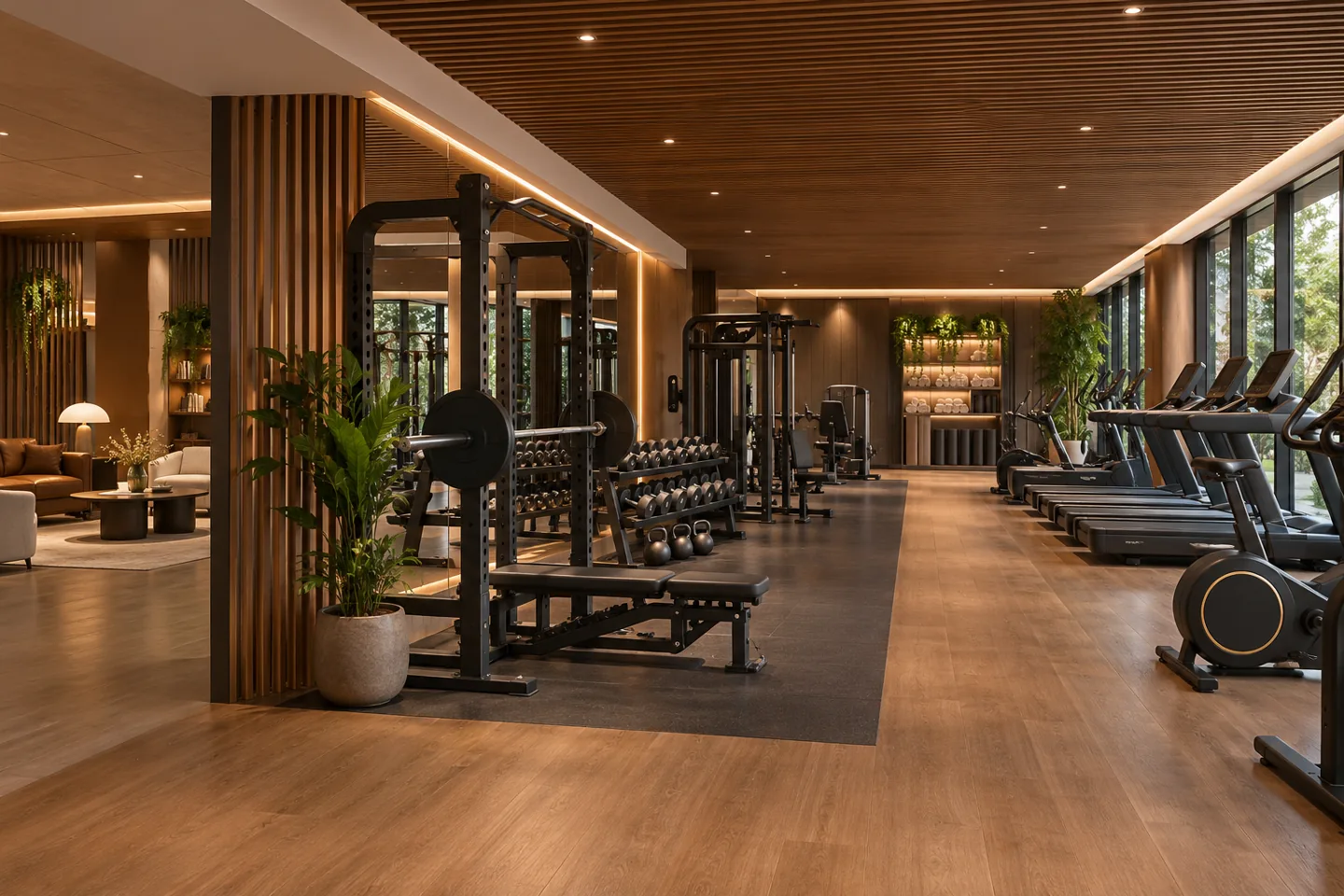
Map the construction revealed by equipment removal
A machine can hide worn flooring, old fixing positions, unused service outlets or a local change of level. Identify what is known before removal and what must be inspected afterward. Keep an agreed mechanism for reviewing newly exposed conditions so a local discovery does not become an undocumented instruction across all clubs.
The floor package should distinguish general renewal from local preparation and repair. Appropriate designers and suppliers establish the assembly and performance requirements. Obtain their information before specifying a finish around heavy or impact-generating activity. A decorative sample should not be described as evidence of structural suitability, impact isolation or compliance with a technical duty that has not been assessed.
Separate club closure decisions from construction sequencing
The operator decides which activities can pause and how members will be informed. Develop the construction sequence around that accepted operating decision. Identify the area handed to the works team, the access available and the conditions required before it returns to the operator.
If phased work is proposed, examine the boundaries and service interfaces with the responsible property and technical teams. Do not assume that a row of machines can remain in use beside unfinished work simply because it occupies another part of the floor. Record protection, temporary arrangements and inspection responsibilities. Where suitable separation cannot be established, the programme should reflect that limitation rather than promise uninterrupted training.
Coordinate power and data with the changed positions
Ask the equipment supplier to identify the proposed connection information and the relevant engineers to determine the corresponding installation scope. Existing outlets should be investigated for suitability rather than reused solely because they are close to a new machine position. Make responsibility for alterations, isolation and testing explicit.
Review the accepted routes with the floor and surrounding finishes. A cable position can affect a threshold, cleaning activity or later equipment replacement, so the physical detail needs more than a symbol on the layout. Release coordinated construction information only when the relevant technical inputs are accepted. The interior appointment does not itself establish utility capacity or certify specialist connections.
Use acoustic suppliers for the activities being changed
An equipment refresh can change the type or location of impact and music within a club. Describe the proposed activities and neighbouring spaces to the responsible acoustic suppliers. CBD coordinates acoustics through certified suppliers; the recommendation should identify the relevant system, interfaces and any agreed verification.
Keep their proposed details connected to the floor and partition information used for construction. A change to an equipment zone may require reassessment even where the visual palette stays the same. Product certification does not establish the completed room's acoustic result by itself. Avoid promising an isolation outcome before the applicable performance brief, installation details and testing responsibilities have been agreed.
Bring your brief into focus
Send your club list, equipment replacement schedule and operating constraints to discuss a defined gym refresh programme with CBD Projects.
Send your project briefTrial a representative training zone before repeating it
Select an appropriate zone for reviewing the equipment-to-interior interfaces. Explain whether the review uses actual equipment, supplier dimensions or a physical sample of a junction. The purpose might be to resolve a floor transition, access opening or adjacent storage arrangement before that detail is repeated.
Record what the trial establishes and its remaining conditions. An operator's acceptance of appearance is separate from a supplier's installation acceptance or a professional technical decision. If another club has different substrate, services or equipment, retain the useful reference while reviewing its local applicability. Repetition should follow accepted information rather than turn one successful installation into assumed suitability everywhere.
Give deliveries a club-readiness check
Before dispatch, confirm that the receiving zone has reached the agreed construction stage and that its route is available. Connect the check to the supplier's actual installation needs, including any preparation that must be complete before equipment arrives. A calendar entry alone does not establish readiness.
Identify where items can wait if the agreed installation cannot proceed, and who accepts the consequences. Protect completed surfaces without hiding work still requiring inspection. Keep packaging, tools and temporary storage within the arrangements accepted by the relevant parties. This prevents an equipment delivery from forcing unplanned use of the club's remaining operating areas or closing access that another trade still needs.
Keep changing-room work visible as a separate package
If the refresh includes lockers, showers or reception furniture, describe that work separately from the equipment replacement. Those areas may have a different access window and different service, waterproofing or supplier dependencies. They should not disappear into a general allowance for making the gym look new.
Confirm the retained components and the interfaces with proposed replacements. A shared brand reference can inform appearance while actual room dimensions and conditions determine the local detail. Relevant specialists establish technical duties and tests. The client should be able to accept or defer this supporting work without obscuring the construction needed for the equipment-led training-zone refresh.
Confirm the permission route for each identified premises
Obtain current property instructions and identify the responsible application and professional roles for the proposed works. A UAE programme still comprises actual premises with their own activities and conditions. For Abu Dhabi locations, ADDED's business-setup guidance connects potential additional approvals to activity and location; it is not a technical gym design standard.
State the agreed application deliverables, the parties providing specialist information and the decisions that remain external. Design acceptance, permission to undertake works and the operator's business readiness should be separately identifiable. No earlier club permission or Dubai appointment is presented as authority to carry out every intervention at another UAE property.
Compare investment by the construction dependencies
Ask for removal and relocation, floor preparation, finishes, service alterations, protection and local reinstatement to be distinguishable in the proposal. Identify equipment supply, specialist assessments and supplier installation separately. Machine quantity and floor area alone do not describe the interior workload or the cost of working within restricted club access.
Explain allowances for conditions that can only be inspected after removal. Compare alternatives through the actual duty and retained construction, including the effect on installation and maintenance. No standard fleet discount, invented unit rate or revenue improvement is promised. The investment discussion should show what is included at each club and which decisions control the outstanding scope.
Control changes through club and equipment references
When a machine changes, identify the affected club, zone, supplier information and construction detail. Review the consequences before altering an outlet or a floor opening. A central purchasing decision may affect several sites, but its consequences should not be assumed identical at each premises.
Give the operator one understandable record of accepted revisions and local exceptions. Procurement and installation teams need the same current reference. If an alteration is only required at one club, preserve that distinction rather than quietly changing the programme standard. This helps future maintenance teams understand why apparently similar training zones have different installed equipment or service positions.
Hand back zones through defined responsibilities
Record the construction checks required before the equipment supplier begins its installation, followed by the supplier's own testing and demonstration obligations. The operator should understand which stage it is accepting. A completed floor and a commissioned machine are related milestones with different evidence behind them.
Walk through representative maintenance and everyday access tasks with the relevant parties. Keep construction snags, equipment issues and operator preparations separately assigned. Where an outstanding item prevents an agreed use, state its status plainly. The works handover should not be described as certification of exercise safety, staff training or the club's permission to reopen without evidence from the responsible parties.
Bring the programme into a reviewable appointment
Send the club list, installed-equipment record, replacement schedule and available layouts. Explain the desired phasing, retained facilities, appointed equipment supplier and known property restrictions. Identify which locations are confirmed and which remain under consideration, so investigation and construction can be proposed on an accurate basis.
CBD Projects can discuss the appropriate in-house details, shop drawings, application inputs and fit-out package around this brief. Deliverables can include coordinated zone information, accepted finish references and an identifiable record of completed local work. UAE delivery suitability and necessary local appointments are reviewed before scope is confirmed. No completed national chain, branch network or guaranteed reopening date is implied.
Frequently asked questions
Can equipment be replaced while a club stays open?
That requires a project-specific operating and construction assessment. The operator, property team and relevant specialists must agree suitable boundaries, access and technical arrangements. Phasing is a possibility to evaluate, not an automatic commitment.
Does the interior appointment include equipment commissioning?
Only responsibilities explicitly agreed in the contract are included. Equipment suppliers retain their installation, testing and demonstration duties as appointed, while the fit-out package identifies its surrounding construction and interfaces.
Can one floor specification be repeated across the clubs?
A common reference can be considered, but substrate, activity, equipment and specialist performance requirements need assessment at each location. A finish sample alone does not accept the complete assembly everywhere.
What starts a useful consultation?
Provide the club and zone list, existing and proposed equipment, plans and operating constraints. These establish which information is ready and which surveys or specialist inputs are needed before a construction proposal.