
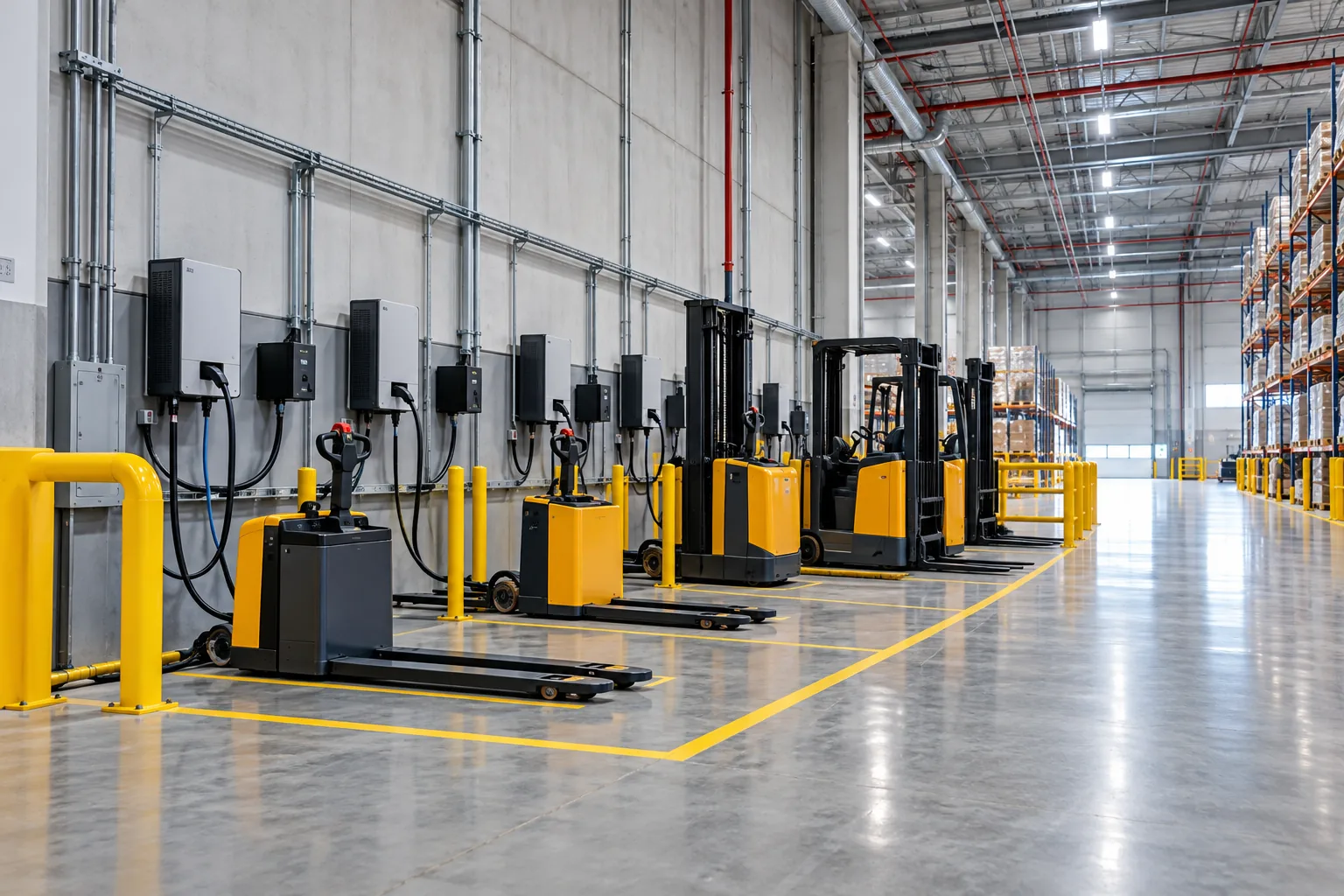
AI-generated illustrative design concept; not a completed CBD Projects project, approved drawing or technical compliance detail.
Charging forklifts or pallet equipment is not merely a row of electrical outlets. Battery type, charger data, fleet movements, ventilation, impact protection and emergency arrangements shape the space. The solution must be designed by the relevant specialists from actual equipment information.
Create a fleet and charger schedule, appoint the competent safety and engineering team, and coordinate the selected equipment with current authority, insurer, landlord and manufacturer requirements. This guide is a briefing framework, not a safety design.
List the actual fleet and duty
Record each equipment type, battery technology, charger model, operating shifts and charging pattern. Identify confirmed purchases and future allowances separately. Supplier data should state electrical, environmental, mounting and service requirements.
Avoid assuming all electric equipment uses the same charging method. A fleet change can alter loads, heat, space and operating controls, so maintain a revision-controlled schedule.
Place the area within warehouse flow
Map equipment travel, parking and pedestrian routes. Keep manoeuvring away from escape routes, fire equipment and unrelated storage. Provide physical separation or protection where the competent risk assessment requires it.
Review the arrangement with the warehouse packing-station guide so charging vehicles do not conflict with dispatch and staff work zones.
Engineer power and environment
The responsible electrical and mechanical engineers must assess supply capacity, distribution, protection, ventilation and environmental conditions using the chosen equipment data. Coordinate landlord approvals and any utility or authority process applicable to the project.
Do not install chargers from estimated fleet power alone. Show cable routes, mounting, isolation and maintenance access on coordinated drawings, and protect equipment from vehicle impact as designed.
Define safe operation and response
The employer’s competent safety team should establish charging, inspection, fault and emergency procedures. Provide only the approved signs, equipment and controls. Keep aisles clear and prevent unrelated storage from migrating into the zone.
Training and supervision are operational responsibilities, not substitutes for engineering. Avoid publishing detailed security or emergency system information in general handover copies.
Commission and manage change
Test chargers and interfaces under the approved commissioning plan, using the intended equipment. Record settings, manuals, warranties and responsible service providers. Verify that physical barriers and markings match the accepted layout.
When vehicles, batteries or shift patterns change, reassess the area before adding chargers. A spare wall position is not evidence that electrical or safety capacity exists.
Frequently asked questions
Can normal wall sockets be used for warehouse vehicle charging?
Use only the charging arrangement designed and approved for the selected equipment by the responsible specialists.
Is ventilation always required?
Requirements depend on battery technology, equipment, charging method and risk assessment. The qualified design team must determine them.
Plan your commercial fit-out planning project with one accountable team
Send CBD Projects your fleet schedule, warehouse plan and landlord requirements to coordinate the fit-out interfaces with your appointed specialists.
Send Your Project BriefBack to BlogRelated ServiceView Real ProjectsContact CBD Projects