
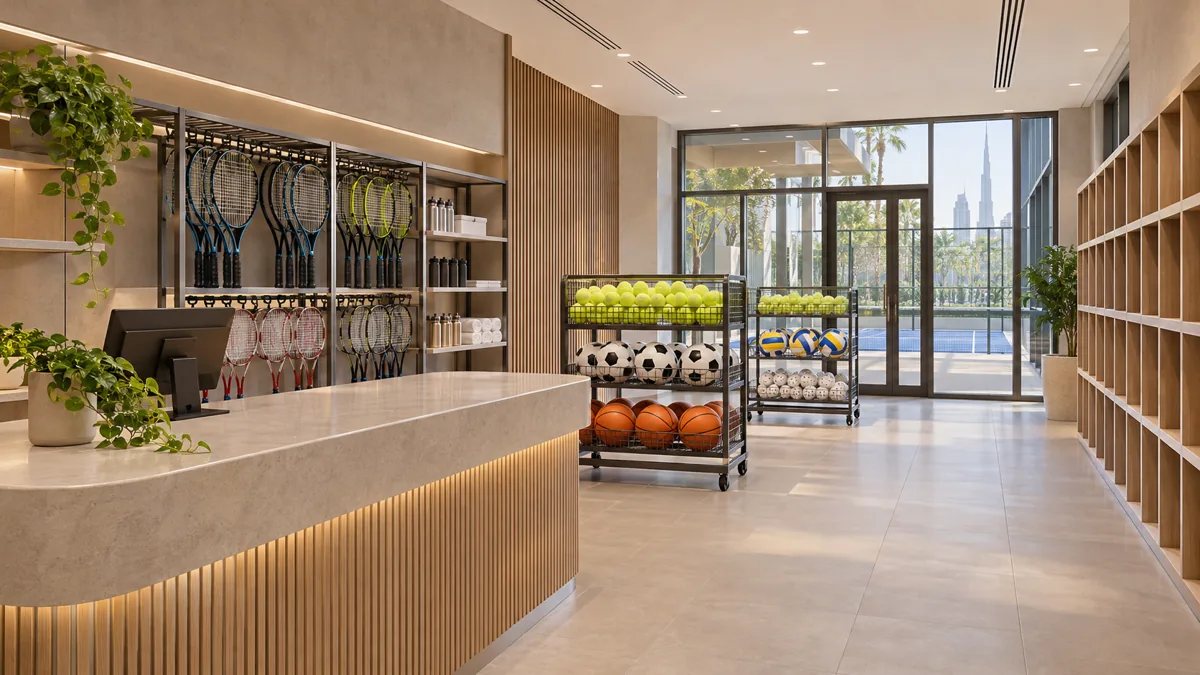
Sports Facility Equipment Hire and Return Rooms — interior design concept.
A player returns hired equipment while another waits to collect the same type. The item has reached the counter, but the operator's process may still require checks or other action before it becomes available again. If the room has only one undifferentiated shelf, staff can lose that distinction at precisely the moment the next session needs an answer.
The fit-out brief should follow an item through reservation, issue, return, the operator's reviewed process and its next agreed destination. This guide addresses the physical room and service interfaces. Qualified operators, suppliers and relevant specialists determine equipment suitability, care and any activity-specific requirements.
Jump to a section 11 topics
Define what the hire service includes
List the equipment offered, the users it serves and the transactions staff perform. A facility lending one standard item as part of admission has a different brief from a service offering several sizes, accessories or advance reservations. Identify whether hire is handled at reception, through a dedicated room or by another reviewed arrangement. The physical plan should follow that choice rather than assume the storekeeper and receptionist are always the same person.
Describe the point at which the operator considers the transaction complete. A return may involve a reference check, missing-item query or a task handled by another authorised role. The client's appropriate advisers should establish commercial terms and procedures. The designer needs the resulting counter, waiting and storage tasks, without writing a hire agreement or inventing technical acceptance rules.
Keep unrelated services distinct. Retail sales, equipment maintenance and lost property can look similar at the counter while using different records and destinations. If the same staff support them, show the competing tasks and the items each requires. A sports facility interior design company should be able to explain the room's complete working brief, not merely the number of shelves included.
Create an inventory that describes availability
Record the actual item groups, sizes, quantities and references the operator needs. Distinguish owned stock from equipment available for the next transaction under its procedures. The design should support those distinctions physically, with labels and destinations that authorised staff can understand. A total item count is insufficient if the next booking needs a particular size or configuration.
Ask what staff need to identify an item reliably. A product name may describe a family while the supplier uses a separate model or asset reference. Establish the relationship between the public description, internal inventory and relevant supplier information. Keep sensitive customer or commercial information within the operator's approved handling process rather than expose it on a public-facing shelf label.
Test the proposed labels with a staff member who did not organise the store. Ask them to locate a fictional booking's item and identify its current status. Record ambiguous references before manufacturing repeated storage. The room should support the operator's chosen process without requiring everyone to remember the original stock arrangement.
Work one changeover through the available stock
Use a hypothetical booking overlap. A group returns several hired items while the next customers arrive requesting different sizes. These are scenario assumptions, not suggested stock levels or participant capacities. Give each transaction a position and identify which employee handles it. The purpose is to find the first real conflict, not calculate an attractive total inventory from the number of bookings alone.
Now let one returned item require a decision through the operator's process. Identify its destination and who updates availability. Ask whether the next issue can continue using the stock confirmed available. The designer should not decide that the item is fit to reissue; it should provide the positions and communication needed for the responsible team to make and record that decision.
Compare alternative operating arrangements. The operator might separate issue and return, adjust an agreed booking sequence or provide another staffed position. Each changes space or workload. A larger counter is useful when it resolves a physical conflict, but it cannot supply a missing staff role or make an unavailable item ready.
Distinguish reserved stock from unallocated stock
An item can be physically ready under the operator's process but already allocated to another booking. Ask how that distinction appears in the inventory and the room. If staff prepare orders in advance, identify the labelled destination and who can change its allocation. A prepared booking should not be mistaken for general stock simply because its customer has not arrived.
Use a fictional delayed arrival to test the communication. Another customer requests the same type while the prepared order remains waiting. The operator should establish the commercial decision and staff authority. The layout should make the current status understandable and provide a place for the prepared set without consuming the return position. If the booking changes, identify who updates both the record and physical destination. This keeps the room's available inventory aligned with what staff may actually offer, rather than relying on memory of which customer a loose group of items was intended for.
Choose a shared counter or separate handoff points
A shared point can simplify communication and supervision of the transaction. Separate points can make direction clearer when arriving and departing groups overlap. Compare both using the same booking and staffing assumptions. Include the employee's movement behind the counter, not only two arrows on the customer side.
Use actual devices, representative containers and ordinary paperwork or fictional digital records in the review. Identify where a customer places belongings and where an item is presented. Have the responsible designer assess approach, accessibility and other applicable requirements. This guide gives no universal counter dimension or queue allowance.
Relate the room to the rest of the facility. The sports arrival and family layout guide considers people not actively participating. A companion waiting nearby or a group gathering for instruction can change the approach to hire without appearing in the equipment inventory. Draw those activities together before fixing the entrance and counter positions.
Give every returned item a defined next destination
Ask the operator and relevant specialists to establish the statuses its process needs. They may distinguish a straightforward return from an item awaiting review, supplier attention or another authorised action. The labels and physical locations should follow that process. Do not create a generic returns shelf and expect staff to infer what each item is waiting for.
Show the containers and working surfaces actually used. Include doors, lids and drawers in their open positions and the person performing the task. A labelled bay that is hard to reach may be bypassed during a busy period. The designer can identify that physical problem while technical inspection, cleaning and suitability decisions remain with the responsible people.
Provide a route for a query that is not immediately resolved. Identify the owner, reference and holding location through the operator's procedures. An incomplete transaction should remain understandable to the next shift. The room should not depend on a handwritten note whose meaning is known only to the employee who received the item.
Size storage from real products and handling
Obtain representative equipment and the supplier information relevant to storage and handling. Measure containers, accessories and packaging as well as the principal item. The responsible designers should assess shelf, rack, fixing and other technical requirements. Do not infer suitable storage from a marketing photograph or describe one rack as appropriate for every sporting product.
Separate working stock from reserve and occasional items where the operating model requires it. The store can be full while the next transaction remains difficult if frequently used items are buried behind infrequent ones. Ask staff to collect and restore a representative order using the proposed arrangement.
For classes sharing loose equipment, the studio equipment storage guide develops kit and changeover planning. A hire room adds another responsibility: keeping an item's transaction and status connected to its physical destination. Retain that distinction when considering shared storage with instructors or another department.
Keep payment and administration physically workable
Identify the devices and information used to issue, amend and close a transaction. Obtain verified dimensions and connection requirements from the relevant suppliers and client teams. A screen and payment device can consume the surface a layout assumed was available for equipment. Show both in use rather than treat technology as an unspecified item added after joinery manufacture.
Ask the operator how private or disputed questions are handled through its own procedures. A longer conversation may need another agreed position, but it also needs an available staff member. The fit-out can provide a suitable setting without deciding commercial entitlements, deductions or access to customer records.
Use fictional information in the trial. Include a transaction needing clarification while another customer waits to collect equipment. Record whether the conflict concerns the room, a device, incomplete information or staffing. Assign the response accordingly instead of sending every observation to the joiner as a request for a longer counter.
Plan supplier visits and replacement equipment
Ask how an item awaiting supplier attention leaves the facility and how its replacement arrives. Identify package dimensions, receiving arrangements and the permitted temporary location. Competent responsible parties should establish handling and technical methods. An equipment room needs an interface with the delivery plan, not an assumption that every technician can appear during the busiest issue period.
Compare current working stock with the replacement product before ordering. A different format or container may change shelf use and the customer transaction even where the sporting purpose is similar. Ask the appropriate operator and specialists to assess its suitability and keep the accepted reference with the inventory.
Confirm who receives supplier documents and updates the room record. A serviced item returning to the building is not automatically the same administrative event as a new purchase. The operator should establish the required evidence and status. The physical storage and references should make that distinction manageable for the staff handling the next issue.
Test the room at the end of the session
A supplier demonstration often begins with organised shelves, no customers and an empty counter. Add a review representing the end of a busy period: several returns, an unresolved query and the next issue request. Use the operator's approved process and representative equipment, with fictional records. The exercise should answer named spatial and information questions rather than certify equipment or staff competence.
| Task | Observe | Owner of the response |
|---|---|---|
| Locate a reserved item | Reference and status are understandable | Operator and inventory team |
| Hold a return for a decision | Its destination is identifiable | Responsible operating specialist |
| Receive a replacement | Package has an agreed route and position | Supplier and delivery coordinator |
| Handle a longer query | Routine handoff can continue as intended | Operator and design team |
After a correction, repeat the affected task. A different label, changed cabinet door or revised staff sequence addresses a different cause. Keep the accepted decision with the room plan and inventory references so the improvement survives beyond the people attending the trial.
Commission a room that supports the chosen service
Give the sports facility interior design consultant the activity offer, booking overlap, inventory by type and status, supplier information and intended staff roles. Identify separately appointed equipment and technology vendors. Ask the proposal to state the storage, counter and coordination information it will produce, and the decisions still belonging to the operator or specialists.
The wider sports performance facility guide considers the relationship between specialist activities and general interiors. The hire room should serve that reviewed offer, including ordinary returns and exceptions. Its success is a clear physical process that staff can run, with technical and commercial decisions reaching the authorised people.
Frequently asked questions
Can reception also handle equipment hire?
It can where the reviewed space, staffing and transaction pattern support it. Test issue, return, customer questions and ordinary reception tasks together before deciding that one counter can serve every activity.
How should returned equipment be separated?
The operator and relevant specialists should define the required statuses and procedures. The room should provide understandable locations and references supporting that process; the interior design alone does not determine whether equipment is suitable for reissue.
What should be checked before ordering storage?
Use actual equipment, containers and supplier information. Review collection and return, open doors, working surfaces, reserve stock and the responsible designers' technical requirements before repeating a cabinet or rack detail.
Plan your healthcare and wellness interiors project with one accountable team
CBD Projects LLC provides interior design and fit-out coordination across Dubai and the UAE. Share your space, location, target opening date and budget range for a practical first review.
Send Your Project BriefBack to BlogRelated ServiceView Real ProjectsContact CBD Projects