
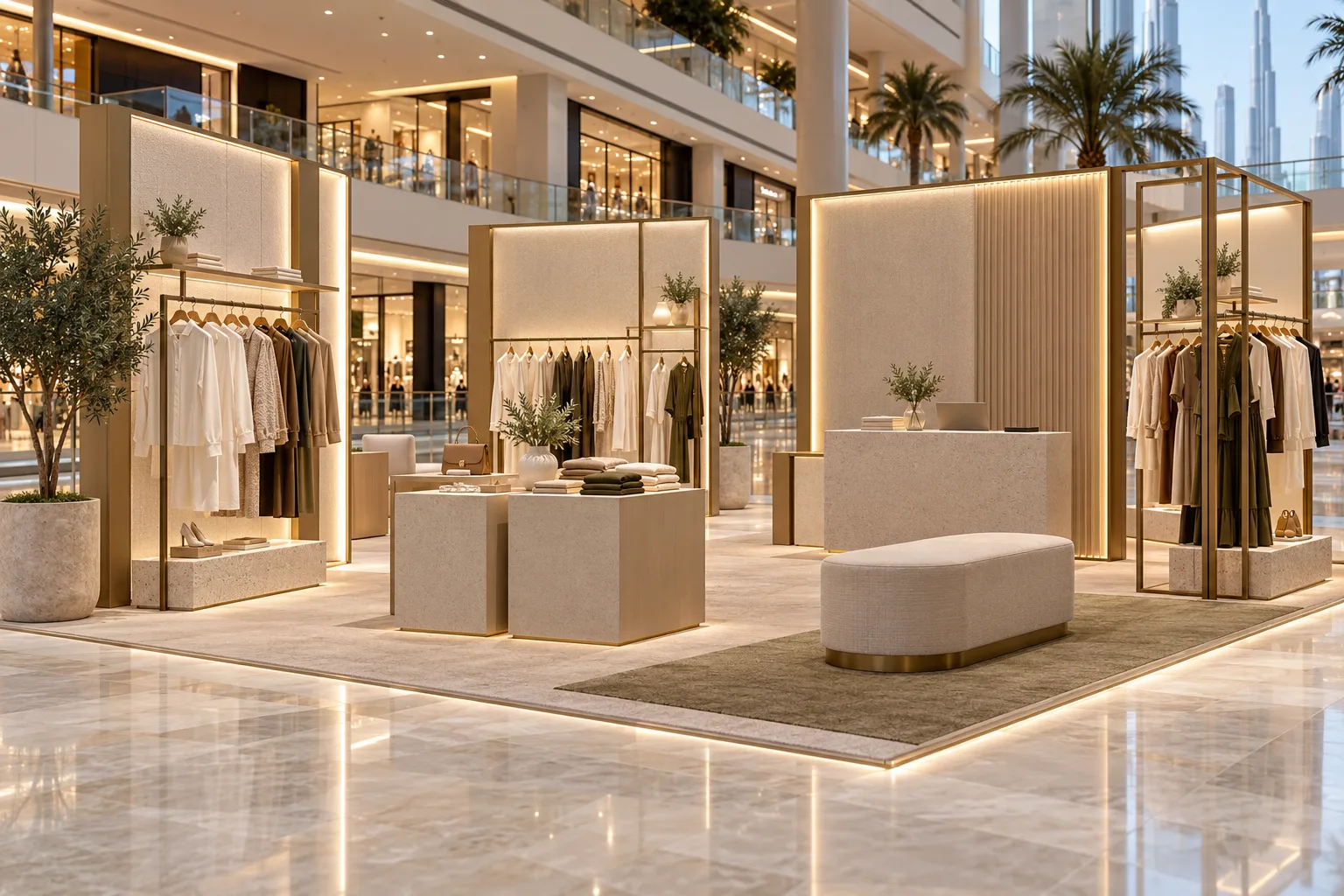
AI-generated illustrative design concept; not a completed CBD Projects project, approved drawing or technical compliance detail.
A short trading period changes the economics of retail fit-out. Bespoke construction may be difficult to justify if it cannot be reused, while an underdeveloped installation can undermine the customer experience. A commercial interior design company in Dubai should coordinate the opening plan and the end-of-occupation obligations together.
Define trading duration, product range, service needs and landlord conditions. Design reusable assemblies where appropriate, price installation and removal, and test the complete customer and staff workflow before launch.
Write a short-term operating brief
Record the merchandise, stock depth, payment process, staffing and expected peak activity. Identify whether the installation is a kiosk, a temporary shop or a concession inside another premises; the setting affects the practical brief and applicable permissions.
Decide what the project must prove commercially, such as testing a location or presenting a seasonal range. Keep those objectives separate from unsupported promises about increased sales. They help the client judge whether a more expensive fixture adds useful capability.
Check landlord conditions early
Confirm the permitted trading area, installation period, working hours, access, signage, service connections and removal obligations with the landlord. Have the responsible team establish required approvals and safety arrangements. Temporary occupation should not be assumed to remove those requirements.
Use the landlord manual checklist to record conditions. Ask how the handback condition will be assessed and who confirms completion, before selecting fixings or altering existing surfaces.
Design modules around transport and reuse
Size fixture sections for the delivery route and intended future storage. Record assembly methods, stability requirements and any approved anchoring with the supplier and designers. A reusable appearance is not enough if panels are damaged every time they are dismantled.
Compare a standard module adapted to the brand with a fully bespoke alternative. Include transport, assembly, spare parts and storage in the comparison. Keep the product presentation coherent through finishes, lighting and graphics rather than relying solely on permanent construction.
Coordinate essential services and back stock
Confirm power, connectivity, payment equipment, lighting and any security interfaces. Protect cables and keep access to serviceable components. Show staff belongings, packaging, cleaning and replenishment rather than filling the entire footprint with customer displays.
Test the busiest likely queue with staff and customers represented in the plan. Review the retail checkout guide for the payment interface, and confirm routes remain suitable when fixtures and stock are in use.
Price and document the exit
Separate design, manufacture, installation, trading support, dismantling, transport, storage and reinstatement. Identify which parts transfer to the next location and which are consumed. This makes two offers comparable even when one includes a lower initial fabrication price.
At handover, retain an assembly record, component references and photographs of the agreed existing condition. Schedule the removal and landlord review in advance. After closure, record what survived well so the next pop-up benefits from actual reuse evidence.
Frequently asked questions
Is a pop-up always cheaper than a permanent shop?
Its initial scope may be smaller, but compare the complete installation, operating, removal and storage costs over the planned trading period.
Can modular fixtures be used at any future location?
Only after checking the next site’s dimensions, permissions, stability and services. Reusability should be designed and documented, not assumed.
Plan your retail and hospitality fit-out project with one accountable team
Send CBD Projects your pop-up duration, merchandise brief and landlord conditions for a coordinated temporary retail fit-out scope.
Send Your Project BriefBack to BlogRelated ServiceView Real ProjectsContact CBD Projects