
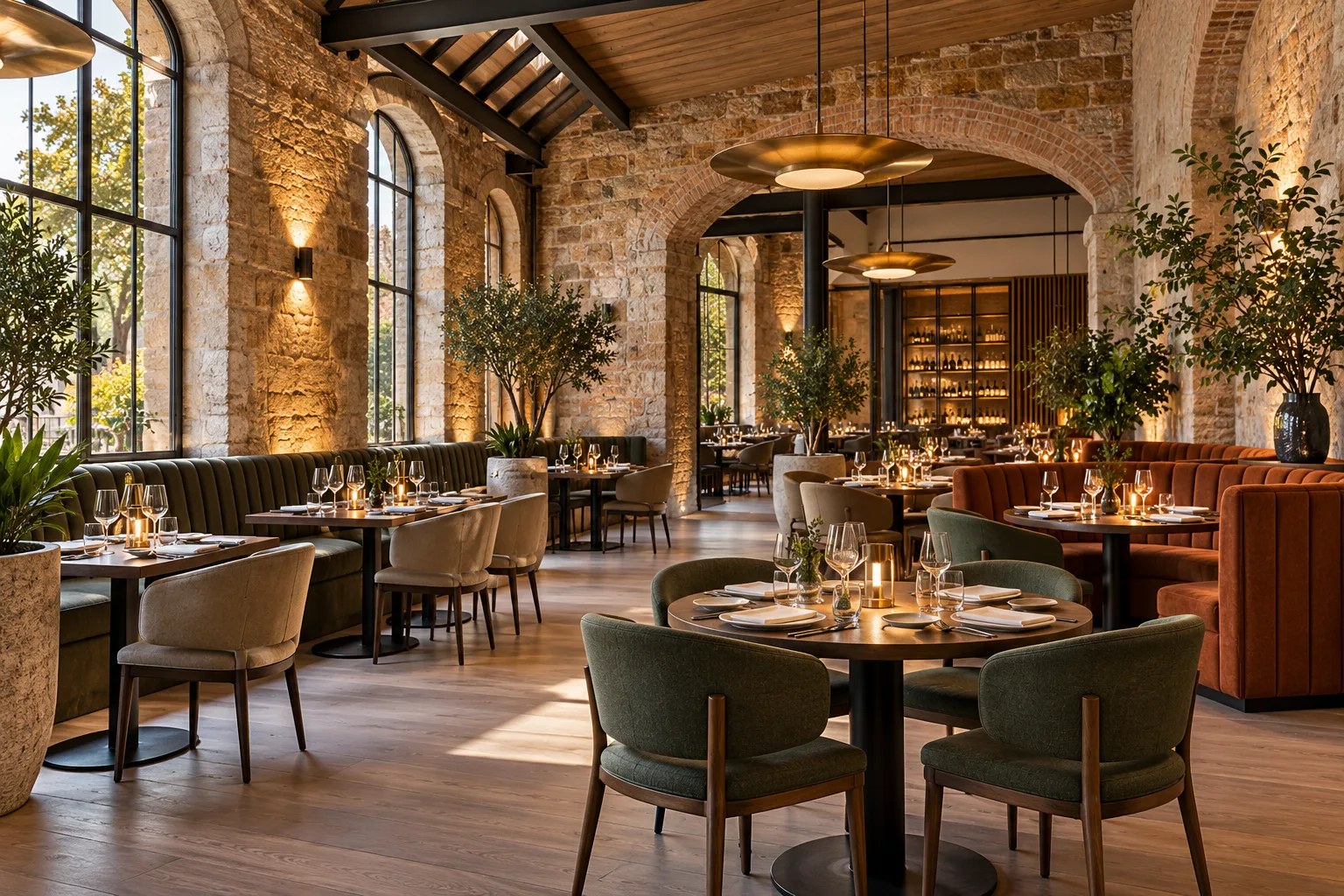
AI-generated illustrative design concept; not a completed CBD Projects project, approved drawing or technical compliance detail.
Changing a restaurant’s identity can range from new finishes to a different menu and service model. A commercial interior design company in Dubai should separate those scopes before presenting an existing fit-out as a ready-made saving. What looks reusable may not suit the proposed operation.
Compare the new concept with the existing approved and installed condition. Classify items for retention, repair, alteration or replacement and identify the evidence required for each decision.
Define what changes beyond the branding
List the proposed menu, service style, seating pattern, delivery demand and operating hours. Record whether the business activity or operator arrangements change and refer licensing questions to the appropriate advisers.
For an illustrative change from casual dining to a tasting-menu concept, existing tables may be reusable while kitchen workflow and guest service need substantial revision. A new logo does not define the construction scope.
Inspect retained assets
Review condition, available records, serviceability and suitability with the relevant specialists. Include kitchen equipment, extraction, cooling, electrical systems, plumbing, furniture and joinery. Keep uncertain items provisional until assessed.
Record who owns retained items and what warranties or maintenance support are available through the appropriate commercial review. Do not count the purchase price of existing equipment as a verified saving before checking whether it can support the new concept.
Coordinate menu and service changes
Obtain data for new equipment and compare its needs with available services. Ask the operator’s qualified food-operation team to establish the required workflow and handling arrangements.
Use the menu-change fit-out guide for the equipment review and the restaurant acoustic guide where the atmosphere or sound programme changes. Existing approval is not automatic approval of a different layout or operation.
Compare coherent renovation options
Price a defined minimum refresh and any broader option against the same operating brief. Include surveys, enabling works, making good, protection, testing and the relevant approval coordination. Keep excluded equipment and client-supplied items visible.
An option that retains finishes but omits necessary service work is not a valid like-for-like comparison. Document the reasons for retention so later discoveries can be handled against clear assumptions.
Reopen against the revised operation
Complete the applicable permission and technical processes and test the intended service sequence with final furniture and equipment. Update drawings, asset records and maintenance responsibilities for both retained and new work.
A fit-out company in Dubai should identify interfaces between old and new systems and the responsible support party. The restaurant fit-out feasibility guide helps frame the initial commitment before refurbishment starts.
Frequently asked questions
Does keeping the kitchen avoid technical review?
No. Review its condition and suitability for the proposed equipment, menu and operation.
Can CBD price a refresh from photographs alone?
Photographs can support an initial discussion, but a dependable scope requires relevant drawings, site information and assessment of the retained installation.
Plan your retail and hospitality fit-out project with one accountable team
Share the existing restaurant plan, new concept and equipment information with CBD Projects for a rebranding feasibility review.
Send Your Project BriefBack to BlogRelated ServiceView Real ProjectsContact CBD Projects