
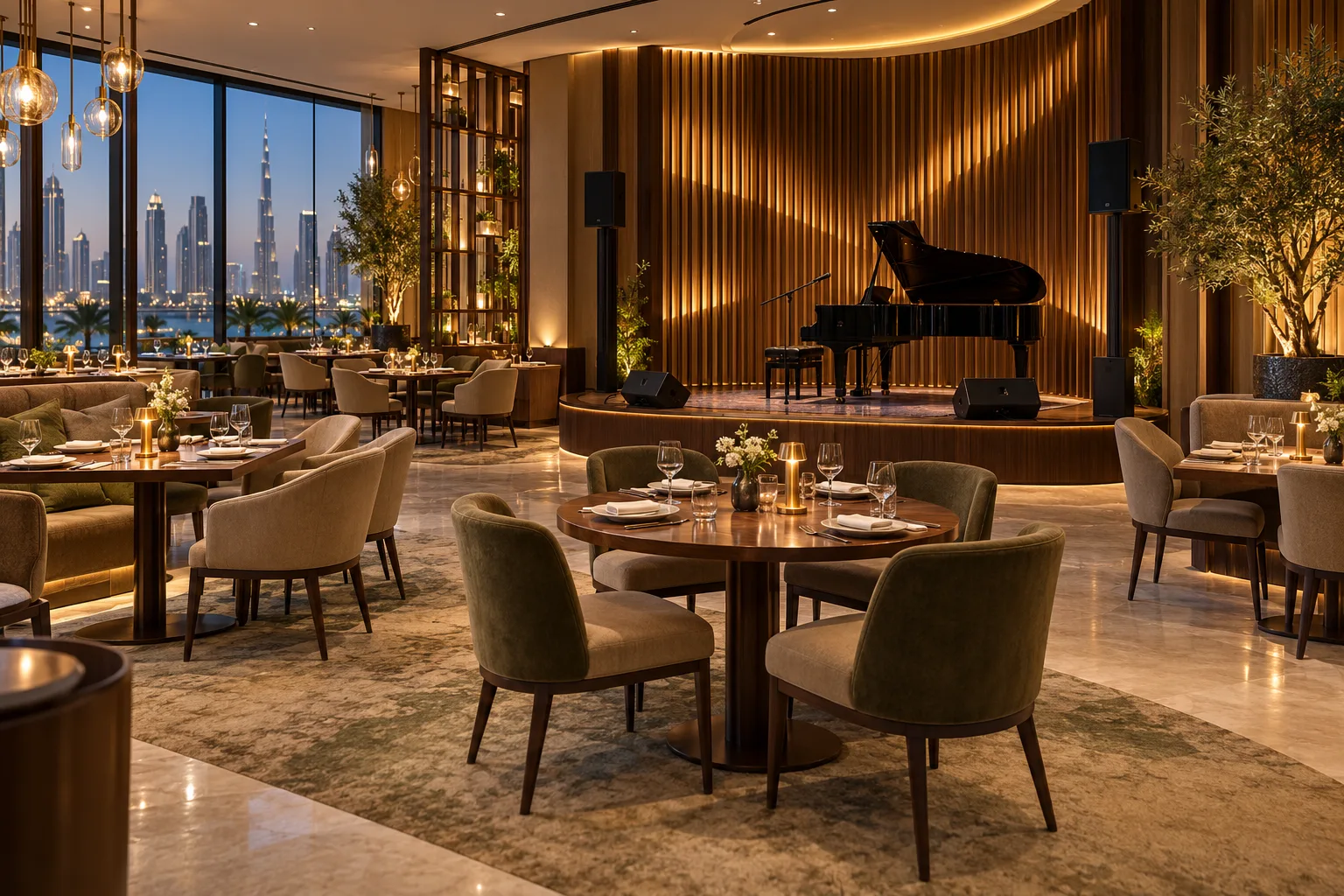
AI-generated illustrative design concept; not a completed CBD Projects project, approved drawing or technical compliance detail.
Adding live performance changes more than the restaurant’s atmosphere. It can affect audience behaviour, sound transmission, lighting, storage and the approved operating scope. An interior designer in Dubai should develop the concept with the operator and relevant specialists before a stage becomes a permanent part of the plan.
Define the performance format and verify the applicable permissions for the specific venue. Then assess dining, audience and technical requirements together rather than adding equipment after fit-out.
Describe the entertainment operation
Record the proposed performance types, frequency, audience arrangement and operating hours. Ask the operator’s licensing advisers and landlord to confirm what is permitted. Do not assume restaurant permission includes every entertainment activity. Keep occasional events distinct from the normal trading model when defining the design brief.
Test dining and performance layouts
Show the normal dining plan and any event arrangement with realistic furniture positions. Have the responsible designers review occupancy, circulation and safety implications. Chairs moved toward a stage can change routes that worked in the dining plan. Avoid treating movable furniture as permission to use any arrangement.
Commission an acoustic review
Provide the specialist with the intended sound system, hours, adjacent occupiers and building information. Distinguish sound quality inside the venue from disturbance outside it. The restaurant acoustic guide provides related planning questions; decorative acoustic panels alone do not establish adequate isolation or acceptable operating sound levels.
Coordinate equipment and backstage support
Agree equipment positions, power, data, control locations and maintenance access. Identify where cases, instruments and movable furniture are stored. Avoid running temporary cables through customer routes as the default operating solution. Include delivery and setup needs in the brief so performance activity does not interrupt food service unnecessarily.
Tender for both ordinary and event operation
Allocate responsibility for audiovisual design, installation, testing and operator training. Ask the team to demonstrate changeover between agreed layouts. Confirm that the dining operation remains practical when no performance is scheduled. Final permissions and operational conditions must be verified separately from construction completion.
Frequently asked questions
Does a small stage avoid permission checks?
No. The actual activity, venue and applicable requirements need review.
Are acoustic panels enough to prevent disturbance?
A qualified acoustic assessment should determine the necessary measures for the building and operation.
What should bidders receive?
Both operating layouts, the performance brief and coordinated technical responsibilities.
References and scope
References checked on 2 November 2026. Confirm current requirements and product instructions for the actual project; these links do not constitute project approval.
Plan your retail and hospitality fit-out project with one accountable team
Share your restaurant concept, intended performance programme and landlord constraints with CBD Projects for a coordinated feasibility brief.
Send Your Project BriefBack to BlogRelated ServiceView Real ProjectsContact CBD Projects