
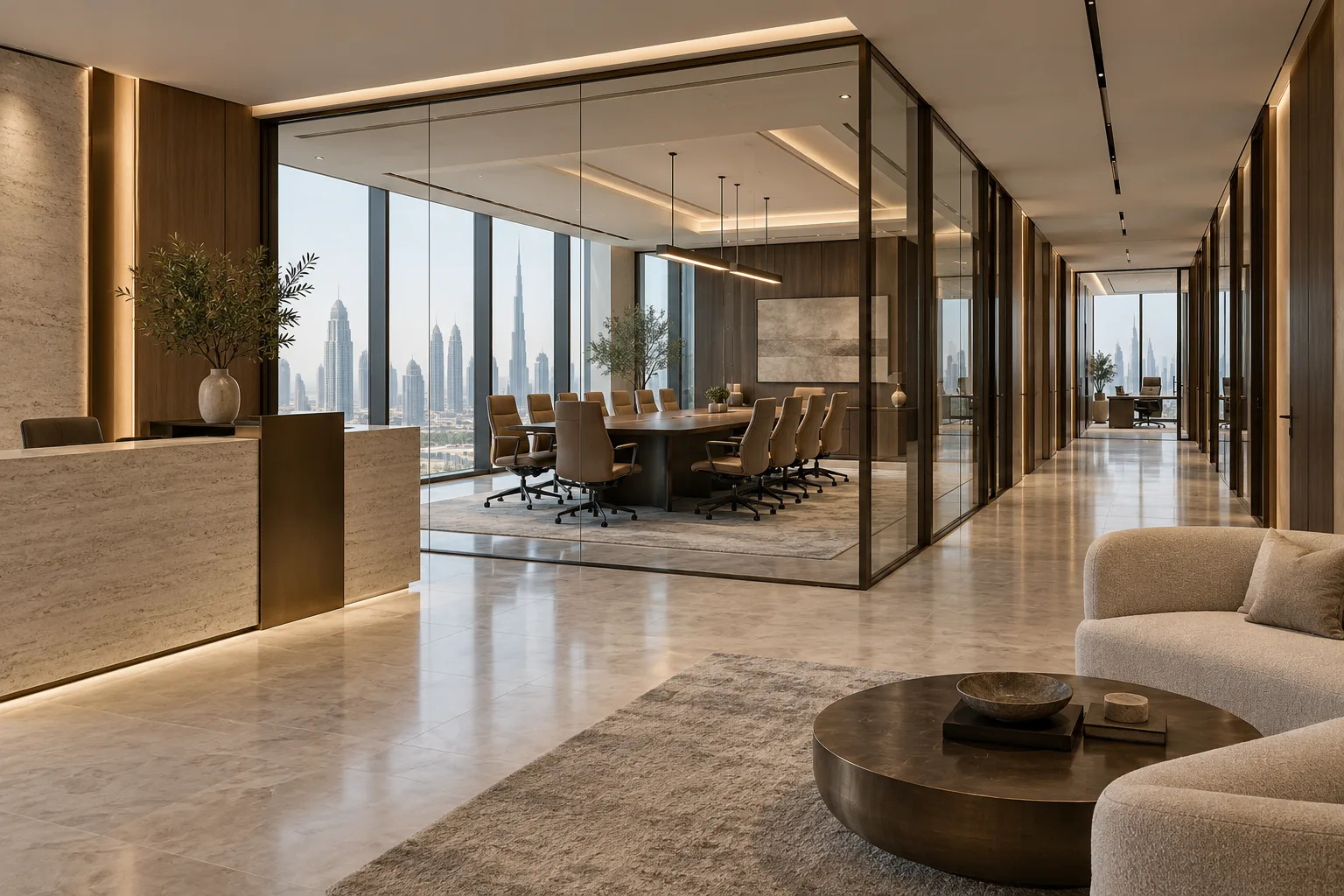
AI-generated illustrative design concept; not a completed CBD Projects project, approved drawing or technical compliance detail.
Refurbishing an office while staff remain in place affects IT, access, meetings and daily services as well as construction. An office interior design company in Dubai should assess continuity with the employer before promising that work can proceed without disruption.
Define the activities that must continue, then test each construction phase against them. Compare the cost and practicality of occupied works with temporary relocation rather than assuming one approach is always better.
Identify critical business activities
Ask the employer which teams, systems and client functions must remain available. Record acceptable restrictions and who can authorise interruptions. Separate genuine continuity needs from a general wish to keep every desk occupied.
Use the temporary office guide where an alternative workspace is being considered. The decision should reflect operational needs rather than a blanket preference for staying on site.
Map phases with live routes and services
Show work areas, occupied areas, deliveries and required circulation for each phase. Have the responsible specialists assess fire-safety, access and shared-service implications.
A partition line does not prove the remaining office is suitable for occupation. Review noise, dust, services and work methods through the appropriate construction and facilities teams before accepting the phase plan.
Coordinate IT and building shutdowns
Identify systems shared across the work and occupied zones. Agree the responsible parties for isolation, reconnection and testing. Include the employer’s IT team and building representatives in the sequence.
For an illustrative weekend changeover, define what must be tested before staff return on Monday. A completed ceiling or floor finish does not establish that network and workplace services are ready.
Price temporary arrangements openly
Include protection, moves, temporary services, out-of-hours working and repeated mobilisation where required. Compare these with the cost and disruption of a planned temporary relocation.
A fit-out company in Dubai should state the assumptions behind its price. Occupied refurbishment may preserve some operations while still costing more or taking longer than an empty-site project.
Use acceptance gates before each return
Agree evidence for releasing a refurbished zone, including the relevant technical checks and operational walkthrough. Keep unresolved defects and restrictions visible to the employer.
Review the next phase only after the current transition has been assessed. Clear communication and decision ownership help maintain continuity, but the programme should not guarantee zero interruption where shared systems or intrusive works remain involved.
Frequently asked questions
Can all office refurbishment be completed after hours?
No. Work methods, shared services and building rules may require other arrangements.
Is a phase plan enough to establish safe occupation?
No. The responsible project team must assess the actual work and live-office conditions.
What should be checked before staff return?
The agreed construction, services, IT and operational readiness criteria for that zone.
References and scope
References checked on 31 October 2026. Confirm current requirements and product instructions for the actual project; these links do not constitute project approval.
Plan your office fit-out project with one accountable team
Send CBD Projects your office plan, critical operating needs and preferred work windows to compare occupied refurbishment and temporary relocation options.
Send Your Project BriefBack to BlogRelated ServiceView Real ProjectsContact CBD Projects