
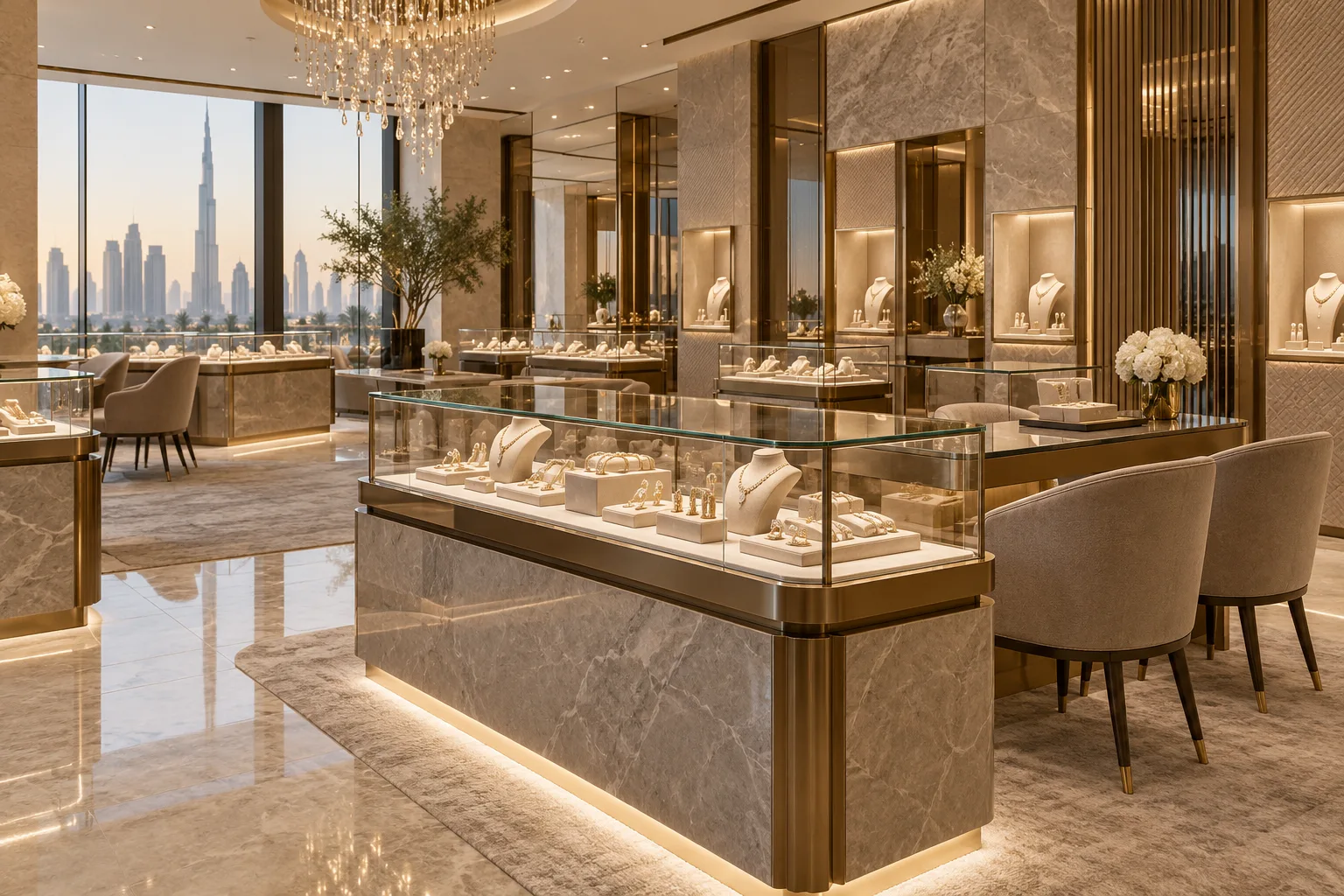
AI-generated illustrative design concept; not a completed CBD Projects project, approved drawing or technical compliance detail.
Jewellery displays must present small, detailed products while supporting a controlled staff-led sales process. A generic glass counter can create reflections, awkward handling and poor customer interaction. An interior design company in Dubai should coordinate the display supplier, lighting designer and retailer’s security team around the actual product range.
Test a representative case with real product samples and the intended lighting. Review customer views, staff handling, maintenance and consultation together before approving repeated cabinetry.
Define the selling sequence
Ask staff to explain how a customer approaches, views a product, sits for consultation and completes a purchase. Identify where packaging and product documents are used. Keep sensitive security procedures in controlled project records. The public layout should support service without exposing detailed control arrangements.
Review the case with actual products
Use representative product sizes, trays and presentation stands in the sample case. Check customer viewing positions, including seated consultation where appropriate. A case sized from an empty rendering can leave the display visually sparse or overcrowded. Confirm the operator’s intended product density before finalising internal dimensions.
Test light and reflection
Evaluate colour appearance, glare and reflections with the lighting specialist and selected glazing. Check the view from several customer positions under the wider store lighting. Use the retail lighting guide to coordinate the case and room. Avoid making product-specific lighting promises without a sample test.
Coordinate access and maintenance
The display supplier should confirm hardware, supported loads and service access. Review light replacement and equipment access without requiring unnecessary handling of merchandise. The security team should approve the relevant control interfaces. Detailed security settings should not be included in public-facing drawings or marketing material.
Approve a repeatable assembly
Record the accepted case, finishes, lighting settings and supplier references. Recheck the sample after any proposed substitution because glazing, light sources or internal finishes can change the result. At handover, demonstrate routine cleaning and maintenance with the operator and retain the approved instructions for future displays.
Frequently asked questions
Should display lighting be chosen before the cases?
Develop them together. Case depth, glazing and product presentation affect the lighting result.
Can a showroom use one display detail everywhere?
A repeated detail can help consistency, but check different product groups and consultation needs before standardising every case.
Plan your retail and hospitality fit-out project with one accountable team
Send CBD Projects your showroom plan and product-display brief for coordinated jewellery retail interior design.
Send Your Project BriefBack to BlogRelated ServiceView Real ProjectsContact CBD Projects