
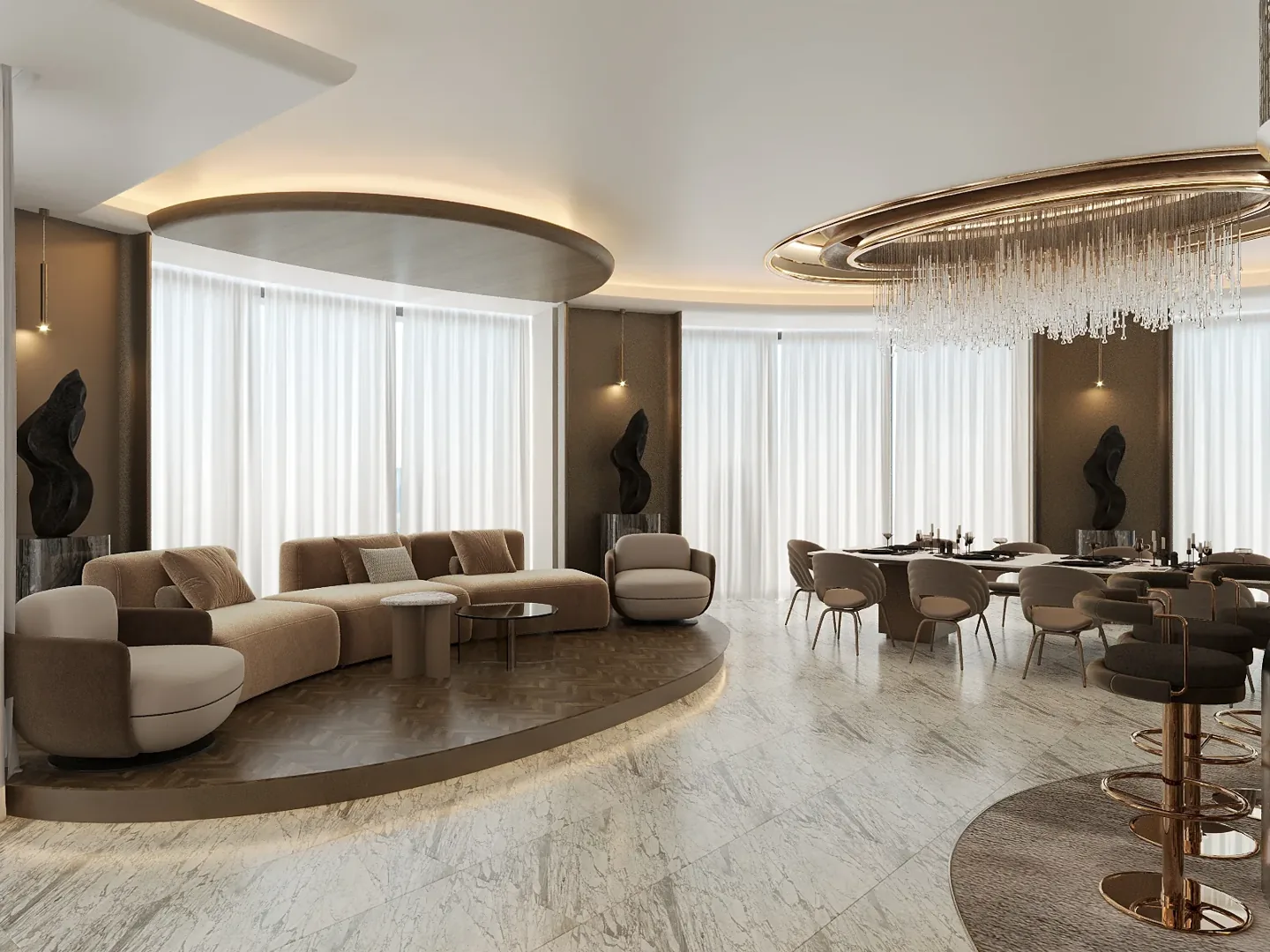
Residential interior reference for the design review.
Indoor planting is often selected near the end of an interior project, when the layout and finishes have already been agreed. A pot then has to fit the remaining corner, and the incoming team inherits responsibility for a plant it did not help choose. Including an indoor planting design brief in Dubai projects earlier allows the client to consider the visual intention, actual conditions and maintenance arrangement together.
This guide concerns the decisions an owner or operator should coordinate with an interior design company and a competent horticultural supplier. It is not a planting specification or a promise of health, productivity or air-purification benefits. An office, home or retail interior may use living, preserved or artificial planting for different reasons. The useful starting point is what the planting should contribute to the room and what the client can realistically maintain.
Jump to a section 14 topics
Describe the visual purpose before choosing plants
Explain why planting is being considered and where it sits within the design priorities. It might soften the view of a large room, create a consistent material language with the landscape outside or provide a focal point in a reception setting. Those are different intentions and do not necessarily require the same scale or quantity of planting.
Keep the brief specific enough to test. Rather than asking for greenery everywhere, identify the views and rooms in which it matters. Consider whether the planting should remain visually quiet or become a feature. This gives the designer and horticultural specialist a shared question to resolve, without committing to a species or planter before the practical conditions have been assessed.
Choose between living, preserved and artificial approaches
The client should understand what type of planting is proposed. Living plants need an appropriate environment and care arrangement. Preserved materials and artificial products have different appearance, cleaning, replacement and product-information considerations. A drawing or mood image should identify the approach rather than leaving everyone to assume that a green feature is a living installation.
Compare the choices against the actual room and the operator's resources. A suitable solution for a regularly attended reception may differ from one for a space occupied intermittently. Discuss the relevant product information and maintenance requirements with the supplier. The decision should be made openly so a client does not approve the appearance of one approach and later discover that the project has priced another.
Assess the actual position and light conditions
A bright photograph does not establish the conditions available to a living plant. Ask the horticultural specialist to assess the proposed position, including the relationship with glazing, shading and the way the room is used. Conditions can differ significantly between a window-side setting and a feature located deeper within the same interior.
The Royal Horticultural Society treats light and room conditions as important factors when choosing and caring for houseplants. Use such guidance as a reason to obtain an appropriate project assessment, not as a universal recipe for every Dubai premises. Record the specialist's assumptions and any information still needed. Avoid allowing an attractive plant symbol on a plan to become an unqualified promise that the selected specimen will thrive there.
Coordinate planting with furniture and circulation
Review the mature or intended maintained size with the furniture layout. A plant that appears compact at installation may need a different allowance as it develops. Consider leaves and branches as well as the container, particularly beside seating, doors, work surfaces and frequently used routes. The interior arrangement should remain practical for the people using the room.
This is useful during an office fit out in Dubai, where furniture, cables and shared circulation already compete for space. Check the planting proposal in normal occupied conditions rather than an empty visual. The designer can coordinate its position with the room, while the horticultural specialist advises on the plant and the relevant accessibility or building specialists assess requirements within their appointment.
Define the planter as an assembly
A decorative outer container is only one part of the proposal. Ask what is included inside it and which components are intended to contain water, support the plant or allow it to be attended. Obtain the selected product information and clarify how the assembly will be installed and maintained. Do not assume that every decorative vessel is suitable for the proposed planting approach.
The brief should identify who supplies the planter, plant, liner and any accessories, and who checks their compatibility. If these come from different suppliers, name the party coordinating them. Manufacturer systems have their own components and instructions; the example of one product should not be treated as a specification for every installation. Keep the final assembly identifiable in the procurement and handover records.
Protect adjacent finishes and allow inspection
Discuss the relationship between the planter and nearby floors, joinery, fabrics and equipment. The appointed supplier should explain how the proposed assembly addresses its normal operating conditions, while the interior team coordinates access and finish interfaces. The client needs to know what can be inspected and how a problem would be recognised and reported.
Avoid placing an assembly where attending to it requires moving several pieces of furniture or dismantling finished cabinetry. Where planting is incorporated into joinery, agree the detailed responsibilities before fabrication. This conversation is particularly valuable when comparing joinery fit-out companies in Dubai: ask how the proposed installation will remain accessible and how the adjacent materials will be cared for, rather than judging only the opening-day appearance.
Allocate watering and routine care to a named party
A maintenance task should have an owner who understands what has been selected. Confirm whether care will be provided by a specialist service, the facilities team or another nominated person. Obtain appropriate instructions for the actual plants and system, including how the responsible person recognises when specialist attention is needed.
Do not place a generic watering frequency in the interior design brief. The horticultural supplier should advise on the selected plants, containers and conditions. The client's role is to make the care arrangement workable: identify access times, where relevant supplies are kept and who covers absence. A plant described as low-maintenance still needs an agreed responsibility; the phrase should not stand in for a practical care plan.
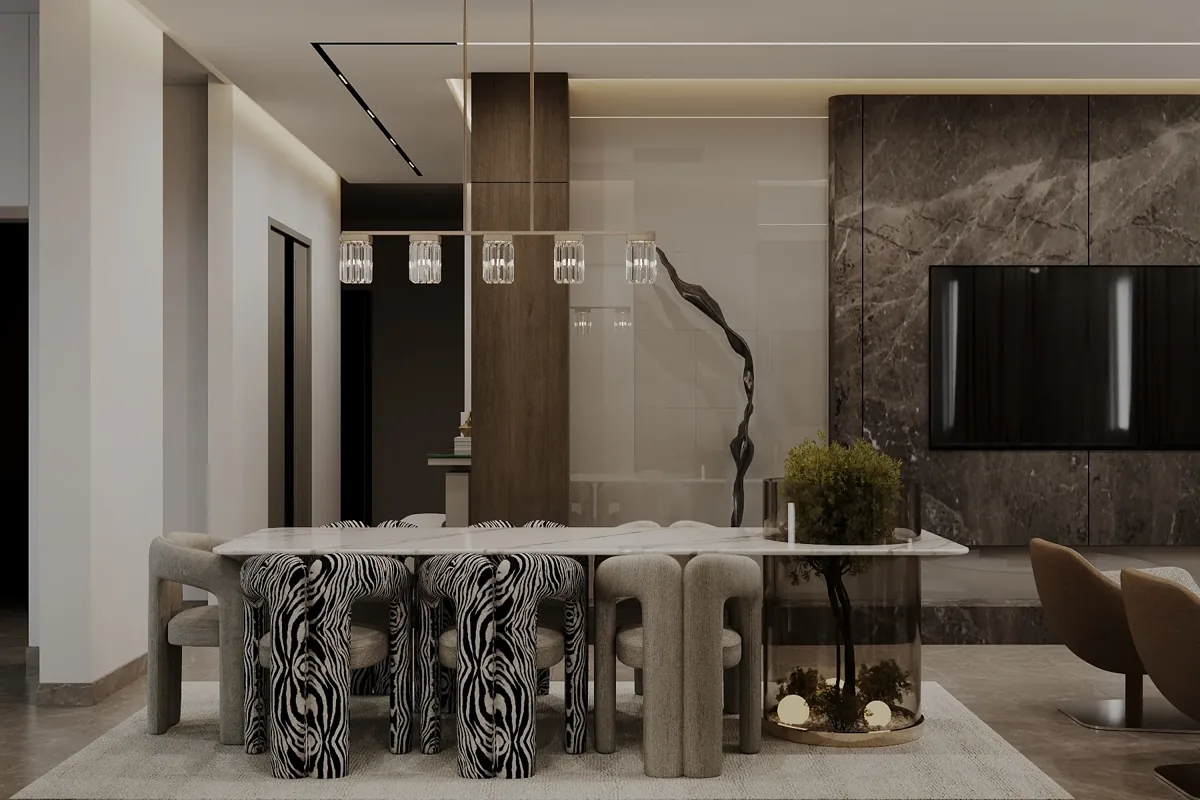
Include cleaning and access around the planting
Planting affects ordinary housekeeping as well as horticultural care. Discuss how the floor beneath and around containers will be cleaned and who attends to the surfaces of the planter or artificial feature. The arrangement should allow the responsible team to reach the relevant areas without improvising access or pushing equipment through sensitive finishes.
Consider the different tasks involved in a large floor planter, a shelf display and a suspended feature. Work at height, specialist access or a difficult replacement route should be assessed by the appropriate parties. The design brief should identify these interfaces early. A visually light hanging arrangement can create a substantial maintenance task if its location and access needs have not been considered with the operator.
Establish boundaries for specialist installations
A large integrated planting feature may involve more than the interior designer and a plant supplier. Structure, fixed services, lighting or other systems can need separate specialist input, depending on the proposal. Identify those packages and the information each must provide. A decorative concept should not be released for construction while responsibility for a consequential interface remains unclear.
The interior fit-out contractor can coordinate the agreed installation sequence within its scope, but the relevant specialists must confirm their own technical designs. State which approvals or property permissions need assessment for the actual work. This guide does not provide an irrigation method, structural detail or universal permit rule. Its purpose is to ensure the client commissions the necessary coordination rather than discovering those requirements after ordering the visual feature.
Plan delivery and installation at an appropriate stage
The planting supplier and main team should agree when the items can be brought into the premises. Consider the readiness of the room, the remaining dusty work and the route from unloading to the final position. Check the dimensions and handling requirements of the plant and container assembly, not merely the pot's footprint on the plan.
Record who receives the delivery and checks it against the approved selection. If the space is not ready, agree a suitable alternative arrangement with the supplier instead of assuming plants can be left anywhere on site. For interior design and fit out companies in Dubai, this is one of the useful handover interfaces to clarify: when does responsibility pass from the installation team to the person providing ongoing care?
Understand the full cost of the planting decision
The initial purchase is only part of the decision. Consider the planter assembly, specialist assessment, delivery, access and any coordinated interior work. Ongoing care, replacement and cleaning should also be understood by the owner or operator. A lower initial figure may not represent the same scope if another proposal includes a maintained installation or additional components.
Ask the supplier to distinguish what is included and what the client must arrange separately. Establish how changes to the selected plant or container will be reviewed if availability changes. Do not treat a larger specimen as an automatic upgrade: it may have different handling, space or care implications. A clear scope helps the client compare proposals through practical responsibilities rather than through appearance and quantity alone.
Agree an approval record that identifies the actual selection
A general reference image can help communicate character, but it should not be the only procurement instruction. Record the selected approach, plant or product reference, intended size, planter finish and relevant assembly details. Identify any conditions attached to approval and the person authorised to accept a substitution. The horticultural supplier should provide the information needed to make the selection understandable.
Review the proposal with the room's finish and furniture samples where appropriate. This can reveal a container colour or scale that is less convincing in the actual setting than in an isolated photograph. Keep the final references with the interior records so the operator can identify what was installed and obtain suitable advice or replacements without reconstructing decisions from informal messages.
Prepare a usable planting handover
The receiving team should be shown the actual installation and the information relevant to its care. Collect supplier contacts, product references, applicable instructions and the agreed maintenance responsibilities. Explain where access must remain clear and which items should not be moved or altered without advice. Keep the record proportionate to the installation, but specific enough for a new staff member to use.
Review the transfer of responsibility explicitly, including any specialist service commencing after completion. Record outstanding actions and the person responsible for closing them. The presence of plants in the finished room does not by itself mean the maintenance arrangement is complete. A considered handover connects the design intention to a named person who knows what is expected after the installation team leaves.
Revisit the brief when the room changes
A furniture reset, new partition or altered window treatment may change the conditions and access around planting. Include the horticultural supplier in the review where living plants are affected. Keep the location and care records current rather than assuming an installation that suited the original layout will remain appropriate after every interior alteration.
For the broader room design, explore our office interior design service or residential interior service. Use the project brief to tell CBD Projects how you want planting to contribute to the space, who will maintain it and what information is already available. Those answers help place the planting decision within a coordinated interior appointment.
Frequently asked questions
Do plants have to be included in every contemporary interior?
No. Planting is an optional design choice that should relate to the room, the client's preferences and the available care arrangements. A clear brief can identify where it has a useful visual role and where another material, object or spatial decision may be more appropriate. It is not a compulsory feature of modern interior design.
Can a plant be selected from the room photograph alone?
A photograph may help explain the intended character, but it cannot establish all the conditions relevant to a living plant. Ask a competent horticultural supplier to review the actual proposed setting and the information it needs. The interior team can then coordinate the location, furniture and finish interfaces around the assessed selection.
Does a self-watering planter remove maintenance responsibility?
No system should be treated as a substitute for identifying who cares for the installation. Obtain the selected manufacturer's instructions and the horticultural supplier's advice for the actual assembly. The operator still needs an appropriate arrangement for inspection, attention and specialist support, with responsibilities understood by the receiving team.
What should be included in a planting enquiry?
Provide the room plans, photographs, proposed locations and whether living, preserved or artificial planting is being considered. Explain occupancy patterns and who would maintain the installation. Include the intended visual effect, any integrated joinery and available supplier information so the design conversation can identify the relevant interfaces and specialist inputs.
References and scope
References checked on 18 November 2026. Confirm current requirements and product instructions for the actual project; these links do not constitute project approval.
Plan your interior planting coordination project with one accountable team
Share your interior plans, planting expectations and maintenance arrangements with CBD Projects to discuss how the planting brief fits the wider design scope.
Send Your Project BriefBack to BlogRelated ServiceView Real ProjectsContact CBD Projects