
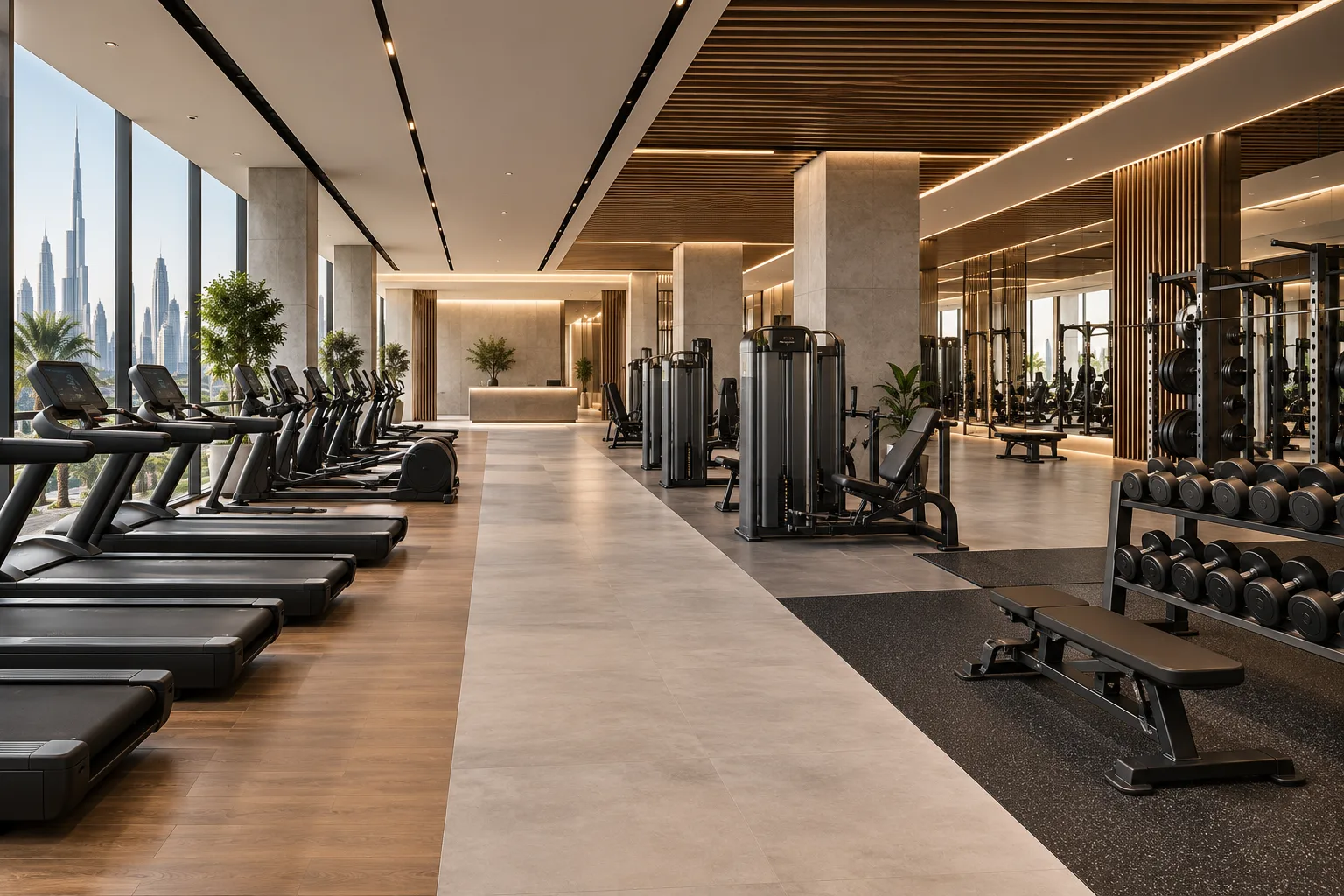
AI-generated illustrative design concept; not a completed CBD Projects project, approved drawing or technical compliance detail.
A successful first fitness club is a useful reference, but it is not a construction drawing for every future branch. Building conditions and member patterns differ. A commercial interior design company in Dubai should distinguish repeatable brand standards from the site-specific work each location requires.
Create a controlled branch design kit, then validate it against each premises. Standardise what is genuinely repeatable while retaining local engineering, approval and operational checks.
Capture the first branch as evidence
Review what worked in actual operation: reception, equipment spacing, studio changeovers and support areas. Record recurring maintenance or congestion problems before reproducing the design.
Use authorised project information and measured feedback. A launch photograph can establish appearance, but it does not demonstrate how the club performs at a busy evening session.
Build a controlled design kit
Define finishes, joinery details, equipment families and brand elements with current specifications. State permitted alternatives and who can approve changes. Include maintenance access and replacement arrangements in the standard details.
The fitness franchise guide addresses first-site coordination. A multi-site rollout also needs document ownership and revision control so branches do not price different versions of the standard.
Run a separate feasibility check for each unit
Review structure, services, access, neighbours and building rules at every location. The applicable authority and landlord process must be verified for the actual property. Do not assign an approval route solely from the area name.
A gym fitout contractor in Dubai should record departures from the standard layout and their consequences. A smaller floorplate may require an operating change rather than simply removing support space.
Coordinate procurement across the pipeline
Identify which products can be purchased consistently and which depend on final site dimensions. Review lead times, storage and supplier capacity against realistic branch-opening dates.
Bulk buying is not automatically a saving if equipment is ordered before the receiving premises is confirmed. Record who carries the risk of changes, storage and unused stock.
Use consistent handover evidence
Create a repeatable acceptance checklist for finishes, equipment interfaces, services and operating rehearsals. Add the site-specific checks required by the responsible project team. Keep each branch’s documents identifiable.
After opening, feed verified operational lessons into the next design-kit revision. This turns a rollout into a controlled improvement process instead of repeating the first branch’s avoidable problems.
Frequently asked questions
Can the same drawings be used at every branch?
Only genuinely repeatable details; each site still needs coordinated layouts, engineering and approvals.
When is bulk procurement useful?
When specifications, site needs and delivery arrangements are sufficiently confirmed.
What should be standardised at handover?
The evidence and review process, supplemented by the requirements of each site.
References and scope
References checked on 31 October 2026. Confirm current requirements and product instructions for the actual project; these links do not constitute project approval.
Plan your healthcare and wellness interiors project with one accountable team
Share your fitness-chain standards, branch pipeline and available site information with CBD Projects for a coordinated rollout plan.
Send Your Project BriefBack to BlogRelated ServiceView Real ProjectsContact CBD Projects