
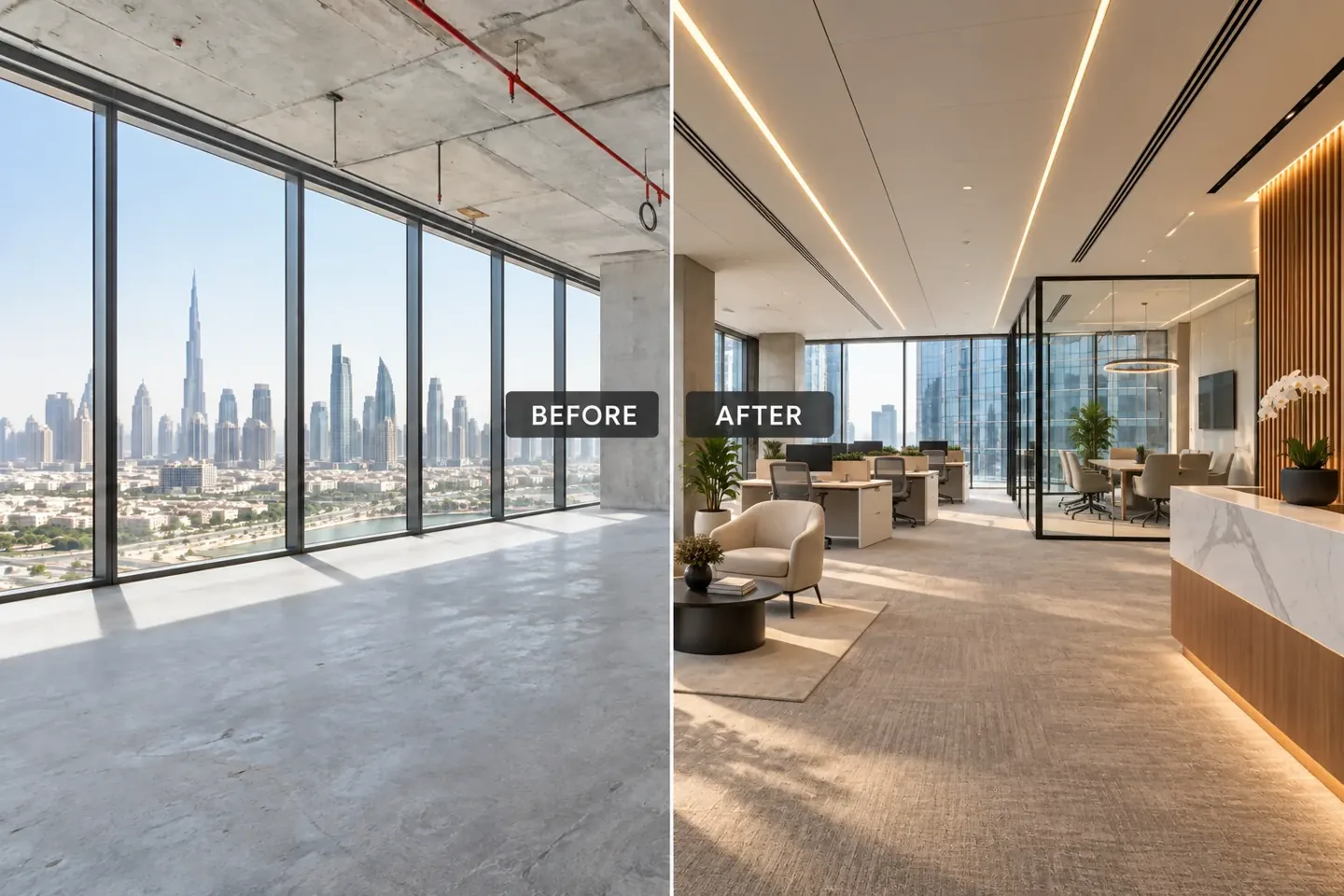
Workplace interior reference for the design review.
Progress photographs can make a fit-out easier to follow, especially when a client cannot visit the site frequently. They can show where work has reached, record a visible condition and help a discussion begin. They can also create confusion when a close-up has no location, a date is unclear or a carefully chosen angle suggests that a room is more complete than it really is.
A useful fit-out progress photography brief describes the purpose of the images before deciding how often they should be sent. The client and project team should agree what needs to be recorded, who receives it and which questions still require a drawing, inspection or specialist test. This guide explains a practical communication approach for Dubai interior projects. It does not treat photographs as certification, permission to publish a private property or a substitute for an appropriately authorised site review.
Jump to a section 13 topics
Decide which decisions the photographs should support
Begin with the reason for the record. A remote client may need a weekly overview, while a project manager may need an image of a particular interface before it is concealed. A designer reviewing a visible junction needs different views from a client checking whether furniture has arrived. These purposes should be identified separately so the photographs are not expected to answer every question at once.
Write a short list of the intended uses and the people responsible for requesting them. An interior design company can help identify the visual decisions that images may support, while the construction team explains what needs an inspection in person. The most useful brief makes those limits explicit. This prevents a convenient communication tool from becoming an informal approval process that nobody agreed to operate.
Give every room an understandable identity
Use room names or references that match the current project drawings. If a client calls a room the meeting suite while the contractor uses an unrelated number, a photo can be attached to the wrong discussion. Agree the reference once and keep it consistent in filenames, captions and issue records.
For a large area, identify practical zones or viewpoints rather than inventing a new naming system for every visit. A simple marked plan can show where the camera stood and which direction it faced. This context is especially helpful when partitions change the appearance of the shell. It allows someone receiving the record later to relate a photograph to the intended room without reconstructing the building from memory.
Use overview and detail photographs together
An overview establishes location and the relationship between components. A detail view can then show the particular junction, finish or defect being discussed. Without both, a close-up may be visually clear but operationally useless because the recipient cannot tell where it belongs or what surrounds it.
For example, a photograph of a joinery edge should be accompanied by enough context to identify the unit and the adjacent finish. Keep the sequence logical and label the point under discussion. The brief should favour a small number of informative views over a large folder of nearly identical photographs. That makes the review easier for clients and helps the fit-out contractor direct attention to the decisions that genuinely need a response.
Repeat selected viewpoints for progress comparisons
Choose a few useful positions from which the project can be recorded consistently. The purpose is to make changes understandable, not to create a polished marketing sequence. A repeated view of a main room can help the client distinguish new partition work, ceiling coordination and later furniture installation without guessing whether the camera simply moved to a more flattering position.
Site conditions will sometimes make a viewpoint unavailable. Record that change rather than forcing access or implying that two different views are directly comparable. Construction access and safety arrangements take priority. No photography instruction should encourage a client or visitor to enter a restricted work area; the authorised site team should determine who may take the required images and from where.
Record dates without overstating what they prove
The record should identify when an image was taken and when it was shared. Those dates may differ. A client receiving a report on Thursday should not assume that every photograph in it was captured that morning. Clear captions prevent an earlier condition from being mistaken for the current state of an area.
A date label is useful project information, but should not be described as independent verification of an installation. If the image is needed for a formal inspection or contractual record, the responsible parties should specify the appropriate evidence and process. Ordinary progress communication should remain honest about its purpose. It can show a visible condition at a stated time without proving every concealed component or the completeness of a specialist system.
Connect images to the current drawing revision
A progress image often makes sense only beside the drawing or detail that describes the intended work. Identify the relevant reference and revision when requesting a decision. This helps the recipient understand whether the image shows the accepted arrangement, a proposed change or a condition that needs further review.
Avoid placing an old drawing beside a new photograph without explanation. A client might otherwise ask for work to match information that has already been superseded. Interior design and fit out companies in Dubai should keep the decision route understandable across images, drawings and written comments. The photograph starts the discussion; the accepted document record should identify the resulting instruction and who was authorised to give it.
Photograph important interfaces before concealment
The project team should identify which visible construction stages need to be recorded before later work covers them. The relevant designer, specialist or inspection plan determines what evidence is appropriate. A photograph may support that record, but it does not replace the required checks or demonstrate performance by itself.
The brief should say who requests the image and where it will be stored with the related inspection information. A wide view, location reference and relevant detail may be more useful than an isolated shot of an unfamiliar component. This is a documentation principle, not an instruction to expose or alter installations for the camera. The authorised team should decide how the record is made within the agreed sequence of work.
Control privacy and permission separately from marketing
A progress record can include documents, screens, personal belongings, staff or information about how a premises operates. Agree what should be excluded, obscured or shared only through a controlled channel. The property owner, operator and project team should establish their information and permission requirements; no assumption of public use should arise because an image was taken during construction.
Marketing permission is a separate question from sharing a photograph with the client for project review. Do not move images from a private progress group into a portfolio or social post without an appropriate authorised decision. When in doubt about legal obligations or personal information, obtain suitable professional advice. A practical brief can protect the project's communication without making unsupported claims about what a particular consent arrangement legally permits.
Keep concept visuals distinct from site evidence
A rendered design concept can help explain an intended result, while a site photograph records a visible condition. Both may appear in a project presentation, but they serve different purposes. Label them descriptively so a client can distinguish the proposal from the construction record immediately.
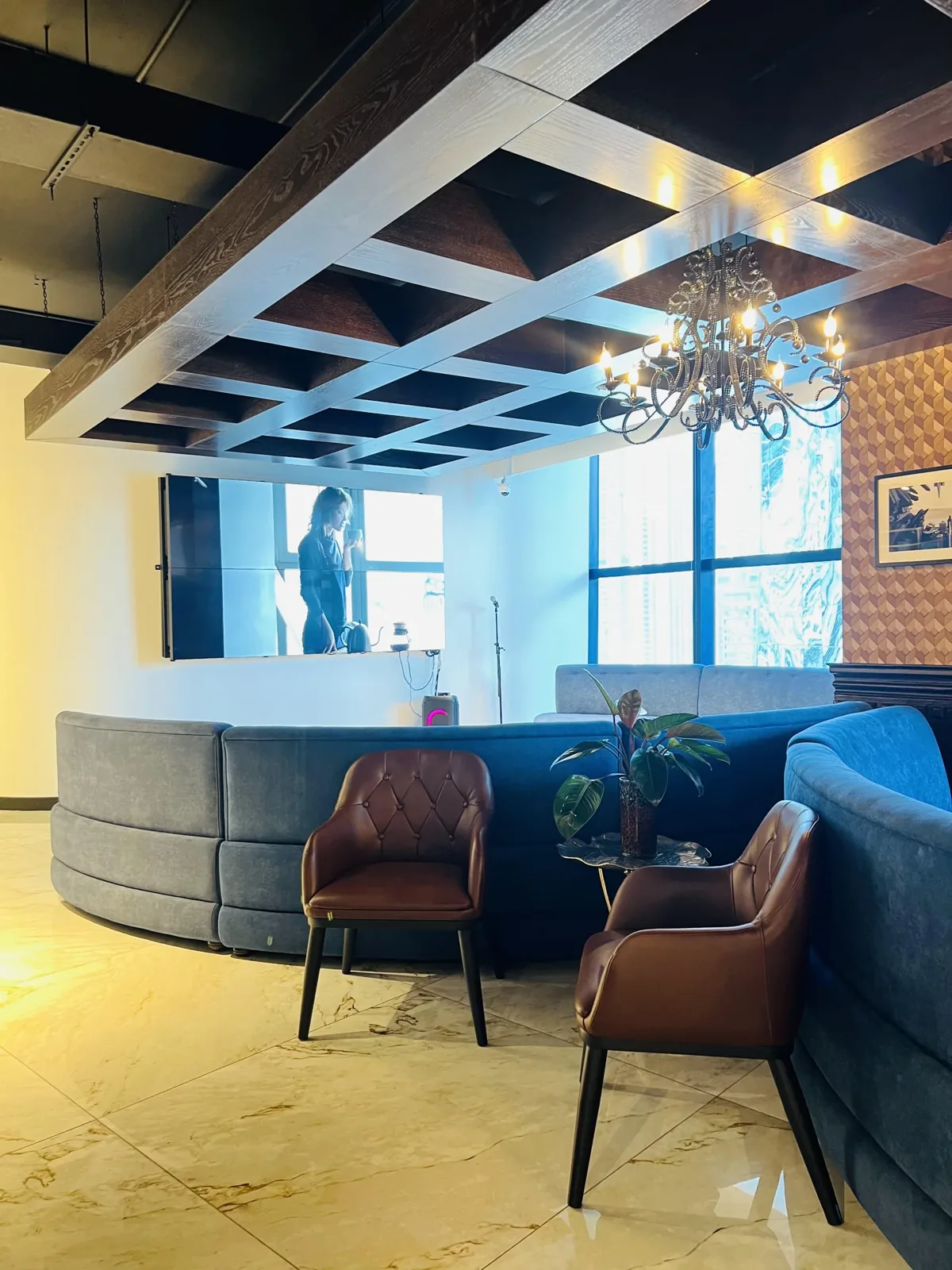
Do not place a concept scene in a progress sequence in a way that suggests the room has been completed. Likewise, a real reference photo from another interior should not become evidence of work at the current premises. The same principle applies to AI-assisted visual material: its usefulness for discussing design does not turn it into a photograph of an installed CBD project. Keeping these categories clear protects the quality of the client's decisions.
Ask for comments that can become an action
A general reply such as looks wrong may express a concern without identifying what the team should review. Ask the recipient to reference the room, photograph and component, then state the question or observed discrepancy. Marked images can help as long as the original remains available and the annotation does not obscure the condition being discussed.
The team should classify the response: a request for clarification, an inspection issue, a design query or a proposed change. Each follows its appropriate approval route. A photograph message should not silently become an instruction to alter completed work. Clear routing helps an interior fit-out company respond efficiently while allowing the client to understand the commercial and programme implications of a new preference.
Choose a reporting rhythm with practical value
Agree a frequency that reflects the pace and significance of the work. A regular overview can be useful, with additional records at important decisions or installation stages. Sending more photographs is not automatically better if recipients cannot identify what changed or which items need attention.
A short report can separate completed visible work, ongoing areas, decisions required and known constraints. Link each image to the relevant item rather than leaving the client to search through an unstructured chat history. Office interior fit out companies in Dubai may work with several client representatives, so agree who consolidates comments. A single coordinated response reduces the risk of different people issuing conflicting instructions against the same photograph.
Understand the limits of remote review
An image can conceal scale, colour variation and conditions outside the frame. Lighting and a phone camera can change the apparent finish. A room that appears complete may still have outstanding tests, access arrangements or defects that the chosen view does not show. Use photographs to identify questions that need further evidence rather than forcing them to prove more than they can.
Where a decision concerns a physical sample, operation or critical interface, the responsible team should identify an appropriate review method. This may involve a site visit, approved sample, supplier document or specialist inspection. A client comparing fit out companies in Dubai can ask how those methods will be combined. The strongest communication process makes the distinction between useful visibility and formal acceptance easy to understand.
Close the record when the issue is resolved
Keep the original observation, resulting decision and closure record connected. If a defect is corrected, an updated photograph should identify the same location and the action taken. The authorised reviewer then confirms the status through the agreed process. A new image alone should not erase the earlier issue or imply that every related obligation has been satisfied.
At completion, transfer the useful project images through the agreed channel with their room references and associated records. The client should know what the archive contains and which formal documents remain separate. For a new appointment, describe your communication needs in the project brief and explore our interior design and fit-out services. CBD Projects can discuss a reporting scope suited to the project and the decisions you need to make.
Frequently asked questions
Can I approve completed work from photographs alone?
A photograph may support a review, but its suitability depends on the decision and the agreed process. It does not prove concealed work, system performance or every detail of a room. The responsible team should identify when a site inspection, sample, test or other evidence is necessary before acceptance.
Should every progress photograph be professionally edited?
The record should show the relevant condition clearly and honestly. Cropping or annotation may help explain a point, but the original should remain available where needed. Avoid changes that hide defects, remove important context or turn a construction record into an image that suggests a different state of completion.
Can the contractor post the images online?
Project reporting and public marketing have different purposes. Agree publication permissions separately through the appropriate owner or authorised party. Images shared for private review should not automatically be reused publicly, especially where they reveal people, documents, private locations or sensitive operating details.
What should I request in a weekly photo update?
Ask for consistent room references, a stated capture date, useful overviews and labelled details. Include the questions needing your decision and the relevant drawing references. The report should explain known limitations and distinguish visible progress from the formal inspections and acceptance records required by the project.
References and scope
References checked on 19 November 2026. Confirm current requirements and product instructions for the actual project; these links do not constitute project approval.
Plan your fit-out client communication project with one accountable team
Tell CBD Projects how you want to review progress and receive project decisions.
Send Your Project BriefBack to BlogRelated ServiceView Real ProjectsContact CBD Projects