
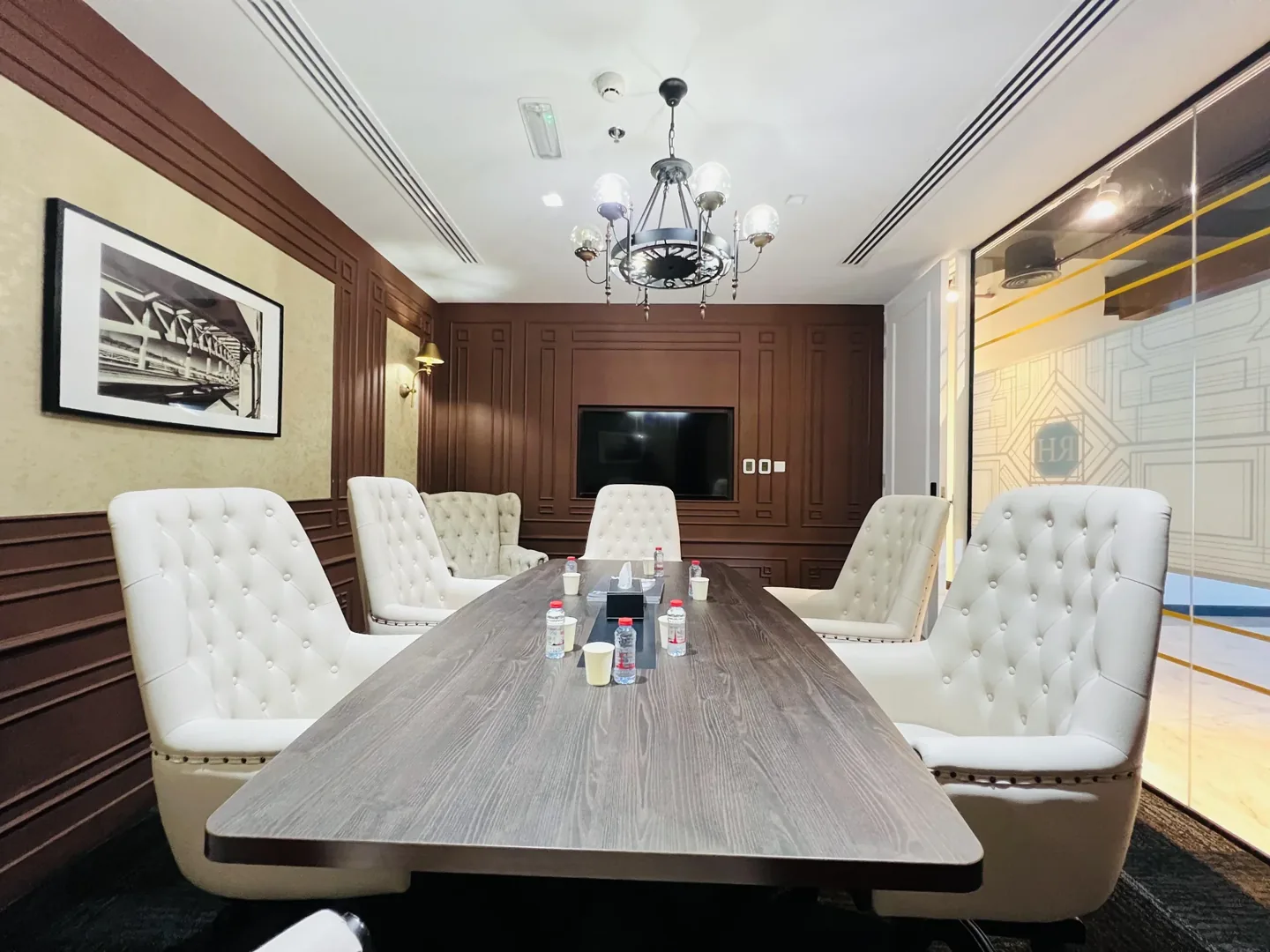
Workplace interior reference for the design review.
Interior design can sometimes begin before the client has decided every room, but the appointment needs a useful stopping point and a clear account of what remains unresolved. A focused study can establish requirements, compare an overall arrangement or examine representative spaces. It should not imply that the whole project is ready for construction simply because some of the design work has started.
A phased interior design appointment divides advisory work into meaningful decisions and deliverables. It is different from carrying out construction in phases or keeping a business open during refurbishment. This guide considers the earlier question: what can you sensibly ask a designer to do now, what information does that work depend on and how will later stages build on it? The approach applies to a household still choosing its priorities or a business developing its workplace brief. Use the actual property, appointments and project requirements to define the scope rather than assume every project follows an identical sequence.
Jump to a section 12 topics
Identify the decision you need to make next
Start with the next commitment that requires better information. You might be deciding whether a property can accommodate the intended activities, whether the room relationships are workable or which areas deserve detailed design first. Describe that decision explicitly. An appointment to test a broad layout does different work from one preparing room finishes and joinery information for a contractor.
Ask what you will be able to review at the end of the stage. A useful output might be an activity brief, a comparison of options or a record of the information required before development. The objective is not to commission the smallest possible drawing package; it is to obtain enough reliable information for a particular decision. If the proposed output cannot support that decision, reducing the fee or shortening the stage will not make the appointment more useful.
Separate an undecided preference from missing evidence
A client may not have chosen a colour, while the project team may not know the actual condition of a ceiling or the available service capacity. Both are unresolved, but they affect design differently. Preferences can sometimes be explored through options. Missing measurements or specialist findings may prevent a conclusion from being relied upon at all.
Create a short list distinguishing client choices, technical inputs and third-party requirements. Identify the person who can resolve each item and the point at which it affects the design. Interior fit out consultants in Dubai should explain which assumptions are acceptable for an early study and which need verification first. This prevents a presentation from looking more certain than its evidence. It also helps the client spend attention on the unresolved matters that genuinely control the next stage, rather than treating every unanswered question as equally urgent.
Establish a whole-project framework before isolating rooms
Detailed work may focus on selected rooms, but their relationship with the rest of the property needs an initial framework. Review circulation, principal activities, shared facilities and the boundaries between areas. A room that seems independent may depend on an adjacent service route, storage area or entrance arrangement. The early study should identify those connections even where later room details remain undecided.
For an office fit out in Dubai, a representative meeting room can be designed while other room types are still being briefed. However, the overall workplace requirements and relevant specialist interfaces still need enough definition to make that room study meaningful. The same principle applies to a home: developing a kitchen without understanding its relationship to dining, storage and family movement can settle details around an uncertain layout. Agree the necessary framework without pretending it resolves every room in advance.
Choose representative spaces for a reason
A representative room can answer recurring questions about materials, furniture, storage or the level of design development required. Select it because of the decisions it can clarify, rather than because it is the easiest room to render. Explain which aspects may be repeated later and which are particular to that space.
Define the evidence the study should produce. A layout option may test furniture and movement; an elevation may explain joinery relationships; a sample comparison may establish a visual direction. Each has a different purpose. Avoid treating acceptance of one element as approval of every item in the room. A pilot study is useful when its findings can be recorded and applied thoughtfully. It becomes less useful when the project repeats an attractive image without checking whether the circumstances of other rooms are different.
Give provisional information a visible status
The design record should show where information is assumed, under review or accepted for a stated purpose. Use a simple status explanation that the client and project team can understand. A general approved label can conceal important differences between agreeing an appearance, accepting an arrangement and confirming technical suitability.
Keep the assumptions beside the documents they affect. If the equipment schedule is provisional, identify which room dimensions or joinery details depend on it. If a room use is undecided, explain the limits of any proposed arrangement. This makes an early appointment more credible rather than less complete. The client can see what has been learned and what remains to be established. Later work can then replace an assumption deliberately instead of discovering that several documents have quietly developed from different starting points.
Define what the stage expressly does not settle
A useful scope describes its boundary as clearly as its deliverables. An early concept may not establish construction quantities, technical system designs, statutory submissions or the final supplier details. The client should understand these limits before using the package to seek prices or authorise purchases. The purpose is to prevent an output from being used for a decision it was not prepared to support.
When comparing fit out companies in Dubai, ask whether an offered design study is a separately defined advisory appointment or part of a proposed construction service. Establish what documents will be issued and their intended use. A concept fee and a developed interior design fee may appear different because they contain different work, not because one adviser is inherently more economical. Record the service boundary so subsequent discussions begin from the same understanding of what has actually been commissioned.
Make the transition to the next stage explicit
Agree the information and decisions required before the next appointment begins. The client may need to select an option, confirm an operating brief or obtain a specialist assessment. Identify the required inputs and the person responsible for providing them. A stage should finish with a useful record of those actions, rather than an invitation to continue detailed design around unresolved fundamentals.
Describe how the accepted outputs will be handed forward. The next stage needs the current drawings, decision record, assumptions and relevant comments in an organised issue. If another adviser or contractor will take over, clarify the intended document use and the responsibilities under the relevant appointments. This is a practical coordination question; contractual rights or document-use disputes need the appropriate advice. The aim is a clear continuation of the project information, not an assumption that everyone can infer the design history from a final presentation.
Discuss fees through the work that each stage contains
A phased fee proposal should explain the deliverables and assumptions at each stage. Consider the briefing effort, option studies, room development, coordination meetings and review rounds involved. A short early appointment may still require substantial thinking about the whole property. Dividing the work into stages does not mean that every part can be priced as an isolated room exercise.
Ask how a change to the brief will be handled and what additional work may be required. If later findings overturn an earlier assumption, the effect needs to be discussed against the agreed scope. Keep professional fees separate from construction budgets, supplier purchases and specialist appointments. The client can then decide whether to proceed with the next stage using a realistic account of the work, instead of expecting that the initial payment automatically includes unlimited development of every room.
Keep authority and landlord decisions in the right sequence
Client acceptance of an early design does not replace the permissions needed for the particular premises and scope. Establish the relevant jurisdiction and the appointed parties responsible for technical assessments and submissions. Dubai Development Authority's published fit-out permit service is one authority-specific reference; it should not be treated as the procedure for every building in Dubai.
A staged consultancy may prepare interior information for another party's review or coordinate comments as the design develops. The scope should explain that interface without implying that every submission obligation is included. Fit-out approvals and a required fit-out work permit may depend on information beyond an interior concept. A phased appointment is most useful when those dependencies are identified early, allowing the client to commission the appropriate services before expecting a design stage to establish readiness for construction.
Do not confuse staged design with staged procurement
Completing a room study does not necessarily mean it is sensible to purchase everything shown. Orders may depend on shared finishes, verified measurements, specialist coordination or decisions in adjacent spaces. A purchasing commitment should have its own information and approval requirements. Early design progress is valuable even when it leads to a deliberate decision to wait before ordering.
Where a client wants to release selected items, ask the responsible team to identify the remaining dependencies and consequences. The interior design company can explain design status, while suppliers and the relevant professionals confirm their own requirements. Keep that record connected to the order decision. This guide concerns commissioning advisory work in stages; it does not propose that procurement or construction should automatically follow the same divisions simply because they are convenient labels in a design proposal.
Review whether the staged approach is still useful
At the end of an appointment, assess what has been resolved against its original purpose. Did the study clarify the next decision? Are the remaining questions understandable and assigned? Has the brief changed enough to require a different scope? A useful review may confirm continuation, identify further investigation or show that another appointment is more appropriate before design develops.
Different appointments can support different points in a project, from defining the initial brief to reviewing developed interior information. Examine the actual work and the handover between services rather than rely on a stage name. Ask how the proposed output will support your next decision and what information the following appointment will need. CBD Projects can discuss a defined interior consultancy scope around your actual questions. The client should be able to explain why that stage is being commissioned and what evidence will support the next commitment once it is complete.
Prepare a concise staged-design enquiry
Provide the available plans, property location and intended use, together with the questions you need to answer first. State which rooms are settled, which remain uncertain and what information is still expected from others. Explain whether you need a focused appraisal, options, representative room studies or more developed documents. Identify the person who will accept the outputs and any other advisers already appointed.
Use that discussion to agree a manageable next step with explicit deliverables and boundaries. Explore CBD Projects' interior design and fit-out services, or send a project brief describing the decisions you need help making. A phased interior design appointment should make progress easier to assess: the client receives useful information now, while the work and evidence required for later rooms remain clear.
Frequently asked questions
Must every room be decided before design advice begins?
Not necessarily. An initial study can help define requirements and compare arrangements. The scope should identify the information needed for that study and explain the limits of conclusions that depend on unresolved rooms or technical inputs.
Is a staged design appointment the same as phased construction?
No. A design appointment divides advisory work and decisions into meaningful outputs. Construction phasing concerns how work will be delivered and may require different technical, access and occupation planning with the responsible team.
Can a representative room establish the whole interior specification?
It can inform recurring decisions, but other rooms need to be checked against their own use, dimensions and interfaces. Record which findings can be applied elsewhere and which require adaptation or further review.
What should the client receive when an early stage ends?
The agreed outputs should be accompanied by a clear issue status, accepted decisions, outstanding assumptions and actions required before continuation. This makes the next appointment easier to define and prevents provisional information from appearing final.
References and scope
References checked on 14 November 2026. Confirm current requirements and product instructions for the actual project; these links do not constitute project approval.
Plan your design appointment planning project with one accountable team
Share your available plans and the decisions you need to make next. CBD Projects can discuss a defined interior design consultancy stage.
Send Your Project BriefBack to BlogRelated ServiceView Real ProjectsContact CBD Projects