
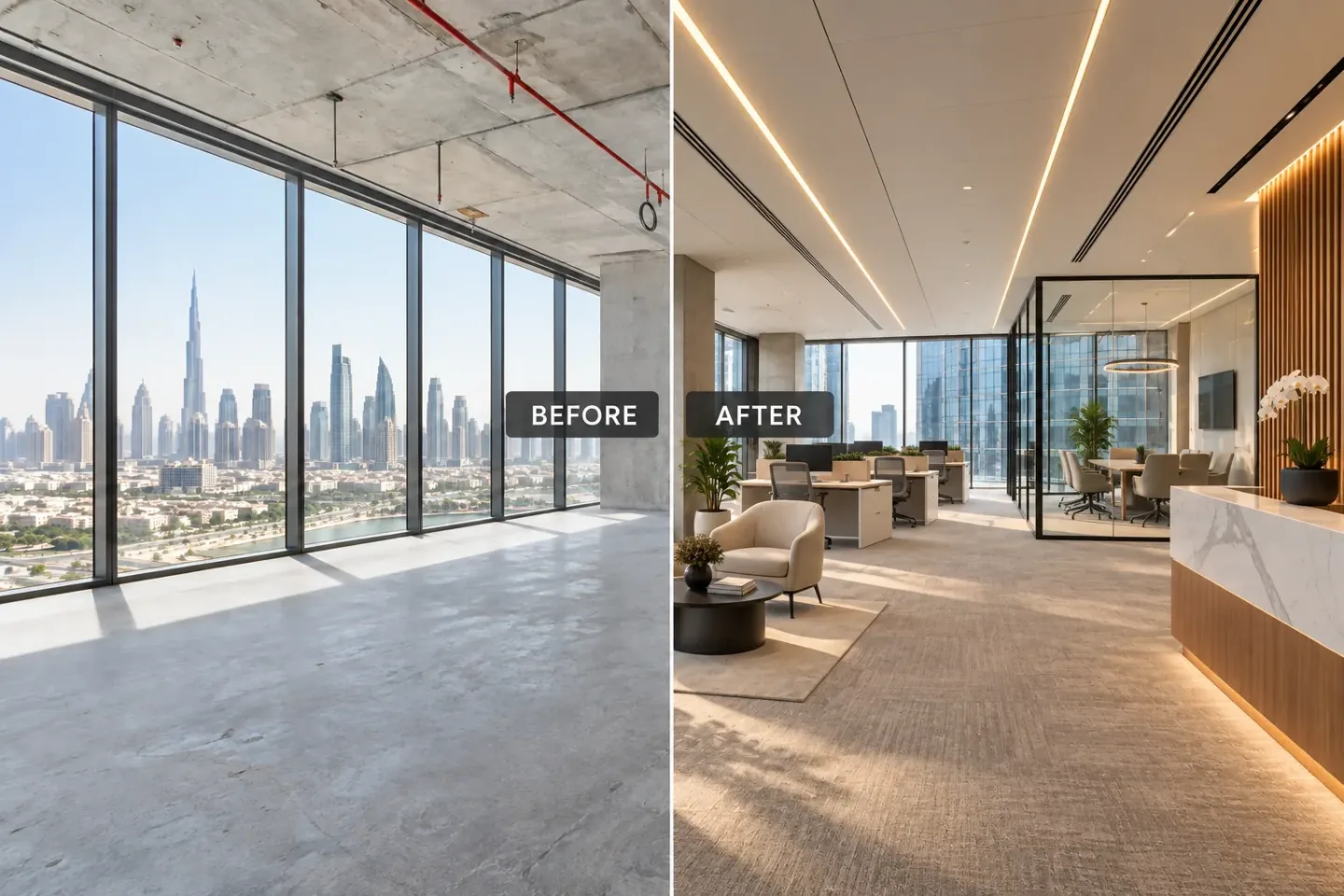
Workplace interior reference for the design review.
A client fit-out site review visit should help you understand a particular part of the work and make the next decision with better information. It is different from a pre-contract survey, a specialist inspection or the formal completion process. Walking through an active site without a clear purpose can leave you with impressions but no reliable account of what requires action.
For a Dubai investor or operator, the most useful approach is to agree what can be reviewed, who needs to attend and how comments will reach the project record. This guide explains that preparation in practical terms. It does not provide site-safety instructions or replace the arrangements set by the team responsible for the works. Follow their access requirements and keep technical acceptance with the appropriate specialists.
Jump to a section 13 topics
Set a purpose that can be answered on site
A useful visit begins with a specific question. You may need to see a representative finish in the room, understand the proportions of a constructed partition or review how an agreed counter relates to an entrance. Those purposes require different attendees and a different stage of work. A general request to see everything can produce an interesting walk without resolving a decision.
Tell the project team what you want to review before the appointment. Ask which items will be sufficiently complete to examine and which remain dependent on later work. The interior design consultant can help distinguish a visual preference from a technical question requiring another specialist. A short purpose statement makes it easier to prepare the right drawings, samples and people.
Arrange access through the person controlling the works
An active construction site is a controlled workplace. Arrange the visit with the responsible project contact, who can confirm whether the proposed time and route are suitable. Do not treat ownership of the premises as a practical reason to walk into an active work area without coordination. Site activities and access conditions can change during the day.
Ask for the visit arrangements in advance, including the meeting point, expected duration and any instructions the responsible team requires you to follow. If the proposed review cannot take place safely while a particular task is underway, reschedule or discuss an alternative way to examine the decision. The purpose is to obtain useful information without interrupting work or creating an avoidable conflict.
Choose attendees who can make the relevant decision
Invite the people whose input is needed for the agreed review. A client representative may be able to accept a visible finish, while an operator needs to comment on how a counter supports a task. Technical acceptance belongs to the appropriately qualified parties. A larger group is not automatically a more effective review team.
Confirm who has authority to give the client's direction and who is attending to advise. If an investor and operator have different priorities, identify the decision route before the visit. Otherwise the contractor may hear several conflicting instructions in the same room. Clients comparing fit out companies in Dubai can ask how site reviews are organised and how a clear client decision reaches the project record.
Review the current information before walking the space
Ask which drawing or schedule revision will be used for the review. Read the relevant pages beforehand if possible, noting the locations and questions you want to discuss. A plan does not need to be memorised, but understanding the intended arrangement makes the site conversation more focused.
Bring unresolved questions to the project contact rather than assuming an older drawing is still authoritative. If a change has been accepted since your last visit, ask where it appears in the current information. The review should compare installed work with an identifiable basis. A debate between different screenshots can consume the appointment without establishing what the contractor was actually instructed to build.
Understand what the construction stage allows you to see
A room before finishes can look smaller, darker or less composed than the intended interior. Temporary protection, unfinished edges and incomplete lighting affect perception. Ask the team to explain the stage and the remaining layers before deciding that an element is wrong. Equally, an attractive finished surface does not prove that concealed work has been properly completed.
Use the visit for questions appropriate to the stage. Proportion, location and access may be easier to understand once partitions are in place, while colour and surface quality may need a representative finished area. The relevant specialists should provide their own inspection and test evidence. A client walk is useful, but it does not replace technical review or certify hidden construction.
Use a representative area to discuss repeated details
Where the same joinery, finish or room arrangement will be repeated, ask whether a representative area can be reviewed before the remaining work proceeds. Identify precisely what the review covers. It might concern a visible junction, the operation of a drawer or the relationship between a wall finish and a door.
Record the accepted reference and any comments. Do not assume that viewing a small material sample approves every aspect of the installed assembly. If performance or specialist suitability is involved, the responsible provider must address it. Joinery fit out companies in Dubai should be able to connect accepted drawings and samples with the item being inspected, so the client can understand the difference between the agreed detail and a new preference.
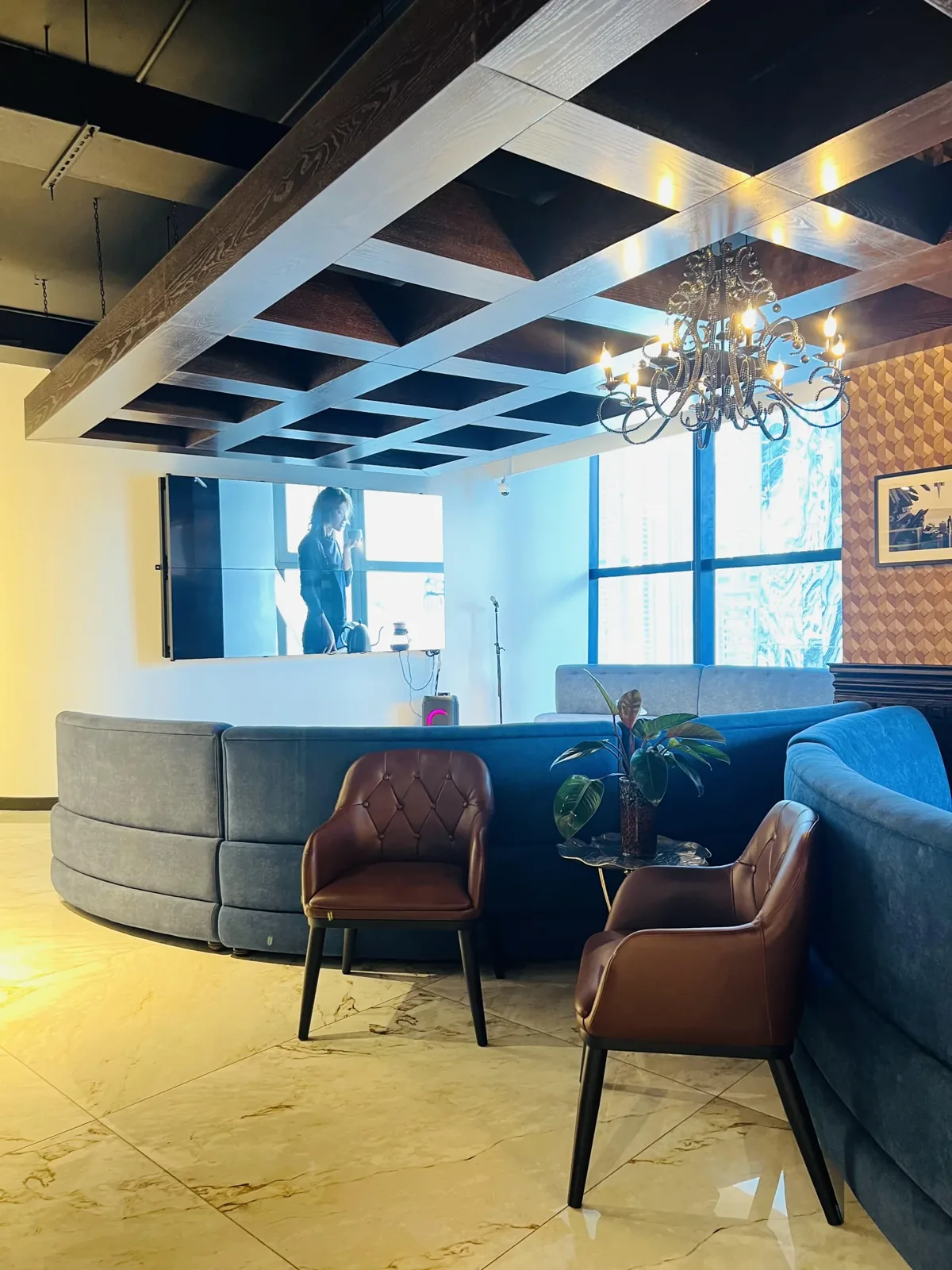
Test everyday use without interfering with active work
Ask the operator to describe the intended task in a room that is ready for the agreed review. In an office, this may be arriving with a visitor or using a meeting setting. In a retail space, it may be replenishing a display. The project team should decide which demonstrations or movements are appropriate at the current stage.
Do not move tools, remove protection or operate equipment independently to simulate use. Where a task cannot yet be demonstrated, identify the later review or specialist demonstration needed. The client can still ask a productive question: what information confirms that the intended activity fits, and when will the actual operation be checked? This keeps the discussion practical without turning a progress visit into an improvised test.
Separate a defect, a question and a proposed change
Different observations need different responses. A visible departure from accepted information may require correction. A concern about an unfinished area may need explanation or a later review. A request for a different arrangement may be a scope change. Recording all three as one general complaint makes it harder to decide the next step.
Ask the project contact to classify the observation with you and identify the information needed. If the client wants a change, request an explanation of cost, programme and coordination effects before directing work. An interior fit-out contractor should have an understandable route for this review. A site conversation can start a decision, but it should not leave trades working from competing informal instructions.
Keep commercial decisions out of rushed corridor conversations
A proposed alteration may affect fabrication, services or work already completed. It is tempting to settle it immediately because everyone is standing in the room. Sometimes the team can explain the issue on site, but a considered proposal may still be needed before the client can make a sound decision.
Record the request and agree who will provide the relevant information. Avoid an apparent verbal approval when you have only agreed to investigate an option. Clients seeking the best fit out companies in Dubai should examine the clarity of this process rather than assuming the fastest verbal answer is the strongest commitment. Useful commercial control gives the client a defined choice and makes the consequence of that choice visible.
Respect occupied areas and confidential material
A refurbishment may take place beside employees, customers or retained business operations. The agreed visit route should account for those occupants and any areas outside the construction appointment. Do not open rooms, cupboards or retained storage simply to understand the building unless the responsible parties have arranged access.
Discuss any sensitive areas with the project contact before inviting additional visitors. An operational clinic, financial workplace or private home may contain information unrelated to the fit-out. The review should focus on the contracted work, with the client controlling access to its own confidential material. This is an organisational precaution, not a substitute for any professional privacy or legal advice the business may require.
Create an action record that somebody can close
For each unresolved item, identify the location, the question or required action, the responsible person and the next step. Include a reference to the relevant drawing or accepted sample where useful. A short, clear description is more valuable than a long list of comments that nobody can connect to a room.
Agree who circulates the record and how corrections will be made if the note does not reflect the discussion. Set realistic response dates around the consequence of the issue. An item affecting fabrication may need a decision before production, while a cosmetic check may belong at a later stage. The action record should support the work sequence rather than act as a separate document that is forgotten after the visit.
Know when another review or specialist is needed
Some questions cannot be answered during a general client walk. Equipment operation, acoustic performance, building-services testing or authority acceptance may require a particular specialist, method or stage. Ask who is responsible and what evidence or demonstration will address the concern. Do not accept a broad assurance as a replacement for a defined technical responsibility.
The project team can connect the issue to the appropriate appointment and programme point. If the question relates to fit-out approvals, identify the actual submission or inspection involved rather than assuming that a site review itself changes the approval status. The client gains more useful control by understanding which decision belongs where than by expecting every answer from one person during one visit.
End with a clear account of what happens next
Before leaving, review the decisions reached and the items still open. Confirm whether any work is waiting for client input and whether a proposed change remains under assessment. Ask when the next useful review should occur and what should be ready by then. This gives the visit a practical conclusion without forcing an artificial acceptance of unfinished items.
CBD Projects LLC can discuss a review approach suited to the actual project, operator and construction stage. Share the people who need to participate, the decisions that matter and any access constraints when preparing your project brief. For a workplace appointment, explore our office fit-out service; broader interior design and fit-out services can be discussed around your premises and scope.
Frequently asked questions
How often should the client visit a fit-out site?
There is no useful universal frequency. Arrange reviews around decisions, representative work and the construction sequence. More frequent unplanned visits do not necessarily provide better control. Agree a schedule with the project contact and allow for changes when site activities or the information available make another time more appropriate.
Can a client bring a colleague or adviser?
Discuss the proposed attendees before the visit so access, supervision and the review purpose can be arranged. Identify who is advising and who can give the client's direction. A relevant adviser can improve a decision, but technical conclusions still need the appropriately qualified party and a clear record.
Does viewing a room mean that we have accepted it?
The meaning of a review should be clear before it takes place and recorded afterwards. A progress walk, sample review and formal acceptance can serve different purposes. Ask the project team to identify exactly what is being reviewed and obtain appropriate professional advice where contractual interpretation is needed.
What if something looks different from the design image?
Start with the current accepted drawings, material references and construction stage. Images may not communicate every dimension or unfinished layer. Ask the team to explain the difference, determine whether it is a departure or a new preference, and agree the information needed before directing a correction or change.
References and scope
References checked on 19 November 2026. Confirm current requirements and product instructions for the actual project; these links do not constitute project approval.
Plan your client project reviews project with one accountable team
Discuss your project scope, review priorities and operator requirements with CBD Projects.
Send Your Project BriefBack to BlogRelated ServiceView Real ProjectsContact CBD Projects