
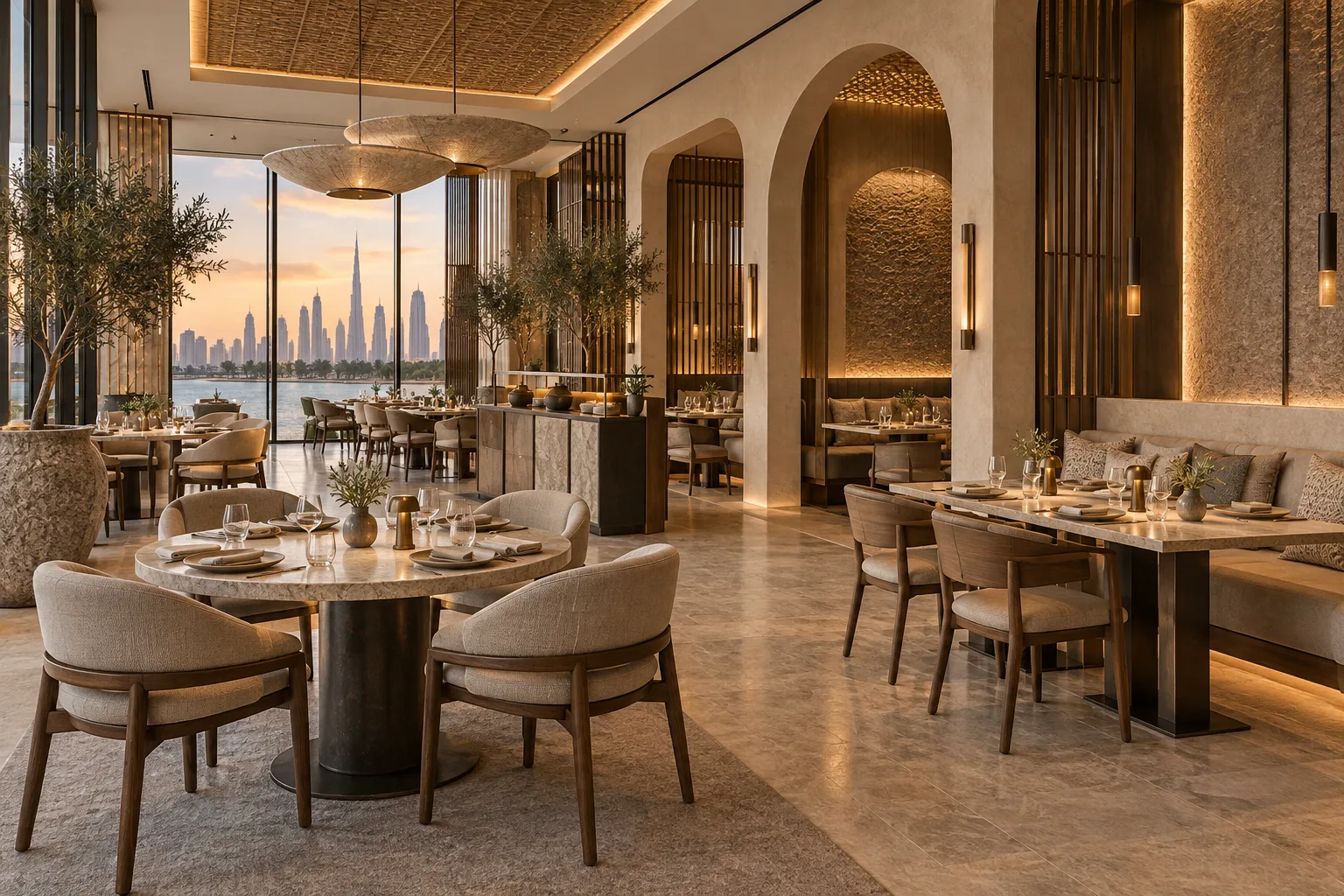
AI-generated illustrative design concept; not a completed CBD Projects project, approved drawing or technical compliance detail.
A fine-dining interior is judged during service, not only in photographs. Guest comfort, staff movement and the delivery of the menu must work together. An interior design firm in Dubai should connect the visual concept to the operator’s service standards before selecting bespoke finishes and furniture.
Define the dining format and service sequence first. Coordinate table settings, staff routes, kitchen handover and procurement so the atmosphere remains workable during a full sitting.
Describe the intended dining format
Ask the operator to explain the menu structure, party sizes, service steps and expected length of a sitting. Identify any tableside activity or specialist equipment. A tasting-menu restaurant and an informal premium brasserie may need different arrangements.
Use these assumptions to test the room rather than copying the table density of a reference image. Keep the operating model visible when evaluating concept layouts.
Review table settings at full scale
Set out the proposed table, chairs and representative place settings in a mock-up where practical. Include staff approach and guest movement in the review. Furniture dimensions and service habits can change the usefulness of an apparently generous plan.
The responsible team should coordinate circulation and accessibility requirements. A premium appearance does not justify obstructed routes or chairs that become difficult to use once every table is occupied.
Keep service support close without dominating the room
Identify where service items, water, cleared items and other operational supplies are handled. Test routes between kitchen handover, dining areas and support stations. Avoid turning a quiet seating corner into an improvised storage location.
Use the restaurant waiter-station guide to detail that interface. The aim is to reduce avoidable crossing and clutter, not to promise a particular staffing or revenue outcome.
Coordinate atmosphere with practical controls
Review lighting scenes with food presentation, menus, cleaning and staff tasks in mind. Consider sound transfer between active service areas and quieter tables. Have specialists assess acoustic and building-services requirements where needed.
Specify accessible controls and maintenance arrangements. Bespoke decorative elements should be checked for cleaning, replacement and compatibility with the surrounding services before they are ordered.
Control bespoke procurement and approval interfaces
Record lead times, samples, mock-ups and installation responsibilities for furniture, lighting and joinery. A commercial fitout company in Dubai should identify how these packages depend on final dimensions and technical coordination.
Confirm the relevant food-establishment layout and building permissions with the responsible team. Rehearse a full service sequence before handover, while keeping construction acceptance separate from permission to begin trading.
Frequently asked questions
Does fine dining always require fewer tables?
The appropriate density follows the service model, furniture and applicable requirements; there is no universal rule.
When should bespoke furniture be approved?
After coordinated layouts and practical sample reviews, with procurement dates built into the programme.
What should a service rehearsal include?
Guest arrival, seating, meal delivery, clearing, staff support and departure.
References and scope
References checked on 30 October 2026. Confirm current requirements and product instructions for the actual project; these links do not constitute project approval.
Plan your retail and hospitality fit-out project with one accountable team
Share your dining concept, service sequence and furniture brief with CBD Projects for a coordinated fine-dining fit-out review.
Send Your Project BriefBack to BlogRelated ServiceView Real ProjectsContact CBD Projects