
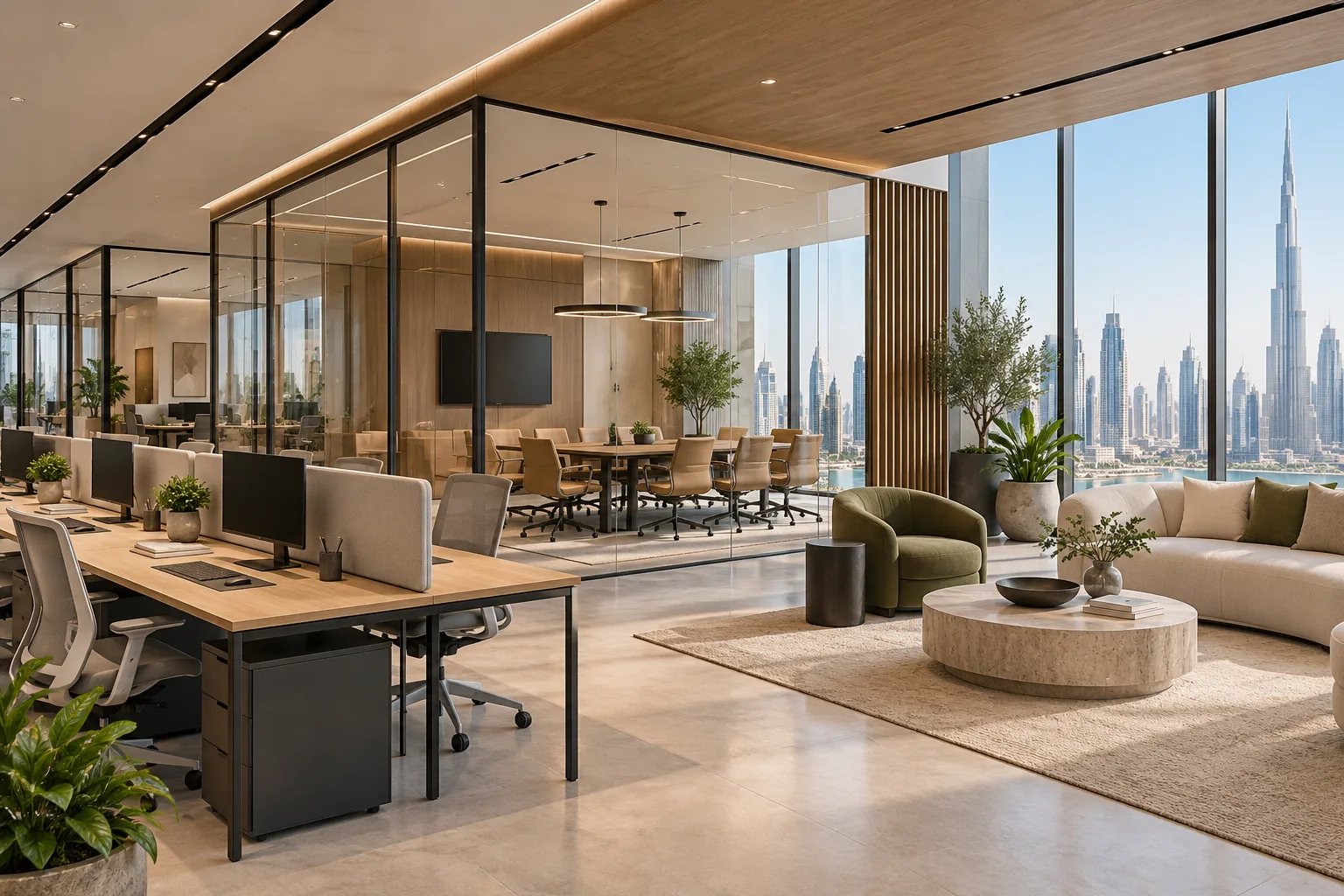
AI-generated illustrative design concept; not a completed CBD Projects project, approved drawing or technical compliance detail.
An enterprise managed suite differs from a few desks in an open coworking space. Corporate occupiers may need private identity, access and technology while relying on shared services. An office interior design company in Dubai should define those boundaries with the operator and tenant before pricing adaptations.
Specify the private suite, shared facilities and operator responsibilities together. Confirm how technology, branding and future alterations are managed so that the promise of flexibility has a practical basis.
Use the market signal as context
Cushman & Wakefield Core’s 2026 UAE flexible-office research describes growing occupier use of flexible workspace and the importance of landlord-operator relationships. This supports examining managed suites, but does not prove suitability for every company.
Start with the tenant’s confidentiality, attendance, meeting and client requirements. Compare the actual service arrangement rather than assuming all managed-office offers are equivalent.
Define the private and shared boundary
List which rooms, reception functions, amenities and support services are exclusive and which are shared. Record access arrangements and the consequences of simultaneous use by other tenants.
The serviced-versus-own-office guide supports the wider occupancy decision. This brief focuses on the private enterprise suite once the managed model is being considered.
Coordinate technology and security ownership
Ask the tenant’s IT team and operator to define networks, equipment, controls and maintenance responsibilities. Identify interfaces with shared building or operator systems.
Do not assume private doors provide the information or technical separation the tenant needs. Qualified specialists should establish the appropriate solution and acceptance evidence for the actual employer requirements.
Make adaptability specific
Describe which partitions, furniture and services can change, who approves changes and what interruption is expected. Record reinstatement and ownership questions for the commercial advisers.
A commercial interior design company in Dubai should show feasible alternative arrangements where flexibility is important. A general claim that the suite can grow does not establish spare capacity or the availability of neighbouring space.
Accept the suite and shared interfaces together
Tender tenant-specific works against the operator’s standards and building conditions. Identify who coordinates approvals and which services must remain live during alterations.
Before handover, test a representative working day, visitor arrival and meeting booking with the operator and tenant. Confirm both the physical interior and the service interfaces rather than accepting the suite in isolation.
Frequently asked questions
Is an enterprise suite the same as open coworking?
No. Private identity, technology and access requirements may create a different fit-out brief.
Does flexible mean any future alteration is easy?
No. Define the actual changes, capacity, permissions and interruption involved.
Who should attend acceptance?
The tenant, operator, facilities and relevant technology specialists.
References and scope
References checked on 1 November 2026. Confirm current requirements and product instructions for the actual project; these links do not constitute project approval.
Plan your office fit-out project with one accountable team
Send CBD Projects your managed-suite offer, tenant requirements and operator standards for a coordinated private-office fit-out assessment.
Send Your Project BriefBack to BlogRelated ServiceView Real ProjectsContact CBD Projects