
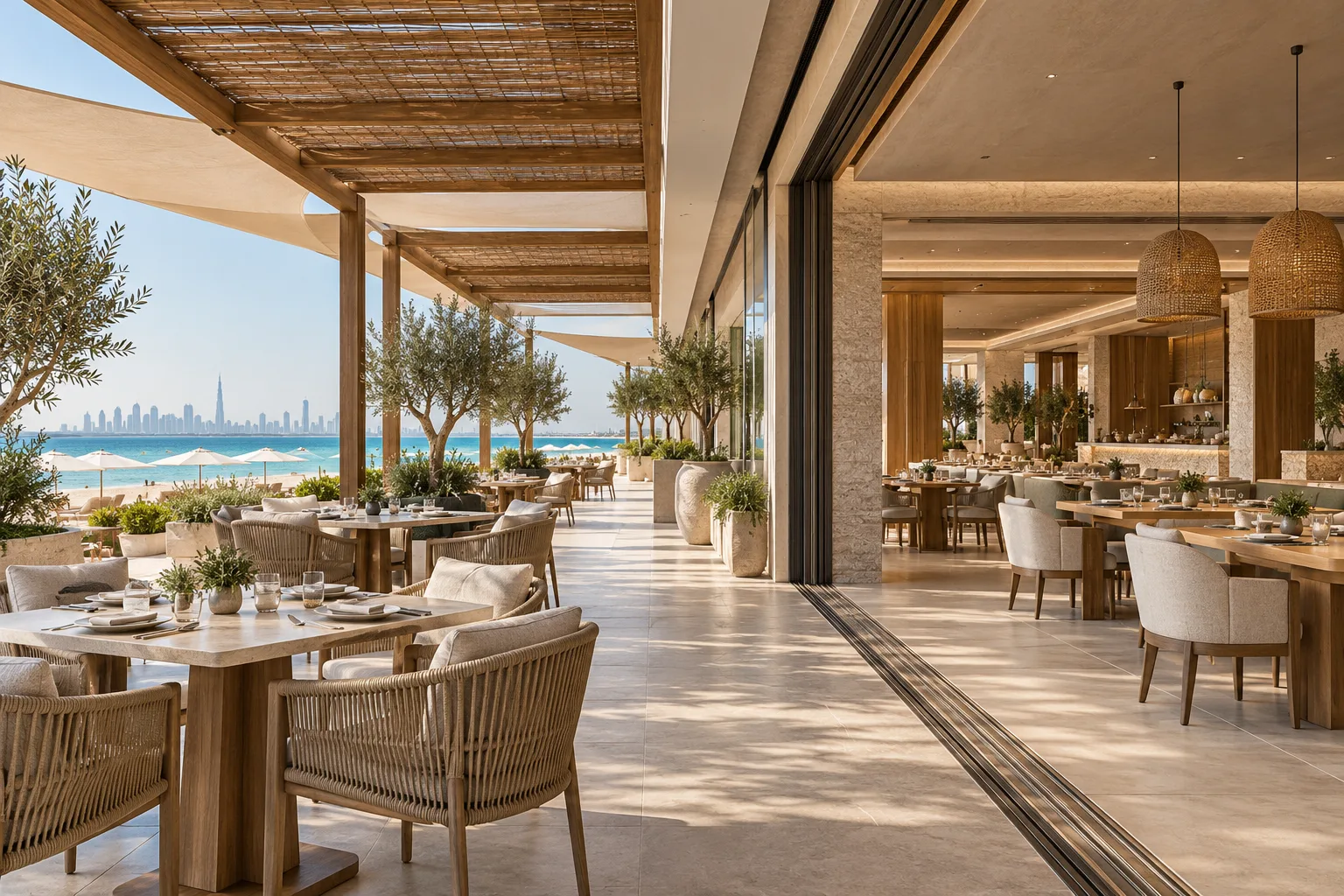
AI-generated illustrative design concept; not a completed CBD Projects project, approved drawing or technical compliance detail.
A beach-club restaurant must handle dining operations and the practical effects of an exposed leisure setting. Materials, guest transitions and service routes deserve more attention than a coastal colour palette. An interior designer in Dubai should build the brief around the actual premises and operating model.
Map indoor and outdoor activities, confirm the permitted scope and select systems for their real exposure and maintenance conditions. Do not assume every waterfront unit has the same approval route or operating permissions.
Define the permitted leisure and dining scope
List the restaurant areas and any connected leisure activities. Confirm landowner, building and activity conditions with the responsible advisers. Identify what belongs to the restaurant contract and what belongs to other operators.
A venue description such as beach club can cover several distinct functions. The design and approval brief should name them precisely instead of treating the whole property as ordinary dining space.
Plan guest transitions
Trace arrival, movement between indoor and outdoor areas, seating and departure. Review the belongings and cleaning demands created by the actual leisure use. Ask the responsible designers to establish applicable access and surface requirements.
Avoid assuming that an indoor furniture layout remains workable outside. Shade, exposure and the operating timetable may change which areas are usable at different times.
Specify materials against actual exposure
Ask suppliers for suitability and maintenance information relevant to the site’s sun, moisture and coastal exposure. Have the technical team review fixings, finishes and external equipment interfaces.
A commercial interior design company in Dubai should compare lifecycle and replacement considerations, not only initial appearance. A product labelled outdoor should still be checked against the actual installation conditions.
Coordinate kitchen and dispersed service
Define where food is prepared and how it reaches the dining areas. Review replenishment, clearing and staff travel with the operator. Include the effect of weather and changes in occupied zones on the service pattern.
The restaurant outdoor-terrace guide covers related details. The beach-club brief must also reconcile the wider leisure interfaces and contract boundaries.
Tender maintenance and operating interfaces
Include equipment access, cleaning provisions, replacement routes and specialist external works in the scope. Confirm applicable food, building and other permissions for the actual property.
Before handover, rehearse a representative indoor-outdoor service with staff. Keep outstanding specialist checks visible; a finished guest-facing area does not prove that all connected facilities are ready to operate.
Frequently asked questions
Does waterfront location determine the approval route?
No. Verify the actual property, jurisdiction and proposed activities.
Are all outdoor materials suitable for coastal use?
No. Check supplier information and the actual exposure and installation conditions.
What makes the service plan different?
Dispersed seating, changing occupied areas and indoor-outdoor transitions can affect staff movement and support needs.
References and scope
References checked on 1 November 2026. Confirm current requirements and product instructions for the actual project; these links do not constitute project approval.
Plan your retail and hospitality fit-out project with one accountable team
Send CBD Projects your beach-club operating brief, site conditions and dining plans for a coordinated interior and external-interface review.
Send Your Project BriefBack to BlogRelated ServiceView Real ProjectsContact CBD Projects