
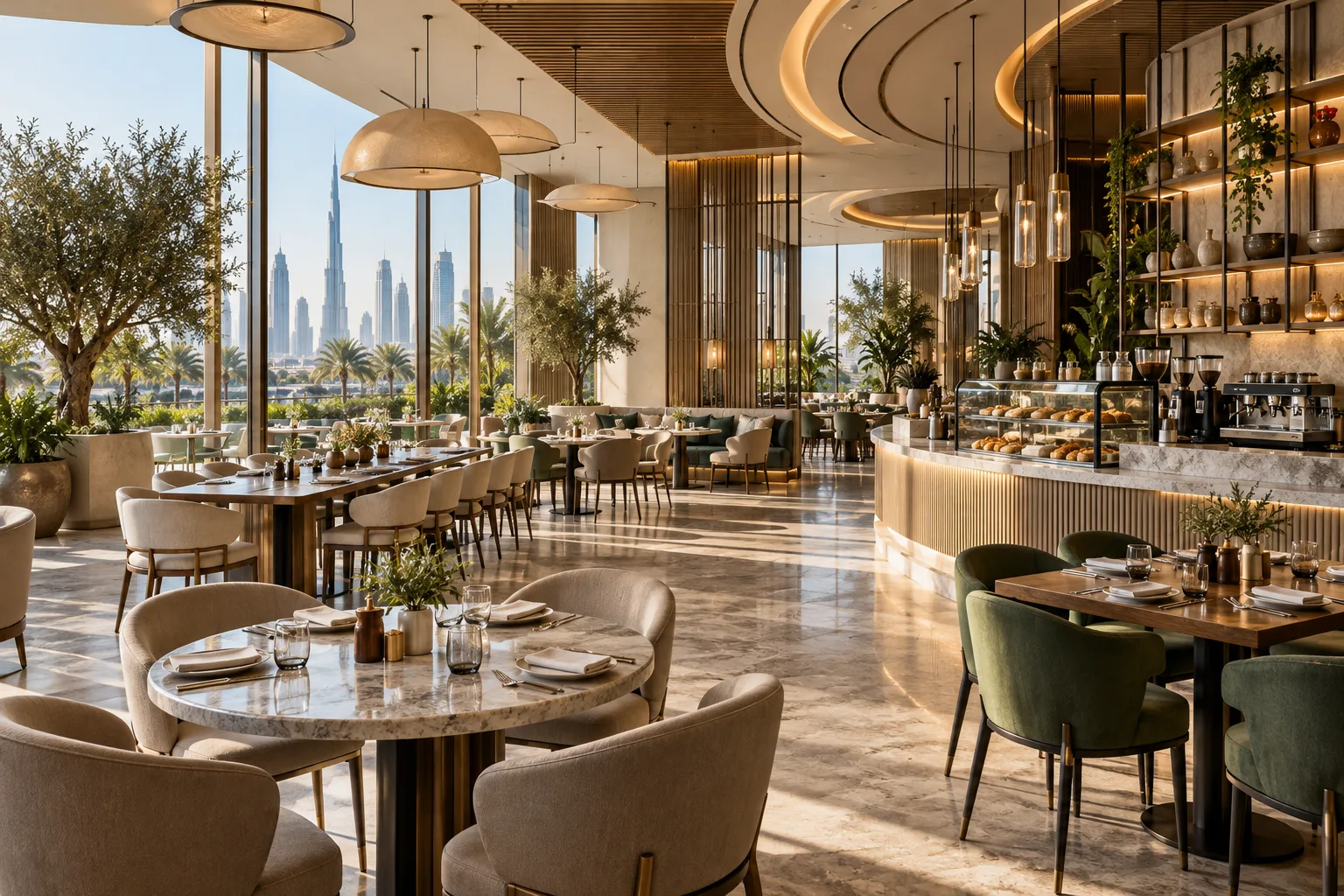
AI-generated illustrative design concept; not a completed CBD Projects project, approved drawing or technical compliance detail.
An all-day restaurant may serve coffee and breakfast, business lunches and a different dinner experience from the same premises. The challenge is not simply choosing a flexible decorative style. Commercial interior design in Dubai should coordinate how the operation changes between those periods.
Describe each service period separately, then test the transition between them. Coordinate dining layouts, kitchen demand, storage and controls so staff can change the setting without disrupting guests.
Write a brief for each daypart
Record menu, service style, table mix, expected arrivals and staffing for breakfast, lunch and dinner. Identify equipment or displays used only during one period. Avoid assuming the busiest service determines every requirement.
For an illustrative café-to-dinner concept, the morning coffee queue may conflict with evening host seating. Test both arrangements before fixing the counter and entrance design.
Plan the reset as a real task
Identify what moves, what is cleaned and what must be stored between services. Provide a route and destination for those items rather than relying on staff to hide them behind a screen.
A commercial fitout company in Dubai should understand whether the reset happens during a closure or while part of the restaurant remains occupied. That decision affects furniture, storage and the practicality of the proposed concept.
Check shared kitchen and beverage demand
Have the kitchen team review the equipment and production sequence across the full day. Include overlap, washing and replenishment rather than evaluating each menu in isolation.
Use the café equipment coordination guide where beverage equipment drives the front counter. The morning setup should not compromise the dinner service or require unplanned utility changes.
Use controls that staff can operate consistently
Coordinate lighting scenes, shading, sound and display changes with the intended atmosphere for each period. Agree simple operating instructions and responsibilities. Sophisticated controls are useful only when the team can apply them reliably.
Review appearance under daylight and evening conditions using the actual finishes where practical. The designer should distinguish a visual preference from any performance requirement that needs specialist assessment.
Trial transitions before final acceptance
Walk through a representative change from breakfast to lunch and from daytime to evening service. Check storage, furniture handling, cleaning access and the time-sensitive tasks staff must perform.
Record the approved arrangements in the operating handover. If the operator later changes a menu or adds a service period, review the affected kitchen, dining and service interfaces instead of assuming the original flexible concept covers every change.
Frequently asked questions
Can one layout serve all dayparts?
Potentially, if the different service models and transitions have been tested together.
Is flexible furniture enough?
No. Storage, kitchen demand, service routes and staff operating tasks also need coordination.
What is the most useful design test?
A realistic service-change walkthrough showing what moves, where it goes and who performs each task.
Plan your retail and hospitality fit-out project with one accountable team
Share your daypart menus, intended service styles and premises plan with CBD Projects for an all-day dining fit-out review.
Send Your Project BriefBack to BlogRelated ServiceView Real ProjectsContact CBD Projects