
A retailer introducing several kiosks needs to decide which parts are genuinely repeatable. The same outer appearance can hide different display inserts, payment devices, access panels and venue connections. If each unit is fabricated from a separate interpretation of a concept image, later merchandising changes and repairs can become individual redesign exercises.
CBD Projects can discuss a modular retail kiosk programme for identified UAE venues. The construction brief focuses on component families, trial assembly, controlled local adaptations and the records needed to maintain the installed units. Agreed design details, shop drawings and application inputs are prepared in house. This programme appointment develops the repeated product-and-display assembly; our individual kiosk fit-out service addresses the complete installation at one premises. Each proposed venue, activity and delivery arrangement still needs assessment before scope is confirmed. No pre-approved universal kiosk or completed retail chain is implied.
Define the kiosk family before counting units
Describe the merchandise and selling tasks that the proposed units share. List the formats being considered and the differences between them. A jewellery display, product demonstration point and collection counter may use the same brand finishes while requiring different construction inside the visible envelope.
Agree which format is the starting reference and who can accept changes to it. Identify the venues already secured and those that are still options. The initial deliverable should be an understandable family of assemblies rather than an unexplained quantity of identical kiosks. This allows the retailer to compare the cost of genuine repetition with the work needed for each distinct selling arrangement.
Translate merchandise into measurable display inserts
Use representative products and their actual presentation requirements to develop the display brief. Record the trays, supports, hooks or enclosures proposed for each collection. The fabricator needs information about the object and its arrangement, including any specialist support or security input, rather than a mood image alone.
Identify which inserts could be exchanged when merchandise changes. Define their intended relationship with the permanent carcass, exposed edges and lighting. A removable tray is only useful when staff can identify and handle it through an agreed process. The operator should accept the merchandising arrangement before it becomes the repeated reference for several units.
Separate permanent structure from replaceable layers
Discuss the intended life of the base assembly, display components and external finishes. Frequent collection changes may justify a different approach to a surface that is expected to remain undisturbed. State the proposed removable interfaces explicitly instead of describing the whole kiosk as flexible.
Ask the responsible fabricators and specialists to establish suitable joints, supports and fixings. The visible junction should be reviewed alongside the removal sequence and the finish it leaves behind. No unlimited reconfiguration or relocation capability is promised. The client needs to know which parts can be changed within the accepted design and which alterations require further construction or technical review.
Make the first assembly an information test
Agree a representative trial and identify what it must establish before repetition. This could involve fitting a display insert, opening a service panel, checking drawer operation or examining the junction between supplied components. Decide what equipment and merchandise are needed for a meaningful review.
Record the observations and the accepted revision. A finish sample or photograph of the trial should not silently replace a dimensional or technical decision that remains outstanding. If the assembly is reviewed without its final device or security component, retain that condition in the acceptance record. Subsequent fabrication should follow the resolved information rather than repeat an attractive but incomplete mock-up.
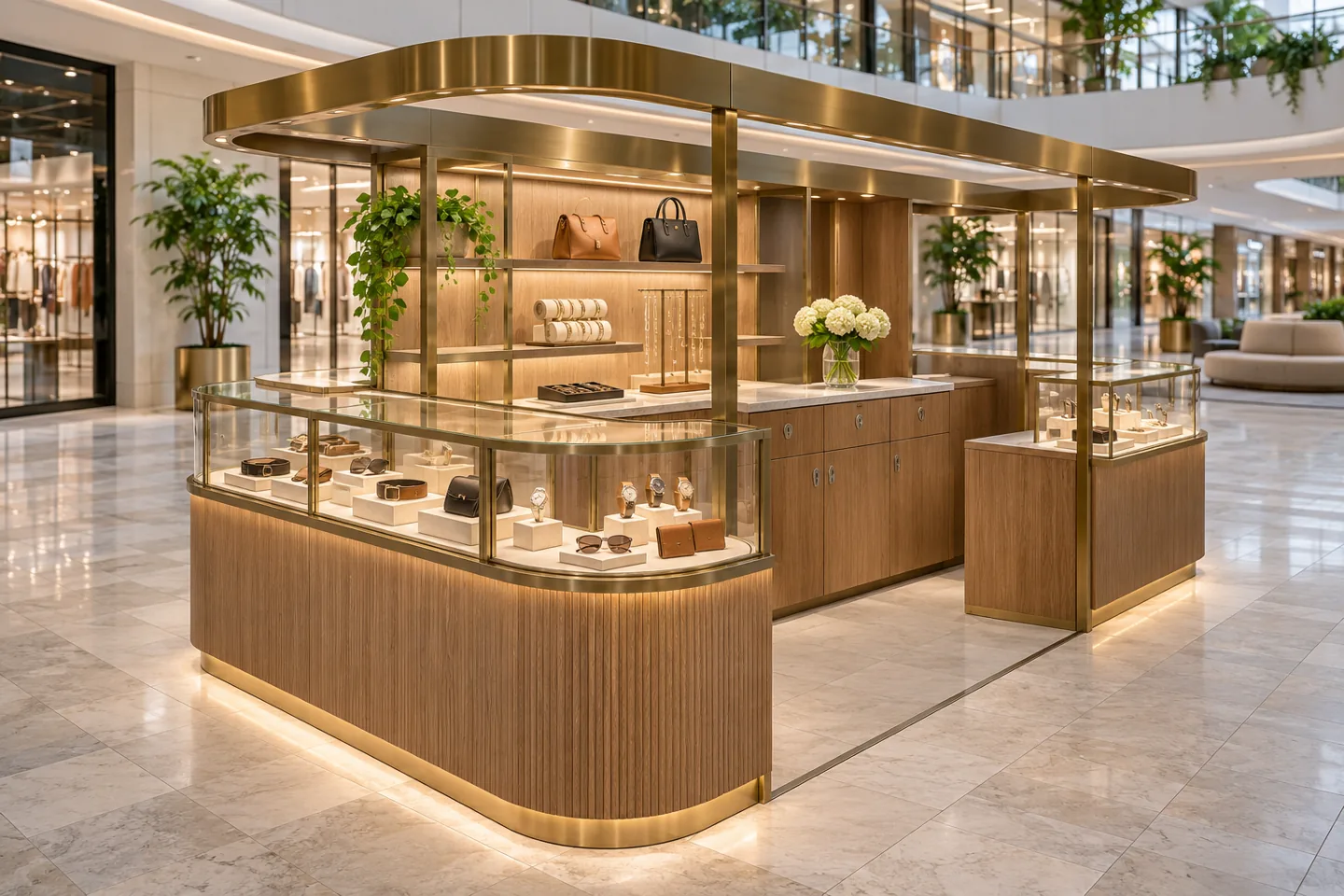
Use component references that survive installation
Assign understandable references to the repeatable parts, connecting them to drawings, material information and the unit in which they are installed. Include items that may be ordered later, such as a damaged lower front or a changed display insert. The system should be usable by the retailer and fabricator without depending on one person's memory.
Keep the installed reference separate from early design options. When two visually similar panels have different construction or dimensions, preserve that difference in the schedule. This does not require exposing a private procurement database to customers. It requires a close-out record capable of identifying the actual replacement part when the kiosk is already trading.
Review everyday access with a fully populated kiosk
Place the proposed products, packaging, payment equipment and ordinary staff items in the reviewed arrangement. Check how a drawer or access panel operates when its neighbouring display is loaded. An empty trial assembly can conceal conflicts that appear as soon as the operator begins normal selling tasks.
Include replenishment and the return of items to storage. The operator defines its staffing and security procedures; the interior package coordinates the physical provisions accepted for those tasks. Identify anything stored outside the kiosk and confirm that arrangement independently. Unsecured off-site storage should not be used to justify a repeated unit that cannot hold the inventory assumed in its operating brief.
Coordinate lighting as a serviceable display component
Review the lighting proposal against the actual products and display inserts. Discuss reflections, unwanted shadow and the operator's intended visual emphasis with the relevant designers and suppliers. A decorative light line on a rendering does not establish access to its driver, connectors or replaceable parts.
Show the accepted service routes and maintenance openings in the fabrication information. Ask the responsible technical parties to establish the relevant connection and testing duties. If an insert changes, review its relationship with the light source before treating the swap as purely decorative. Keep product appearance review separate from electrical acceptance and any specialist requirement applying to the installation.
Give payment and security devices defined interfaces
Request the actual dimensions and installation information for the retailer's selected devices. Identify what staff must reach, which components need service access and which are managed by appointed suppliers. Keep device details current when procurement changes the model or mounting arrangement.
Coordinate the agreed physical supports and cable routes with the cabinetry. The fit-out team should not invent security performance or payment-system compatibility. State the supplier's installation and verification responsibilities separately. A kiosk can be complete as joinery while still requiring device setup, and the programme should make that remaining work visible before the retailer assumes the unit is ready to trade.
Bring your brief into focus
Share your merchandise, proposed kiosk formats and UAE venue list to discuss a repeatable retail assembly programme with CBD Projects.
Send your project briefSurvey the venue exceptions before manufacturing the batch
For each proposed position, obtain the accepted envelope, available connection information and current venue instructions. Check the actual conditions affecting the unit, including adjacent finishes and installation access. A central brand approval should not be treated as a measured site survey.
Compare these findings with the selected kiosk family. Identify an adaptation by unit and explain whether it changes a standard component or introduces a local part. The client should see that consequence before batch fabrication proceeds. Preserve useful repetition without concealing the fact that a column, connection position or receiving restriction may require a different assembly at one venue.
Keep trading acceptance distinct from a product trial
Identify the application and professional responsibilities for the actual activity and premises. A retail assembly trial addresses agreed construction questions; it does not transfer permission between venues. ADDED's business-setup guidance identifies potential additional approvals as dependent on activity and location, including for an identified Abu Dhabi business premises.
Agree the drawings and inputs CBD prepares in house and the specialist information supplied by other appointed parties. Keep external decisions and operator licensing obligations visible in the programme. A food-related kiosk requires its own defined operating and specialist brief; no non-food display specification or added sink is presented as universal food-premises acceptance.
Confirm packing and assembly through the receiving route
Develop the component breakdown with the proposed handling and installation arrangements. Check how protected parts reach the kiosk position and where they can be unpacked. The final assembled footprint does not establish the size of a deliverable module or the space required to join it.
Mark destination units and component references so similar parts are not confused during a multi-venue dispatch. Record who receives, checks and stores them before installation. Discuss the treatment of visible joints and the protection removed only after relevant work is complete. These details connect off-site fabrication to an achievable local installation rather than describing delivery as one undefined overnight event.
Control a collection change through its affected parts
When the retailer proposes a new product range, compare it with the accepted display basis. Identify the inserts, supports, lighting relationship and storage affected. A new collection may need only a removable component, but that should be established through the actual merchandise rather than assumed from its commercial category.
Distinguish changes intended for all units from local exceptions. Obtain the relevant client and supplier decisions before production. Keep the remaining accepted components identifiable so the update does not become an undocumented new kiosk version. The programme record should allow the retailer to understand which units can receive a common replacement and which need further review.
Agree a practical spare-parts package
Discuss which exposed components are likely to need replacement and which product references the retailer wishes to retain. The decision should reflect the actual construction, procurement availability and operator's maintenance arrangements. Avoid claiming that every bespoke finish can be matched indefinitely.
Identify what is supplied as spare material, what is merely documented for possible later ordering and where supplied items will be stored. Keep dimensions and finish references with the parts, and record any limitations stated by their suppliers. A realistic replacement strategy is more useful than an open-ended promise of maintenance support without an agreed scope or stock responsibility.
Price the standard assembly and its exceptions separately
Ask the proposal to distinguish design development and the trial from repeat fabrication, unit-specific parts and local installation. Make signage, specialist devices, technical connections and venue charges identifiable. A low price per kiosk may describe only the central joinery assembly while omitting work needed to place it into service.
Compare the consequences of different materials and removable interfaces, including later replacement effort. Confirm the quantity basis and information that could change it before ordering. No invented production saving, national discount or return on retail investment is offered. The quotation should explain which work is shared and which remains dependent on the actual venues and their accepted conditions.
Inspect the installed unit against its accepted revision
Review finishes, display operation, doors, drawers and agreed removable components at each venue. Reconcile the installation with the relevant unit drawing and recorded local adaptations. Any specialist connections or devices require the checks and demonstrations assigned to their responsible suppliers.
Separate construction defects from merchandising setup and operator preparations. Give outstanding items an identifiable owner and status. Acceptance of one representative assembly does not close observations at every installed unit. The final record should show what was actually supplied at that venue, including any deviation that matters to replacement parts, maintenance access or a later collection change.
Start with the product range and the venue list
Share the proposed merchandise, selling tasks, brand references and intended kiosk formats. Include the confirmed positions, available venue information and known devices or specialist suppliers. Explain whether the immediate need is a new programme, a controlled extension of an existing unit or a repeatable display refresh.
CBD Projects can review a suitable development and fabrication scope around that evidence. In-house details, shop drawings, agreed application inputs and installation coordination can be defined as clear deliverables. Proposed UAE locations and local appointments are assessed before commitment. The consultation should establish what can responsibly be repeated and what must be resolved locally, without guaranteeing venue acceptance or a universal opening date.
Frequently asked questions
Does modular construction mean the kiosk fits any venue?
No. Repeatable components still need assessment against the actual position, activity, services and venue instructions. Local adaptations and permissions remain identifiable for each unit.
Can existing kiosks join a new component programme?
They can be surveyed for condition, dimensions and compatibility with the proposed parts. An earlier drawing or similar appearance does not establish that an existing carcass accepts a new insert.
Is a trial assembly a complete approval?
Its record should state exactly what was reviewed and what remains conditional. Technical acceptance, venue decisions and operator licensing retain their own responsible parties and evidence.
Which information supports the first discussion?
Provide merchandise examples, selling tasks, kiosk formats and the venue list, together with available dimensions and device information. These help define the trial, repeat components and local investigation needed.