
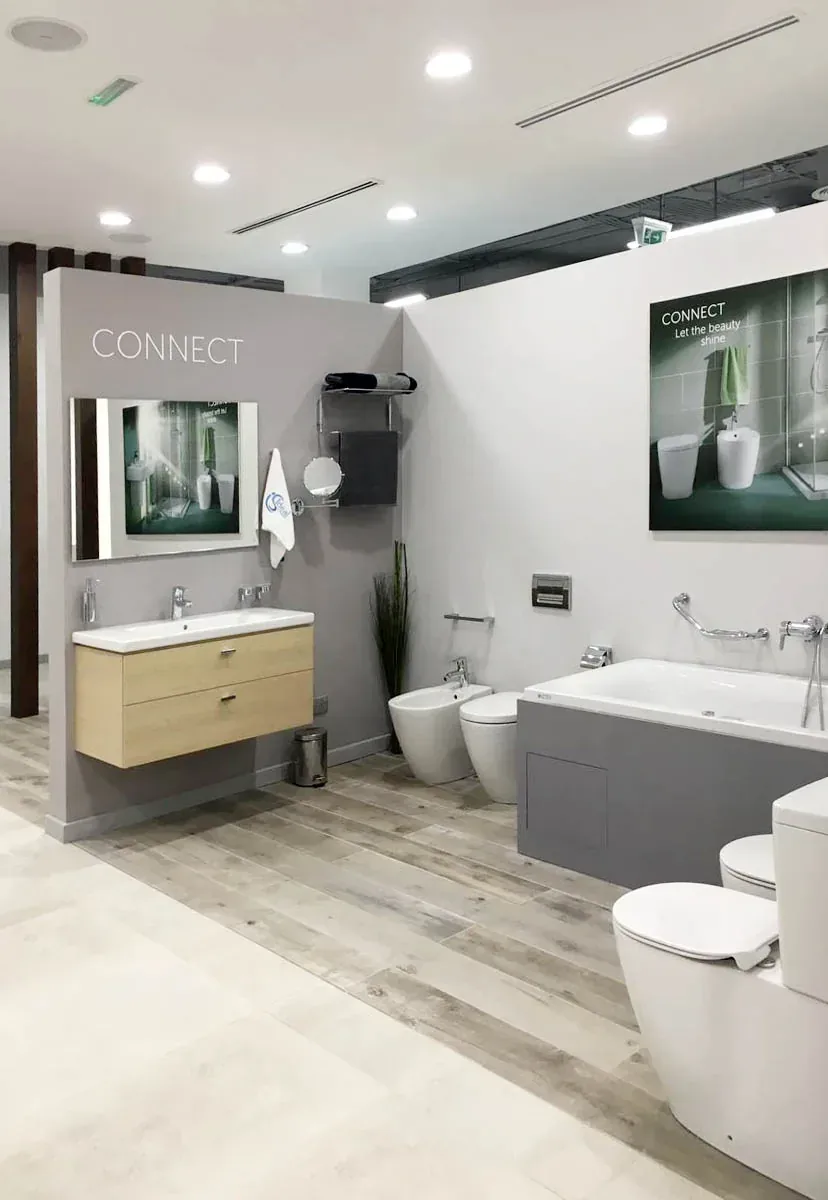
Interior reference for retail product demonstration areas.
A customer wants to try a vacuum cleaner before buying it. The salesperson brings it from a display, but the nearest clear floor is the route to checkout. Its accessories are in another cupboard and the demonstration model needs attention. The shop has product display and consultation seating, yet no complete demonstration arrangement. A useful retail product demonstration area connects the product, the person trying it, the people watching and the staff task of restoring readiness. This guide concerns that live-use setting. It differs from a consultation table where a customer mainly compares samples, drawings or quotations. A retail interior design company in Dubai should establish which experience the operator intends to provide before allocating a feature platform or purchasing specialist equipment.
Jump to a section 13 topics
Define what the customer will actually do
List the products selected for demonstration and the action each demonstration supports. Does a customer watch a staff member, operate selected controls or compare two products through a defined task? The operator and product supplier should establish appropriate methods, restrictions and staff competence. The designer needs their physical implications rather than improvise a procedure from a marketing photograph.
Use a representative purchase question. A customer may want to understand weight, visibility, movement or how a particular accessory works. Those questions create different settings. A countertop can support a small handheld item but not a product that moves over a floor. Record the intended task and the expected result of the explanation. The design can then support a truthful customer decision without promising performance or suitability beyond the supplier's evidence and the retailer's authorised advice.
Separate display status from demonstration readiness
A sample can look complete on a shelf while being unavailable for use. Identify the operator's readiness checks and the person responsible for them. The product supplier should provide relevant instructions and support information. The fit-out should make the agreed status easy for staff to identify without relying on someone remembering which display item has a missing component.
Distinguish ready samples, items awaiting attention and saleable stock through the retailer's procedures. Give each an appropriate destination. For a hypothetical technology product, the demonstration may depend on an approved configuration or test account, while a boxed retail item remains untouched. The fixture schedule should identify associated accessories and support items, not only the principal object. This prevents an attractive display becoming a collection staff must assemble from several unrelated places whenever a customer asks for a trial.
Draw the active footprint and the audience together
Place the product in its working state, then show the customer, salesperson and likely observers. Include opened parts, accessories and the movement described by the supplier. The responsible designers should assess relevant circulation, accessibility and technical requirements. A product's stored dimensions do not establish the footprint of an ordinary demonstration.
Compare an edge location with an island or dedicated bay. An island may draw attention from several directions but expose the demonstration to passing traffic. An edge bay can offer a clearer boundary while limiting the number of useful viewing positions. Test both with an occupied shop plan. If observers must stand in a route, the issue is not solved by drawing a decorative circle around the demonstrator. The layout needs a credible place for the audience as well as the product.
Choose between an open demonstration and a booked setting
Ask how often the activity occurs, how long it occupies the area and how much staff attention it needs. A short spontaneous demonstration differs from an appointment requiring setup and a named specialist. The retailer should define the service it can staff consistently rather than imply unrestricted trials through the presence of an impressive demonstration stage.
For an illustrative store, an open bay might suit quick comparisons while a quieter room supports a longer technical explanation. Compare staffing, waiting, reset and the impact on browsing. A booked setting needs clear arrival and availability information; an open one still needs an operating boundary. The related retail consultation guide addresses advice and order discussion. The live demonstration brief should identify when a customer moves between those activities and what remains available to other shoppers.
Make comparison conditions intentional
If two products are compared, decide what stays consistent and what differs. The supplier and operator should define an appropriate, fair demonstration for the actual products. The designer can coordinate surfaces, lighting, support and viewing positions around that method. Avoid a fixture that makes one product easier to reach or observe simply because its display bay is larger.
Use fictional customer questions during review. Ask whether the arrangement lets the salesperson explain the difference without repeatedly moving accessories or clearing unrelated merchandise. If the activity involves a particular surface or environment, obtain appropriate supplier information rather than assume any attractive finish will serve. Record the accepted conditions. A demonstration should help the customer understand the offered product, not accidentally attribute an effect of the room or setup to the product itself.
Coordinate power, connectivity and other services early
Identify the exact demonstration equipment and its requirements before the fixture is fabricated. Relevant designers and suppliers should determine suitable technical provision and verification. The retail team should not depend on improvised permanent connections or an unreviewed cable crossing the customer route simply because the sample needs to operate.
Show the complete interface: product location, service entry, controls, removable components and maintenance access. If several models use the station, identify the reviewed configurations rather than promise universal compatibility. A replacement item with a similar appearance may need a different arrangement. The fit-out interface matrix helps allocate supply, installation, connection and acceptance across the fixture, equipment and technical teams. The demonstration area should be priced as a coordinated result rather than a counter with services left to others.
Give accessories an address in the demonstration sequence
List the pieces needed before, during and after the trial. Accessories, approved consumables, instructions and cleaning items can occupy considerable storage even when the main product is compact. The operator should define handling and care using supplier guidance. The designer needs actual sizes and quantities rather than a general allowance for cupboards beneath the platform.
Test retrieval while the customer remains in position. A salesperson should not have to open a door into that person or leave the whole area unattended to find a component. Compare local working storage with reserve stock elsewhere. Keep labels and internal divisions consistent with the retailer's system. The aim is a complete kit that can be checked and restored, with unusable or incomplete items separated through the operator's process instead of returned to the ready sample by mistake.
Consider what the next shopper can see and hear
A demonstration can generate movement, light, sound or attention beyond its immediate bay. Review the relationship to neighbouring merchandise, consultations, payment and waiting. The appropriate specialists should assess any specific acoustic, technical or other requirements. The designer should not assume that a lively selling event suits every adjacent activity.
For a hypothetical lighting demonstration, changing the sample's output may affect a nearby colour comparison. In another store, spoken explanation may compete with customer advice. Compare separation in space, a different orientation or an operator-managed schedule. Record the selected arrangement and its practical limits. This keeps the store's different services compatible, rather than let a promotional activity repeatedly undermine the quieter purchase decisions the surrounding interior was designed to support.
Plan information without turning the trial into a screen presentation
Identify what customers need to know before using the setting, during explanation and at the next step. Product references, availability and operating boundaries should be clear through the retailer's approved material. The relevant owner should check claims and instructions. The interior designer provides suitable presentation positions rather than author technical promises.
Test the sign or screen from the actual approach, including when people are standing around the product. An instruction hidden behind an open lid or an audience member cannot do its job. Keep essential information distinct from promotional content. If the range changes, the content process should allow an authorised update without improvised labels covering controls or adjacent merchandise. The retail digital-signage guide develops that communication task without replacing the demonstration's physical planning.
Support the decision after the demonstration
Ask how the interaction concludes. A customer may compare another model, request advice, place an order or return to browsing. Identify where personal belongings, notes and selected product information go. The demonstrator should not leave the station unavailable indefinitely while completing a lengthy quotation for one customer.
Compare a handoff to a consultation or checkout position with keeping the whole transaction in the bay. The right arrangement follows staffing and purchase complexity. Use a hypothetical second arrival to test whether the first customer can continue their decision while the next sample is prepared. This is an operational allocation question as well as a furniture one. Record who owns each stage so an attractive transition on the plan is supported by an actual staff handoff.
Reset for the next customer, including an exception
Run the agreed return, checking and preparation sequence using supplier instructions and the retailer's procedures. Identify who restores accessories and updates readiness. A quick successful first trial does not demonstrate that the station remains usable through repeated ordinary visits. Give any item awaiting attention a clear destination outside the ready set.
Include one fictional interruption, such as an unavailable model or an incomplete accessory kit. Ask what staff tell the customer and which alternative, if any, the operator is authorised to offer. Do not assume every nearby product is an equivalent substitute. Record issues by cause: physical storage, missing information, staffing or supplier support. This makes corrections specific and avoids buying a larger platform to resolve a problem caused by an unclear reset routine.
Define the station when no demonstration is running
Ask the operator how the bay appears between demonstrations and during periods when no authorised staff member is available. The product may remain visible without being offered for unsupervised use. The retailer and supplier should define appropriate controls and information for the actual arrangement.
Review where accessories and portable equipment go in that state. A counter covered with temporary notices or loose components can obscure the product and confuse customers about what is available. Coordinate a deliberate inactive appearance with the operating process, rather than expect the salesperson to reconstruct a display whenever the demonstration finishes.
Release a station standard that can be maintained
Before repeating the station, identify the exact fixture, equipment, accessories, technical references and operating assumptions accepted. Check a first installed arrangement with the relevant people and demonstration method. Use samples where a key junction or repeated component needs review, keeping visual and technical decisions appropriately distinct.
At handover, provide usable references for product changes, supplier attendance and fixture maintenance. The retail fit-out checklist can connect those actions to the wider opening plan. A retail interior design consultant adds value by making the live task and its support visible in the brief. The finished area should help customers understand a product through a repeatable, properly supported experience, while leaving product advice and operating procedures with the retailer and its qualified suppliers.
Frequently asked questions
Is a demonstration area the same as a consultation area?
A demonstration supports live product use or observation. A consultation mainly supports explanation, samples and purchase decisions. They can connect, but each needs a clear task, staff arrangement and reset.
Can one bay demonstrate every product in the range?
Only configurations appropriately reviewed for that station should be assumed. Compare actual product requirements, movement, services and accessories before extending the offer.
What belongs in the first mock-up?
Include a representative product in use, relevant accessories, staff, customer and observer positions, information and the complete reset. Add the actual technical interfaces where they affect the decision.
What if a demonstration model is unavailable?
The retailer should define its response and any appropriate alternatives with the relevant suppliers. The design can provide clear readiness information and a place for items awaiting attention without improvising product suitability claims.
Plan your retail and hospitality interiors project with one accountable team
CBD Projects LLC provides interior design and fit-out coordination across Dubai and the UAE. Share your space, location, target opening date and budget range for a practical first review.
Send Your Project BriefBack to BlogRelated ServiceView Real ProjectsContact CBD Projects