
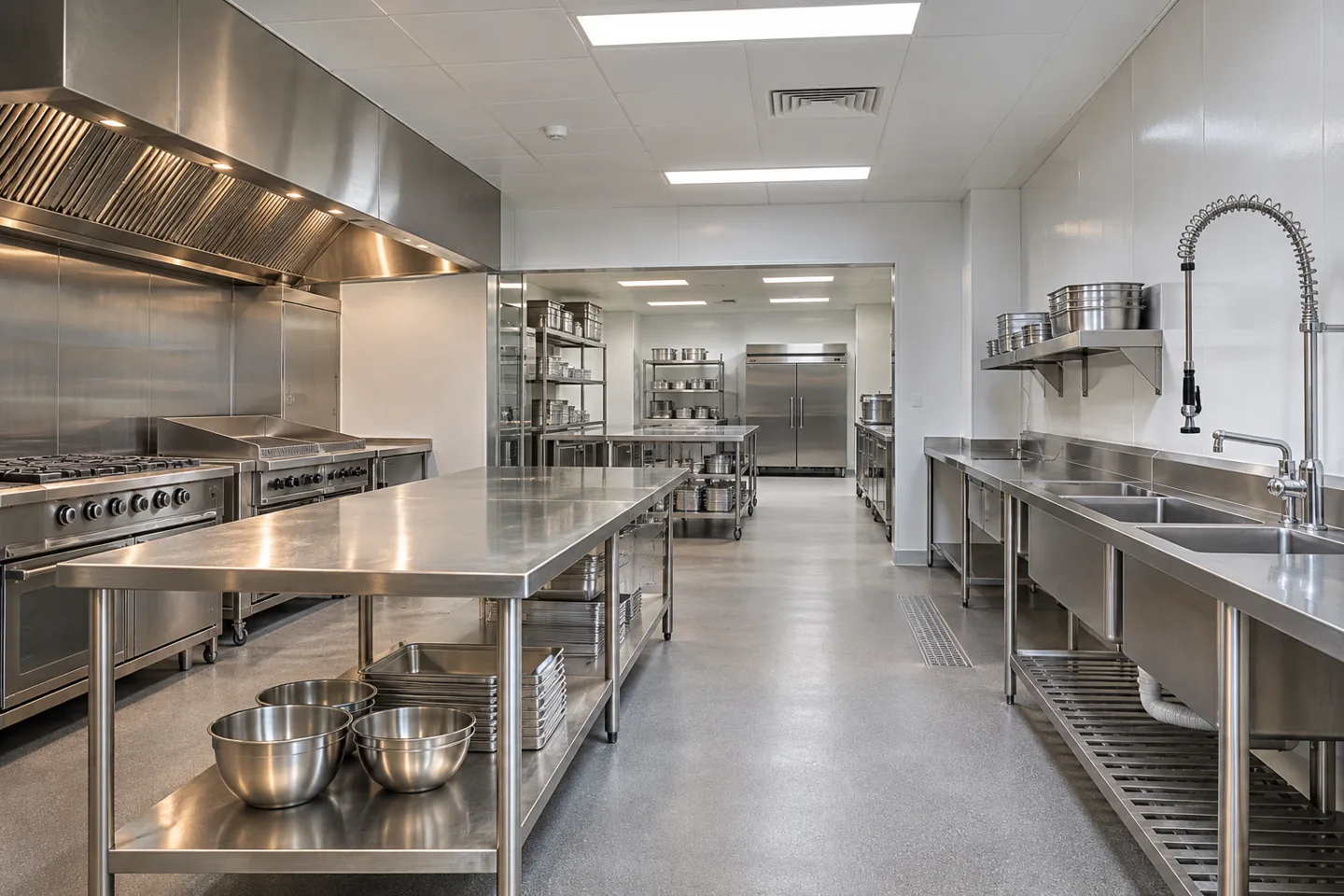
Restaurant interior design concept. Contextual illustration for the planning discussion.
Size working stock and supplier reserve separately, using real pack dimensions and delivery assumptions.
A restaurant can have an efficient dispatch counter and still lose working space to packaging. Delivery cartons arrive in bundles, cups occupy a different shelf, seasonal sleeves remain after a promotion, and the reserve stock gradually spreads into whichever cupboard is not yet full. The packing point may have been designed around one order, while purchasing supplies it in quantities intended to last much longer.
Before fixing the back-of-house layout, distinguish the packaging used during a service from the reserve held between deliveries. CBD Projects can coordinate both within a restaurant fit-out scope, using the operator's menu, ordering pattern and supplier information. This is a storage-capacity question rather than a guide to courier queues or food preparation.
The operator remains responsible for food-safety procedures and suitable packaging choices. The design team needs the accepted requirements and product information to plan the physical provision. A generic shelf allowance is unlikely to explain whether your actual purchasing arrangement fits, particularly where a Dubai premises has limited back-of-house space and several sales channels.
Jump to a section 11 topics
Count packaging by the orders that consume it
Start with the packaging components used for each relevant order type. One sale might need a container, lid, bag, seal and cutlery pack. Another uses a different cup or a protective insert. List those components separately rather than counting all packaging as a number of boxes. Ask the operating team which choices are confirmed and which are still being tested.
Use representative normal and busy service patterns. The purpose is not to forecast sales perfectly, but to identify what must be available and where uncertainty sits. A menu revision can change the packaging mix without changing the number of orders. Record that assumption alongside the layout brief so that a later change in product or serving format triggers a storage review instead of an unexpected demand for more joinery.
Separate service stock from purchasing stock
The packing area needs a working quantity that staff can reach during service. The reserve needs somewhere appropriate to wait until replenishment. These quantities solve different problems. Designing the dispatch counter to hold an entire supplier delivery can make it unnecessarily large; providing only the working quantity can leave the owner with no location for the rest.
Ask who replenishes the working stock and when that task occurs. A small counter store may be reasonable if reserve stock is nearby and replenishment can happen through the accepted operating arrangement. If the reserve sits behind several other activities, the same allowance may be impractical. Review the movement between reserve and service locations with the operator, including whether full cartons or smaller quantities are carried and where packaging is opened.
Use actual supplier pack dimensions
Ask the purchasing team for the quantity and external dimensions of the units that will arrive. A supplier may describe a carton as containing a familiar number of items, while its shape and handling requirements differ from another supplier's equivalent. Nested containers, rigid boxes and flat-folded bags use space differently. Count the delivered form rather than estimating from a single opened sample.
Record how the product is stored and accessed after opening. Can the remaining pack stay in its original carton? Does the operator need a different appropriate container or dispenser? The responsible food-safety team should establish suitable handling and protection. The designer can then plan shelf openings and usable depth around a defined arrangement instead of making assumptions that purchasing and operations later interpret differently.
Calculate a working capacity with visible assumptions
For each component, set out the estimated consumption during the chosen period, the delivery interval and the reserve the operator wishes to hold. Compare the resulting number of packs with the actual storage arrangement. Treat this as a planning model that needs updating when the operating assumptions change, not as a promise that stock will never run short.
Check the space used at the point of delivery, when remaining stock and a new order may coexist. If the purchasing plan assumes the cupboard will be almost empty on every delivery day, make that condition explicit. The operator should decide whether that arrangement is realistic. A clear model can reveal that ordering smaller quantities more often is worth discussing, but the designer should not assume the supplier will offer a different commercial or delivery arrangement.
Account for awkward and slow-moving items
Not all packaging turns over at the same rate. A large platter box, catering tray or gift sleeve may be used infrequently but still require a substantial location. Record those items separately so that a rarely used product does not displace the working stock used every day. Ask what genuinely needs to remain on site.
Promotional and branded items deserve a clear decision. A package left from an old campaign can remain in a cupboard long after the menu changes. The owner should identify who reviews obsolete stock and what the business intends to retain. The fit-out brief should reflect an accepted inventory, rather than size a permanent room around every item the business has ever purchased. Where future promotions are likely, define a proportionate flexible allowance with an understood limit.
Protect circulation and other assigned storage
Place the proposed reserve on the actual plan, showing doors, working areas and neighbouring storage allocations. Review the arrangement with representative cartons present. Shelves can appear sufficient in elevation while the space required to place or remove a pack interferes with another task. Do not count the same floor or cupboard area twice for packaging and an unrelated operation.
The operator and relevant professionals should confirm the appropriate storage conditions and separation for the activity. Packaging overflow should not become a reason to occupy an area intended for access, services or another controlled function. Identify a shortage while the layout can still be adjusted. A note saying “additional storage as required” does not resolve a physical shortfall in a premises where every usable area is already assigned.
Rehearse receiving and replenishment
Walk through a supplier delivery with the operator. Where does the carton arrive, who checks it, where is it temporarily placed and how does it reach the reserve? Consider the timing relative to preparation, staff movement and service. A delivery route that exists on paper may rely on moving several items every time it is used.
Then rehearse replenishing the packing point during a busy period. The route should be considered alongside other movements rather than evaluated in an empty restaurant. Record any tasks that the operating team intends to perform before service instead. The accepted sequence can inform the layout and storage positions. It should remain an operating choice with clear assumptions, not an unexplained instruction that staff must somehow avoid all replenishment whenever customers are present.
Check food-related requirements for the actual activity
Dubai Municipality lists layout assessment for food-establishment licensing among its services. The operator and appointed team should establish the current requirements for the proposed activity and premises, including any design changes that need review. An accepted packaging-storage arrangement should be coordinated with the wider food-operation layout rather than treated as an independent furniture purchase.
Do not use this article as a source of prescribed shelf heights, separation distances or food-contact specifications. Those details must come from the applicable requirements, accepted product information and responsible professional review. CBD can coordinate design details, shop drawings and the agreed approvals work in house within its appointment. Authority decisions remain with the relevant authority, and a storage calculation does not itself establish regulatory acceptance of the restaurant.
Price the usable storage, rather than the cabinet frontage
Ask quotations to identify shelving or joinery construction, shelf configuration, access, internal fittings, finishes and installation interfaces. Include the requirements accepted by the operator and technical team. Two cabinets with the same external width can have different usable capacity once internal divisions, hardware and clearances are considered.
When comparing interior design and fit out companies in Dubai, show each provider the same pack schedule and operating assumptions. Ask how the proposed solution accommodates the reserve and working quantities. This makes the discussion more useful than requesting a generic low-cost store cupboard. Pricing will depend on retained conditions, selected materials, fabrication, access and the wider fit-out scope; there is no reliable universal packaging-storage price for every restaurant.
Keep the model useful after opening
At handover, give the operator the accepted storage allocation and the assumptions behind it. If supplier pack sizes or ordering quantities change, compare them with that allocation before placing the next large order. Review whether the working stock and reserve are being used as intended rather than assuming every shortage requires new construction.
For a future branch, use actual experience to improve the brief while checking the new premises separately. A storage detail that worked in one restaurant may depend on a delivery arrangement that is unavailable elsewhere. Bring the menu formats, supplier pack information and proposed delivery cycle to CBD Projects for a free initial consultation. The next step is an agreed fit-out brief connecting purchasing, service and physical storage, rather than an unsupported promise of unlimited capacity.
Review a supplier change before accepting a new pack
A replacement packaging supplier may offer the same container capacity in a different external pack. Before accepting a routine substitution, check the delivered carton, nested arrangement and replenishment method against the storage schedule. Ask purchasing and operations to confirm the consequence together. A cheaper unit price can be offset by a reserve that no longer fits or a working pack that is awkward to handle. The designer does not need to approve ordinary purchasing decisions, but the owner should know which changes invalidate the assumptions behind the fitted storage and require a revised operating arrangement.
Frequently asked questions
Can we size storage from the number of restaurant seats?
Seat count alone does not describe takeaway, delivery or catering packaging demand. Use the relevant order mix and product components, then compare supplier quantities and delivery intervals. A restaurant with few seats can still need substantial reserve packaging for sales channels that do not use the dining room.
Does flat-packed packaging always save space?
It may reduce reserve volume, but the operator must consider assembly, handling, suitability and where the task happens. Compare the complete arrangement, including working stock and labour assumptions. Do not select a packaging format solely from its stored dimensions without confirming that it suits the actual operation.
Should reserve packaging be stored at the dispatch counter?
Only if the accepted layout and operating requirements support that quantity and location. Separate the working-stock requirement from the supplier reserve first. A nearby reserve with a practical replenishment arrangement may be more appropriate than enlarging the dispatch counter to hold everything delivered.
What information helps before joinery is ordered?
Provide confirmed packaging references, delivered pack dimensions, approximate consumption, delivery intervals and the operator's accepted handling requirements. Mark uncertain products and seasonal items clearly. The designer can then show what fits and which assumptions need resolution before fabrication is released.
References and scope
References checked on 28 November 2026. Confirm current requirements and product instructions for the actual project; these links do not constitute project approval.
Plan your restaurant project with one accountable team
Send the premises plan and your operating brief to CBD Projects for a free initial consultation and an agreed design scope.
Send Your Project BriefBack to BlogRelated ServiceView Real ProjectsContact CBD Projects