
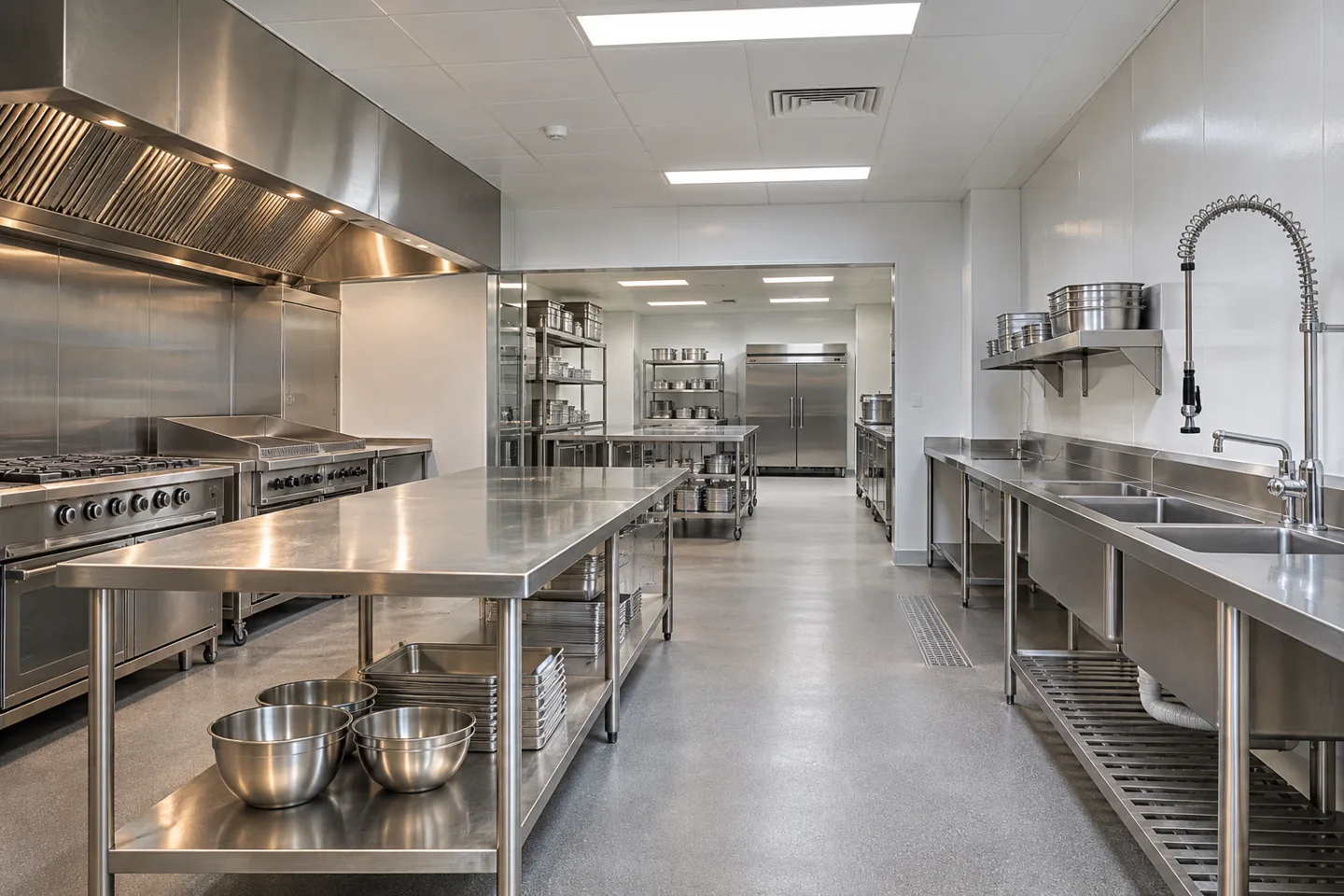
Commercial kitchen design concept showing the work surfaces and shelving that compete for back-of-house space.
Count one type of plate through a busy sitting. Measure the clean stock needed until the next replenishment, then test that quantity on a shelf with real samples.
At the pass, the chef asks for a shallow bowl. There are plenty of plates in the building, but the remaining bowls are on occupied tables, in the wash cycle or boxed on a shelf nobody can reach during service. An opening order measured in pieces per cover will miss this problem. The owner needs two answers before approving shelving. How many of each piece must circulate at the busiest moment, and where will the clean pieces be when somebody needs one?
Start with the menu and the way guests order. Then follow a single type of plate from clean storage to service and back to its next point of use. This is a buying and layout exercise for a restaurant fit-out in Dubai. The chef, stewarding lead and front-of-house manager should each recognise the plan before a joinery or shelving order goes out.
Jump to a section 10 topics
Count the piece that runs out first
Select one busy service and write down the dishes that share a plate, bowl, platter or cup. A signature bowl used for three popular dishes may matter more than the total number of dining places. Distinguish dishes that are served together from courses that follow one another. A customer ordering a side dish can add an extra piece without adding a seat. A sharing menu can reverse the pattern, putting several dishes at one table and requiring smaller side plates for every guest.
Give each important piece a short identifier and a photograph of the actual item or nominated sample. A list that says “large white plate” twice is asking for an ordering mistake. Record the outer dimensions, including a projecting rim or handles, whether it nests, and any supplier instructions affecting stacking or storage. These details matter when two replacement ranges look almost identical online but consume different amounts of shelf space.
Draw a snapshot of the busiest quarter hour
For one piece, count how many are on tables, at plating, waiting to be cleared, passing through the wash process and ready at the clean pickup point. Use observations from an existing operation where available. For a new restaurant, rehearse a plausible order sequence with the chef and label it as a planning assumption. Record each physical piece in one place only. Adding the entire table setting to a separate count of pieces already on those same tables inflates the order.
Suppose an illustrative sitting has 24 bowls at tables, six holding completed dishes at the pass, ten awaiting cleaning and eight available for the next orders. That is 48 bowls accounted for at one instant. If the next order wave needs twelve before any more clean bowls arrive, the immediate shortfall is four. The right response might be faster replenishment, a reserve near the pass, a different service sequence or more bowls. The example explains the calculation. It does not set a universal purchase quantity.
Measure when clean stock comes back
Ask the stewarding lead to time a real return journey. Start when a piece leaves a guest's table and stop when an acceptable clean item reaches the station that serves the next dish. Include waiting, sorting and transfer as they happen in that operation. A quoted machine cycle covers only one part of the journey. A dining room upstairs or two stations drawing on the same stock can make the route a bigger constraint than the equipment itself.
Run the exercise a second time when the menu or staffing pattern changes. For example, dessert bowls may return in a cluster near the end of a sitting, too late for a second group already choosing the same dessert. If stock arrives in irregular batches, record the longest credible gap and the quantity used during it. That is a more useful input to the working shelf than an average hourly total. For wash-area planning beyond the clean-stock question, see our restaurant dishwashing layout guide.
Separate stock in use from stock in reserve
Define what each storage point is for. The pass needs enough ready stock to plate the next run of orders. A replenishment shelf can hold the next transfer. A reserve for breakage or supplier lead times may sit farther away because it is not accessed in normal service. Treating the full opening purchase as working stock can bury the most-used pieces behind boxes and encourage staff to create makeshift stacks on worktops.
Ask who is allowed to draw from the reserve and what triggers a reorder. Some pieces can be replaced singly while others come only in cartons or a minimum order. Record the pack size and any confirmed replenishment conditions separately from the number physically needed during a service. It is reasonable to buy a full carton when four replacements are required, but the extra pieces still need somewhere to go. Let procurement and operations decide the reserve and give it a location with a named owner.
Prove that the proposed shelf holds the plate
Bring a representative sample to the review. Build a stack within the supplier's guidance and the operator's handling practice. Measure its height and outside width, then allow room for hands to take the piece out. Check the actual usable opening between supports, uprights, shelves and doors. Cabinet dimensions on a tender drawing often describe overall width. Hinges and a centre divider can turn one seemingly generous length into two bays neither of which accepts the planned stack.
Lay out the stacks side by side as they will be used. A second row at the back adds little everyday capacity if reaching it requires unloading the first. A very deep shelf might suit closed reserve cartons while a shallower wall shelf serves the pass more easily. Ask the supplier to verify supports and loading for the proposed equipment, quantities and installation. Avoid assigning a safe stack height or shelf load from appearance. A dimensioned layout with the selected product references is a better purchasing instruction than “heavy-duty shelving throughout.”
Decide where the clean handoff happens
Follow the staff member taking stock from the clean return point to the pass. Do they need to stop and open a door with their hands full? Is the route shared with incoming deliveries, waiting food or dirty returns? Have the operator and food-safety adviser identify acceptable arrangements for the actual activity. The designer can then draw the agreed storage faces, approach and transfer point rather than assuming opposing arrows on a plan will keep the work flows apart.
Position stock according to the person who uses it. A shelf beside a plating station can be close to the chef but difficult for a replenishing colleague to access from the other side. Try the move while somebody occupies the station. If stocking interrupts every order, consider a different replenishment face, a smaller service quantity or a scheduled top-up from a nearby base. Each option changes who walks and when. Invite both teams to test it before fixing the counter height or depth.
Resolve pieces that use the same shelf differently
Wide platters, lidded bowls, handled cups and fragile presentation pieces do not behave like a run of flat plates. Handles can force alternating rows or prevent nesting. Lids stored apart from bowls can become the limiting component even when there are enough bowls. Some presentation pieces need individual separation or a particular storage orientation. Use the manufacturer's instructions and ask the team which pieces they must retrieve quickly with one hand available.
Separate the service styles that really occur. A breakfast store of cups might share space with dinner pieces if the team has time and somewhere to relocate them between services. If breakfast continues as lunch preparation begins, that space is committed twice. On the drawing, shade each bay for the time it is occupied and write the changeover action next to it. An operator who can explain that action is in a better position to approve the shared space.
Price three alternatives on comparable terms
First test buying more pieces while keeping the current replenishment route. Include their working and reserve storage, any new shelving and the handling implications. Then test improving the route while keeping the existing stock count. This might involve moving the clean return point, changing a cabinet opening or relocating slow-moving stock. A third option is to simplify the range of pieces after checking how the chef presents the menu. A common bowl can serve several dishes but also concentrates demand for one item.
Compare what each option changes for guests and staff as well as what it costs. A longer route paid for with extra inventory can require additional handling every shift. A shorter route that takes away a useful plating surface can create a different bottleneck. When comparing fit-out companies in Dubai, give each fit-out contractor the identified pieces, agreed storage quantity and an annotated elevation. If two quotes allow different useful shelf lengths or different support systems, resolve those differences before treating their prices as comparable.
Agree what to check when the restaurant is fitted
Set out the accepted samples at their assigned stations and rehearse a representative sitting before filling every cupboard. Use the operating team's own procedures. Ask somebody who did not arrange the storage to find the next bowl and return the next clean rack. Note where they hesitate or where two people have to yield. An unclear label costs little to change. A shelf whose opening is too small for the chosen platter needs a design correction.
Dubai Municipality lists a food-establishment layout assessment service. Confirm with the appointed project team which reviews apply to the actual restaurant and any proposed changes. A tableware rehearsal answers an operational question and belongs alongside the approved design and the operator's food-safety arrangements. Record who approved the final shelving layout, who placed the crockery order and who holds the supplier references for replacements. These are three different responsibilities even when one person performs more than one of them.
Make the opening order easy to revisit
Keep a one-page stock sheet by piece identifier. Record the opening quantity received, working positions, reserve location, carton size and the date of the last check. A change of menu or a decision to add another sitting is a reason to repeat the peak snapshot. If breakages cluster around one piece, ask where they occur before increasing the order. A tight shelf opening, awkward carry route or incompatible rack may be consuming inventory faster than the purchasing team realises.
For the first fit-out discussion, bring the draft menu, seats by service period, a few actual items and any existing wash or pass plan. If the restaurant is still at lease review, the same exercise can help identify where apparent floor area is already committed to an essential daily task. It gives the owner, chef and interior design consultant a shared basis for accepting the storage proposal before an opening order arrives in cartons.
Frequently asked questions
Can we calculate tableware from the seat count alone?
Use seats as a reasonableness check. A restaurant with two sittings, shared plates and a slow return route can need a different mix from another restaurant with the same seats. Model the high-use pieces at a specific service peak before buying the full range.
Is boxed reserve stock suitable beneath the pass?
Ask the operator and food-safety team what storage is acceptable in that location. Also check whether a carton can be removed without interrupting plating, and whether it displaces working stock. Reserve stock often earns its space farther from daily service.
What should the supplier bring to a design review?
Request representative plates and bowls, dimensions, stacking guidance, carton quantities and replacement information. Bring the proposed shelf drawing too. Measuring an actual stack against the usable bay can resolve a purchasing question that two separate catalogues leave open.
References and scope
References checked on 25 November 2026. Confirm current requirements and product instructions for the actual project; these links do not constitute project approval.
Plan your restaurant project with one accountable team
Share your menu, peak sitting and selected tableware for a back-of-house planning discussion.
Send Your Project BriefBack to BlogRelated ServiceView Real ProjectsContact CBD Projects