
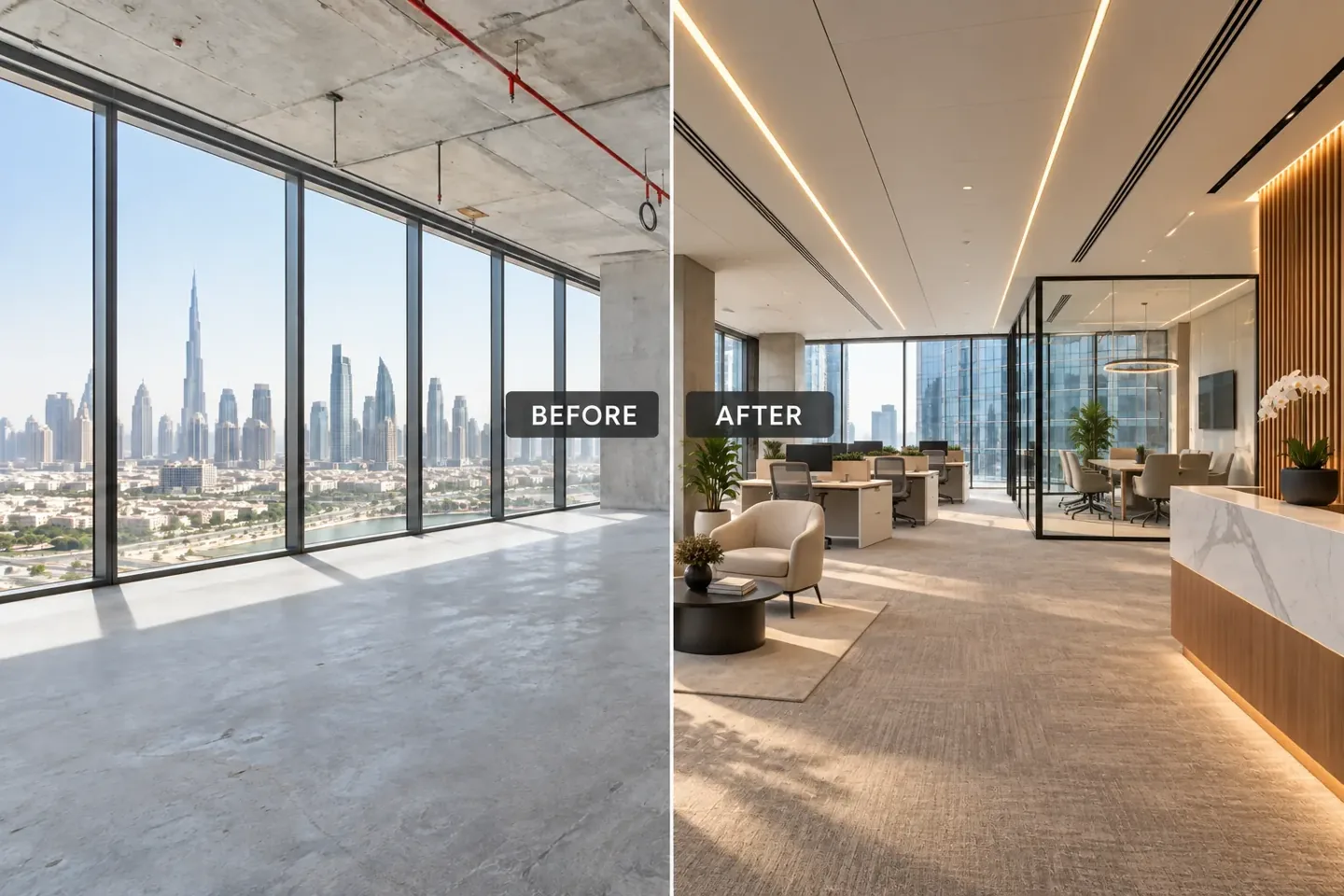
Workplace interior reference for the design review.
A pendant or wall light can become the most memorable object in a room, which makes it tempting to order the preferred piece as soon as a concept is approved. The photograph may settle its visual appeal while leaving the size, finish, control compatibility and installation responsibilities unresolved. Those questions are easier to address before a purchase than after a crate arrives on site.
Decorative lighting selection for interiors in Dubai should connect the visible design decision with the information the supplier and appointed electrical team need. This guide concerns the client’s purchasing and coordination process, not electrical installation instructions or a substitute for lighting design. Whether you are briefing an interior design company for a home or an office fit out in Dubai, establish who approves the fixture, who checks its technical suitability and what evidence authorises the order.
Jump to a section 14 topics
Separate the fixture’s appearance from its lighting role
Start by describing why the fitting is being selected. It may be a visual focal point, part of a repeated rhythm or a source of light for a particular activity. A sculptural pendant can contribute strongly to the room even where other fittings provide much of the working light. The lighting designer or electrical specialist should identify the relevant technical requirements rather than infer them from an attractive image.
Record that role in the selection discussion. If the client expects the decorative piece to illuminate a table or counter, the appointed team needs to assess whether the proposed product can do that appropriately. This distinction prevents a design approval from being misunderstood as confirmation of the complete lighting performance of a room.
Review scale in the actual setting
A supplier photograph often removes the furniture, ceiling or person that would explain the size of an object. Compare the published dimensions with the actual room and the elements around the proposed position. Check the overall composition, not just the widest measurement. A cluster of smaller objects may have a very different effect from one large fitting, even when the combined material quantity seems similar.
Use a representative drawing, measured outline or suitable mockup to review the relationship. Consider the view when seated as well as standing, and discuss the intended hanging position with the appointed team. The purpose is to make the scale decision understandable before purchase, not to replace technical checks of mounting, clearances or building requirements.
Request an identifiable product record
A moodboard image and a purchase specification are different documents. Ask the supplier to identify the manufacturer, model, size, finish and selected options. Record the current drawing or data sheet associated with that exact configuration. A descriptive name alone may refer to several products with different dimensions or technical arrangements.
Keep the product reference with the approved selection rather than relying on a screenshot from a messaging conversation. If the supplier proposes an equivalent or a changed version, ask the team to review the difference before it is ordered. Clear identification helps the interior fit-out contractor, purchasing team and client refer to the same item throughout coordination, delivery and later maintenance.
See the finish beside its neighbours
Metal, glass, fabric and painted finishes can look different across photographs and screens. Review a suitable physical sample where the consequence justifies it, especially when the fitting sits beside other visible metals or reflective surfaces. The sample should represent the proposed finish and any important texture rather than a broadly similar colour from another range.
Discuss the conditions under which the finish is being approved. Nearby daylight, wall colour and other light sources can affect its appearance. Record the accepted reference and any limitations, such as a sample showing colour but not the full fabrication detail. This allows the decision to be carried into the order without pretending that one small piece proves every aspect of the completed fixture.
Provide technical information to the appointed electrical team
The electrical team needs the actual supplier documentation to assess the proposed product for the project. Relevant information may include the supplied light source, driver or control arrangement, connection requirements and installation instructions. The competent specialists should determine which details matter for the premises and system. A client should not be expected to resolve electrical suitability from a catalogue photograph.
Ask for the technical review to happen before the order is released and record who completed it. International product pages may describe a different regional configuration, so the selected version needs explicit confirmation. The design team can coordinate the visible intent with this review while leaving calculations, installation and technical acceptance with the parties appointed to provide them.
Treat dimming as a compatibility question
The word dimmable does not describe every possible combination of fitting, light source, driver and control. Lutron’s published resources illustrate that manufacturers provide compatibility information for particular combinations. That is a reason to obtain an actual project-specific review, not a recommendation that a product listed for another region or system is automatically suitable in Dubai.
Share the proposed control arrangement and exact fixture information with the responsible electrical or controls specialist. If a sample demonstration is appropriate, establish what combination is being demonstrated and what it proves. The client’s visual approval should be kept distinct from that technical confirmation. A later change to one component may require the compatibility decision to be revisited before procurement or installation proceeds.
Coordinate the visible position with the room
The desired location should be reviewed against furniture, joinery, ceilings and the activities below it. A fitting that is centred on a room may not be centred on the table it is intended to accompany. Similarly, an arrangement that works with one furniture layout may become awkward if the client later chooses a different size or shape.
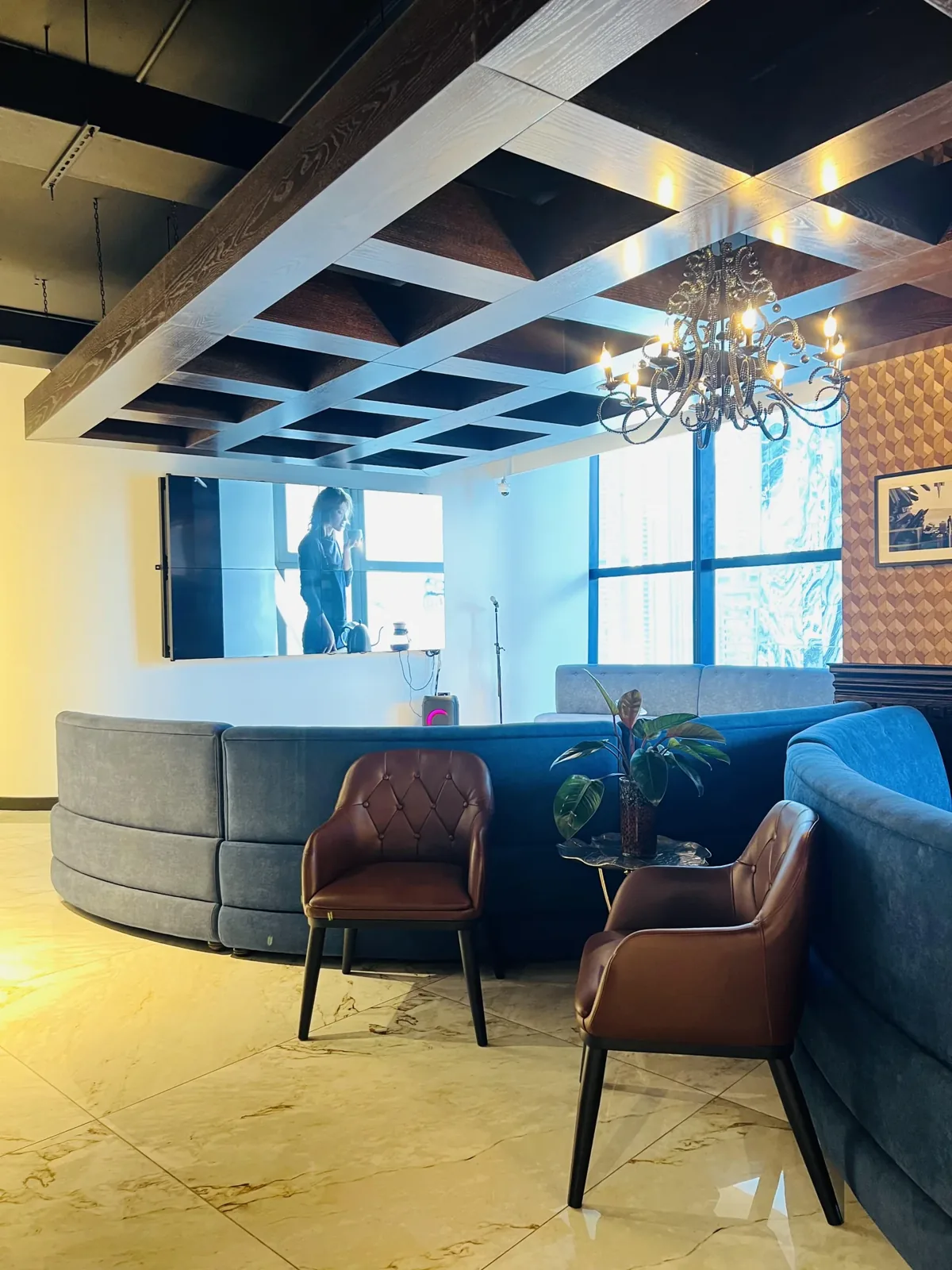
Review the setting as a coordinated whole and identify the information that must be fixed before the final position is confirmed. Record how any unresolved furniture decision affects the lighting package. In office interior fit out Dubai projects, this discussion may include workstations, meeting tables and displays; in a home it may concern dining, conversation or circulation. Keep each decision tied to its actual use.
Identify mounting and ceiling interfaces early
A decorative fitting may create requirements at the ceiling or wall that are not visible in a concept image. The appointed installation and technical teams should review the manufacturer’s information and assess the relevant support, access and connection arrangements. The interior design scope should identify the visible coordination points without implying that decorative drawings replace structural or electrical design.
Ask who provides the necessary detail and when it is required relative to ceiling closure or finishing. Establish how any canopy, bracket or access requirement relates to the surrounding design. Resolving the interface before fabrication or finishing is more useful than asking the installer to conceal an uncoordinated arrangement inside a completed decorative feature.
Check what the quoted supply actually includes
A quotation may describe the main fitting while treating accessories, light sources or other components separately. Ask the supplier to state the contents of the proposed package and any items expected from another party. Confirm the exact selected configuration rather than assuming that everything shown in a promotional image is included.
The client should understand who purchases, receives, stores and installs each component. The interior fit-out contractor also needs to know whether the fitting is a client purchase or part of the contracted package. Clear boundaries help prevent a missing part from becoming an argument about what a broad description was intended to include. They also make competing quotations more meaningful to compare.
Plan delivery and handling around the product
Ask the supplier about packaging, delivery arrangements and any handling requirements relevant to the selected item. A large or fragile object may need a different sequence from a standard boxed fitting. The responsible team should consider building access, storage conditions and the point at which the site is ready to receive it.
Record who checks the delivery against the order and how damage, missing items or discrepancies are reported. Do not assume that an unopened crate has been accepted for every contractual purpose. The appropriate process depends on the purchase terms and appointment. From a client coordination perspective, the important step is to nominate the people responsible before the item arrives rather than leave that decision to whoever is present.
Understand the maintenance commitment
The decorative effect should be considered alongside the work needed to keep it attractive. Ask for the relevant manufacturer’s care and maintenance information and review access with the people responsible for the premises. A complex cluster can introduce a different cleaning and replacement task from a simple fitting, particularly where it sits above fixed furniture or an inaccessible area.
Confirm what is replaceable and how the responsible team obtains the necessary parts or support. A product’s appearance alone does not establish long-term availability. Keep the supplier contact and selected model information with the handover records. These questions do not require the client to become a lighting technician; they help the project avoid buying a maintenance obligation that nobody has agreed to manage.
Use a sample or prototype for consequential choices
Not every fitting needs the same level of review. A small, familiar product and a prominent bespoke feature may justify different checks. Consider the consequence of getting the decision wrong: visibility, replacement difficulty, quantity and the relationship with other finished work. The design and specialist teams can advise which aspects deserve a physical sample or representative demonstration.
Write down the purpose of the review before it happens. It may address scale, finish, light appearance or another defined question, while separate technical requirements remain outstanding. Record what was accepted and what still needs confirmation. An approval with unresolved qualifications should not be passed to purchasing as an unconditional instruction to order every component.
Release the order through a clear decision record
Bring the approved visual selection, product reference, supplier offer and relevant technical confirmations together before ordering. Identify the person authorised to release the purchase and the documents that describe the accepted configuration. If an important decision is still conditional, make that visible rather than allow the urgency of a programme to erase it.
Changes should follow the same clear route. A finish substitution, different size or altered component may affect several earlier decisions. Record the proposed change and ask the relevant parties to review its consequence. This is particularly useful when comparing interior design and fit out companies in Dubai: ask how their scope handles client selections, supplier information, technical coordination and purchasing authority instead of judging the appointment from images alone.
Keep the final selection usable after handover
The incoming facilities team or homeowner needs more than the image that first attracted the client. Collect the final product record, relevant supplier instructions, care information and the contacts needed for support. The appropriate specialists should provide installation, commissioning or control demonstrations within their responsibilities. Keep any remaining actions identifiable rather than combining them into a general statement that the room is finished.
For a wider appointment, explore CBD Projects’ interior design and fit-out services. A project brief can explain the room, intended atmosphere and fixtures already being considered. That gives the discussion a practical starting point while allowing the relevant team to establish the design, technical and purchasing decisions still required.
Frequently asked questions
Can I order a fitting before the electrical design is complete?
An early selection can establish the visual direction, but the purchase should reflect the information actually confirmed. Ask the appointed team which technical and coordination decisions must be settled first. Record any conditions clearly so a preferred image is not mistaken for an unrestricted approval to order.
Does a manufacturer’s compatibility list approve the whole installation?
No. Such information concerns the combinations and conditions described by the manufacturer. The responsible project specialists still need to assess the selected regional product, system and installation requirements. Keep the technical review separate from the client’s approval of appearance and avoid treating a general website listing as project certification.
Should every decorative fixture be bespoke?
No. A standard product may suit the room and provide useful supplier information or replacement options. Bespoke work should solve a defined design requirement and have an agreed specification and review process. The appropriate choice depends on scale, composition, budget and coordination rather than a general assumption that custom always means better.
Who should keep the final lighting documents?
Agree this with the client organisation or homeowner before handover. The people responsible for operation and maintenance should receive the relevant records, with a clear route for supplier queries. Include the exact purchased configuration so later replacement discussions do not rely on an old concept image or an ambiguous product nickname.
References and scope
References checked on 18 November 2026. Confirm current requirements and product instructions for the actual project; these links do not constitute project approval.
Plan your interior design and lighting coordination project with one accountable team
Share your interior plans and decorative-lighting priorities with CBD Projects to discuss a coordinated design and fit-out scope.
Send Your Project BriefBack to BlogRelated ServiceView Real ProjectsContact CBD Projects