
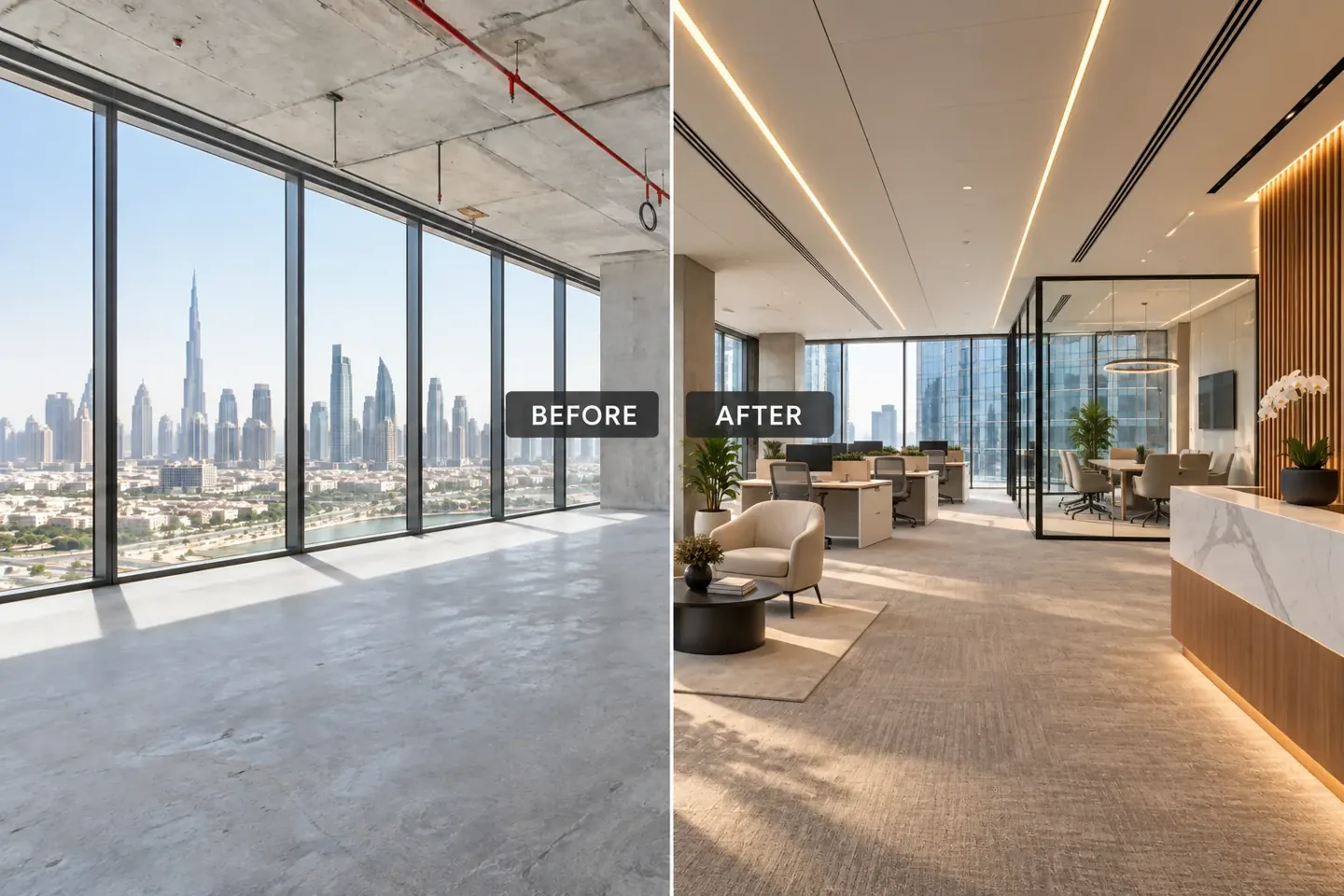
Workplace interior reference for the design review.
A sign can be carefully fabricated and still carry the wrong business name, room description or contact information. The problem often begins before production, when several people comment on artwork but nobody is clearly responsible for approving the words. A fit-out client can prevent that uncertainty by assigning content ownership and recording exactly which version is authorised for manufacture.
This guide concerns the wording and proofing of signage within an interior project. It is separate from choosing a wayfinding system, designing electrical connections or establishing the correct permission route. The client, designer, relevant specialist and sign maker each have information to contribute. Their responsibilities should be agreed so a visual approval is not mistaken for confirmation of every word, translation and business claim.
Jump to a section 13 topics
Name the person who owns the content
Identify one client representative who can authorise the text or consolidate the required business approvals. That person does not have to write every line personally, but must know whose review is needed. A receptionist may notice a room name that has changed, while a brand manager may control how the company name appears. Collecting those contributions is different from issuing the final instruction to fabricate.
Record the content owner in the project communication plan and provide an alternative when they are unavailable. The design team should know where to send a proof and who can resolve contradictory comments. An informal group chat is a weak substitute for that arrangement because silence can be interpreted differently by different participants.
Prepare a reliable source for names and details
Create a content schedule containing the exact words required on each sign. Use an identifier for every item and connect it to a drawing location. Include the business name, room name, opening information or other wording applicable to that item. Obtain official names and approved brand files from the client’s authorised source rather than retyping them from an old photograph or a search result.
Check numbers and contact details as separate pieces of information. A person can read a telephone number fluently without recognising that two digits are transposed. Confirm the intended website address and test any destination used in a code or link. Where text is not yet agreed, mark it as unresolved and keep it out of a production release.
Distinguish wording approval from visual approval
A client may like the colour, material and placement of an artwork while its text still needs checking. Make the approval request precise. Ask whether the review concerns content, visual treatment, technical manufacture or a combination, and show the relevant version for each decision. A comment such as looks good should not leave the sign maker guessing which responsibility has been discharged.
The interior design company can coordinate the visual relationship between signage and the fitted space, while the client confirms the business information. The sign maker should provide the production proof and advise on manufacturing matters within its appointment. If the project needs copywriting, translation or legal review of claims, appoint those services explicitly rather than expecting them to arise automatically from graphic design.
Arrange proper Arabic and English review
Where more than one language is included, appoint a competent reviewer for each relevant language and clarify how the two versions relate. A literal translation may not express the intended business name or room function correctly. Ask the authorised client representative to confirm approved terminology and the appropriate form of any registered name before it is incorporated into artwork.
Review the final laid-out text, not only a separate word-processing file. Line breaks, type selection, punctuation and the arrangement of languages can affect how the words appear. Ensure the reviewer sees the same artwork intended for manufacture. If a correction is made after conversion or formatting, obtain another check of the changed content and any nearby text affected by the revision.
Keep design changes connected to the wording
A room name can change when the layout changes, even if the signage artwork still looks current. Link the content schedule to the relevant room or location reference and ask the project team to flag changes that affect it. The schedule should show the latest agreed name and the status of its proof, allowing the team to identify which items need another review.
For an office fit out in Dubai, a meeting room may be renamed by the occupier after the design is developed. In a retail project, a service description may change during operational planning. These are ordinary client decisions, but they can invalidate an earlier proof. Decide who is responsible for communicating them to the signage package before manufacture begins.
Review the actual production proof
Ask the sign maker to issue an identifiable proof showing the information needed for the agreed review. It should be clear which sign or group of signs it covers and how it relates to the approved artwork. The client should be able to read the content without relying on a low-resolution screenshot or a cropped image missing part of the design.
Check spelling, names, numbers, punctuation and the arrangement of text methodically. Compare the proof with the approved content schedule rather than trusting memory. A second reader can provide a useful independent check, especially for repeated names or similar sign variants. The supplier’s own order and proofing terms should be understood because they may define what approval releases into production.
Check repeated items without assuming they are identical
A project may contain several signs sharing a format while carrying different room numbers or words. Give each variant a clear identifier and check every actual text item. A correct first sample does not confirm the wording on the rest of the batch. Review quantities and locations separately so the right sign is manufactured for the right position.
Where one approved change should apply across several items, list the affected identifiers. Avoid instructions such as change everywhere unless the scope of everywhere is demonstrable. Ask for revised proofs showing the completed change and compare them with the instruction. This prevents a partly updated set from being mistaken for a coordinated final issue.
Treat permission and content acceptance as different decisions
Dubai Municipality announced advertising content guidelines in October 2026 addressing outdoor advertising content and design. The published announcement covers matters including written content, images and logos. Where a project includes advertising or external signage, obtain the current requirements from the relevant authority and appointed specialist for the actual sign. An internal client proof approval is not a substitute for any applicable permission.
The correct route depends on the location, type of sign and scope. Identify whether the landlord, management, brand owner or authority needs a separate review and who coordinates it. This guide does not establish requirements for every sign. It provides a way to keep the client’s wording decision identifiable alongside the technical and permission responsibilities that the project team must resolve.
Release manufacture with an unambiguous record
The final instruction should identify the sign references, artwork or proof version, approval date and authorised approver. State whether any items are excluded or still on hold. The sign maker needs to know which exact files are released and whether conditions remain outstanding. If the approval covers only part of the package, make that boundary clear.
Keep the released proof and the instruction together in the project record. The record should allow someone joining the project later to understand what was approved without searching through multiple message threads. This is useful for the interior fit-out contractor as well as the client, because production and installation need to follow an identifiable instruction rather than an interpretation of scattered comments.
Manage a late correction before it becomes another error
If wording changes after approval, contact the responsible supplier promptly through the agreed channel and ask about the current production status. Do not assume a revised email attachment automatically stops manufacture. Identify the affected sign references and request confirmation of what can still change. The practical consequences may differ between an artwork file, a cut component and an already installed sign.
Obtain a clear proposal for the correction, including the revised information, cost and programme implications where applicable. Record who authorises those consequences. The new instruction should supersede the relevant previous release without obscuring the history. A late change can be managed more reliably when the team can trace the original and revised decisions precisely.
Use a content review meeting efficiently
Prepare the proofs and source schedule before the review so the right people can check the actual information. Separate questions about wording from questions about materials, installation and location. Some issues may need different specialists and should be assigned accordingly. The purpose of the meeting is to resolve identifiable decisions, not to collect a general impression that the package is nearly ready.
Finish with a list of approved items, required corrections and unresolved questions. Assign a responsible person and response date to each open point. For retail fit out companies in Dubai coordinating several client and brand stakeholders, this simple discipline can make a complex review easier to follow. The same approach works for a small office or a single reception sign.
Allow time for checking before the production deadline
Work backwards from the point at which the supplier needs a release. Allow separate time for the initial proof, the client’s coordinated comments, the revised proof and the final review. The amount of time needed depends on the number of signs, languages and decision-makers involved. Ask the supplier which milestones affect manufacture or installation so the client understands the significance of its response date.
Do not solve a late review by allowing an unqualified person to approve wording they cannot check. Identify the missing reviewer and agree what can proceed independently. Some signs may be ready while others remain on hold, provided the package clearly identifies the distinction. This is preferable to an ambiguous approval covering unresolved text.
The client’s appointment with a fit-out consultant should identify whether organising these reviews is part of the agreed service. Content ownership can remain with the client while the consultant coordinates the review dates and package interfaces. A clear allocation prevents the programme from relying on an assumption that another party is quietly checking the words. It also helps the team recognise a genuine hold point before a costly or difficult-to-reverse production step.
Verify installed content and preserve the final files
Before accepting the signage package, compare installed items with the released proof and their intended locations. Check that the correct variant has been placed in each position and that no temporary wording remains. Keep content checking distinct from technical installation review; the relevant specialist should assess fixing, electrical or other technical matters within its responsibility.
Store the final accepted files and content schedule where the client can find them for replacements or future changes. Identify who controls later revisions so an old proof is not reused accidentally. If signage forms part of your interior project, include these responsibilities in the project brief. Our office interior design service explains the wider coordination with the fitted workplace.
Frequently asked questions
Does approving the interior design automatically approve sign text?
That should not be assumed. Agree whether the client is reviewing appearance, wording, technical details or several aspects together. A specific approval request and identifiable proof help each party understand the decision. Business names, translations and contact details should be confirmed by the authorised client representatives.
Who should check Arabic wording?
Use a competent reviewer who understands the intended meaning and the approved business terminology. They should inspect the final laid-out artwork, not only an earlier text file. The project appointment should state who provides translation and who authorises the final wording for manufacture.
What if the room name changes after the sign is ordered?
Notify the responsible supplier through the agreed channel and ask whether production can still be changed. Identify the exact sign reference and revised wording. Obtain confirmation of the cost, programme and technical implications before issuing a replacement authorisation.
Is a digital proof enough for every sign?
The appropriate proof and sample requirements depend on the product and the questions being reviewed. A digital proof can support a wording check, while colour, material or manufacturing detail may require other evidence. Agree the supplier’s review process and the limits of each approval before release.
References and scope
References checked on 17 November 2026. Confirm current requirements and product instructions for the actual project; these links do not constitute project approval.
Plan your client approvals project with one accountable team
Include your signage content owners, available brand files and expected approval responsibilities in the project brief so these can be coordinated with the interior scope.
Send Your Project BriefBack to BlogRelated ServiceView Real ProjectsContact CBD Projects