
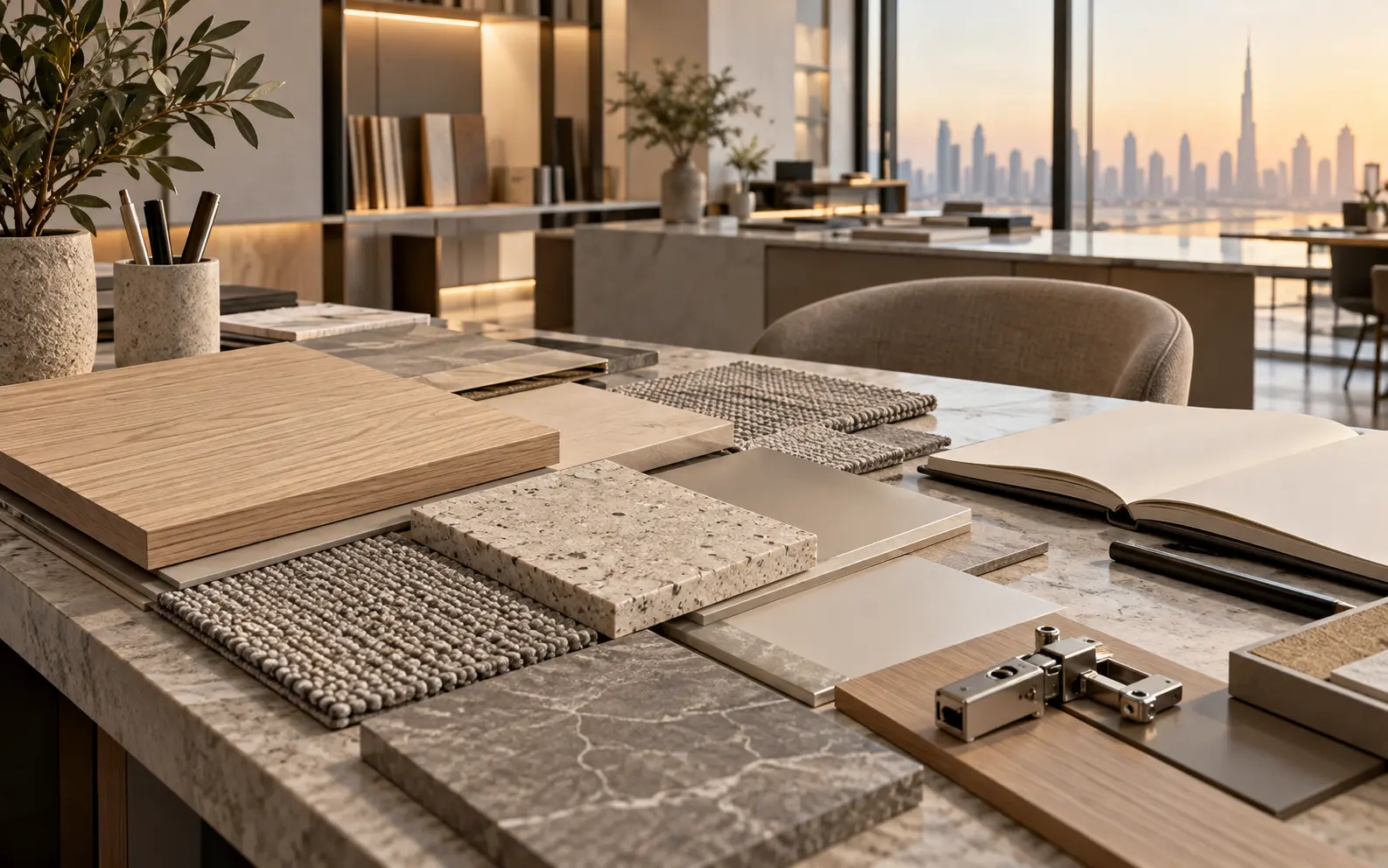
AI-generated design concept for illustration only; not a completed CBD Projects project or a technical compliance drawing.
A proposed alternative often arrives with a sample and the statement that it is equivalent. The colour may be close while fire performance, acoustic behaviour, cleaning compatibility or installation requirements differ. A useful substitution process makes those differences visible before an order is placed.
Explore our fit-out contractor in Dubai for the wider project scope.
Compare the proposed alternative with the approved specification, document technical evidence and downstream changes, then obtain the required design and commercial approvals. Do not let availability or a lower price stand in for equivalence.
Record why the change is being proposed
Identify the original item, drawing reference, quantity, location and approval status. State the reason: discontinued product, confirmed supply delay, cost proposal or a coordination issue. Request evidence for any claimed availability or lead time and record how long the offer remains valid.
Keep the original specification as the baseline. If requirements have changed, state that openly rather than calling a different scope equivalent. The decision-maker should be able to distinguish an unavoidable supply issue from an optional value proposal.
Compare performance and interfaces separately
Build a comparison covering dimensions, material, appearance, intended use, relevant test evidence, cleaning, maintenance and warranty. Review any fire, acoustic, hygiene or other project requirements with the appropriate professionals. A certificate should refer to the actual product and assembly where applicable.
Then check interfaces: floor thickness, door clearance, structural support, MEP loads, fixing method, adhesive compatibility and access. A technically suitable product may still require drawing changes. Use the commercial flooring guide as an example of why a finish and its installation system must be reviewed together.
Calculate the whole change, not only the purchase saving
Include redesign, additional preparation, installation differences, accessories, testing, wastage and any effect on related trades. Identify whether already ordered materials can be returned and who bears the cost. Confirm the programme effect using written supplier and installer information.
Present cost and technical acceptance as separate decisions. An alternative may satisfy the design but be commercially unattractive, or appear cheaper while failing an essential requirement. Do not conceal the trade-off in a single approved tick box.
Obtain approval before release
Submit the comparison, samples, product data, revised drawings and proposed cost or time change through the agreed project process. Identify whether landlord or authority review must be revisited. The responsible professionals should determine this for the actual scope and approval conditions.
Keep affected purchasing or installation on hold until the necessary authorisations are recorded. Emergency verbal instructions should be documented through the contract's change process, not relied on as a permanent substitute for a controlled record.
Update the project record and inspect delivery
Revise the material schedule, drawings, purchase order and handover information after acceptance. At delivery, verify that the approved alternative is the product supplied, including relevant model and finish codes. Keep the accepted sample available for comparison.
Link the substitution register to the FF&E procurement tracker and final asset record. This article covers approval control; the broader value-engineering guide addresses purposeful redesign of scope and cost. They should support each other without becoming duplicate articles.
Compare the evidence for the proposed alternative
A proposed alternative may be described as “equivalent” because its colour and dimensions are similar. Ask for a comparison against the actual project requirements, including the relevant performance evidence, installation system, maintenance implications and warranty conditions. The responsible specialists should assess technical suitability rather than relying on the label.
For an illustrative floor substitution, changing the finish may also affect adhesive, substrate preparation, transitions and cleaning instructions. Include those consequences in the price and programme comparison. Identify any earlier orders or installed work that would become redundant, so the decision reflects the complete change.
Keep the client’s commercial acceptance separate from technical review and any required authority or landlord process. After approval, update the specification, procurement record and handover information to identify what was actually installed. A fit-out company in Dubai should provide a clear decision trail, allowing the client to understand both the proposed saving and the commitments that accompany it.
Frequently asked questions
Is a matching colour enough to approve a substitute?
No. Review performance, dimensions, installation, maintenance, warranty and any approval implications as well as appearance.
Can a substitute avoid a programme delay?
Sometimes, but verify stock, delivery, installation and related design changes. A faster product can still delay the project if its interfaces are unresolved.
Is a supplier’s “equivalent” description enough?
No. Compare the proposed product and installation against the project requirements, with review by the responsible specialists and a documented change decision.
Plan your interior project planning project with one accountable team
Send the approved specification, proposed alternative and reason for change. CBD Projects can help organise a comparison for the relevant technical and commercial decision-makers.
Send Your Project BriefBack to BlogRelated ServiceView Real ProjectsContact CBD Projects