
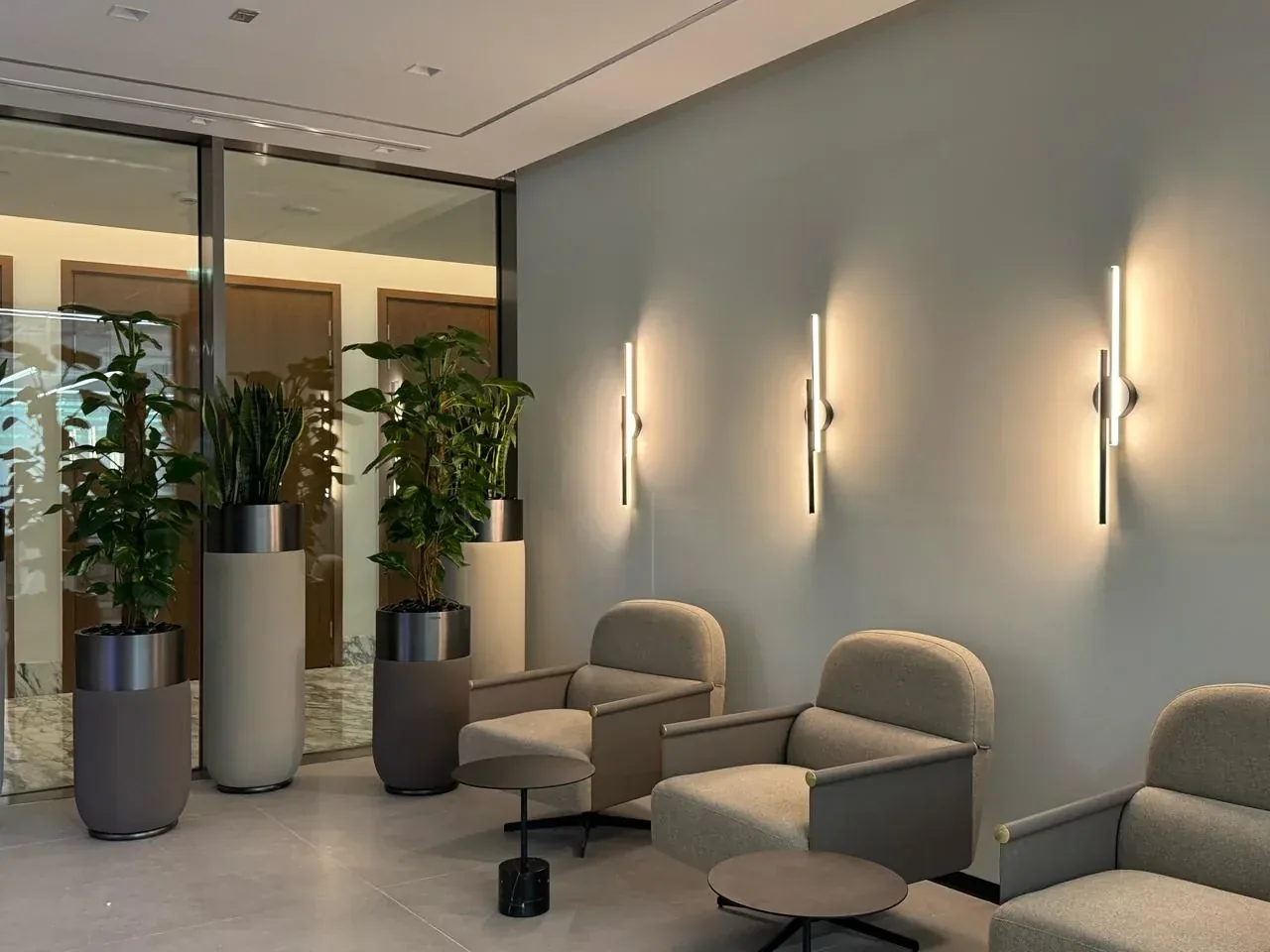
Workplace interior reference for the design review.
A supplier describes a board as low carbon. Another offers a recycled finish. A third suggests a carbon-neutral product. These statements may refer to different things, making them difficult to compare in a Dubai interior project. Before an interior design company puts one into the specification, the useful question is what evidence supports the claim and whether it describes the actual product being purchased.
This guide explains a practical procurement conversation, not a calculation method or a claim that every Dubai fit-out must obtain an environmental product declaration. International guidance from the US Department of Energy's Better Buildings programme and the UK Green Building Council provides useful context for material evidence and life-cycle thinking. Applicable Dubai building and project requirements still need separate confirmation by the responsible professionals.
Jump to a section 12 topics
Start with the decision you are trying to make
Establish whether the client wants to retain existing materials, compare alternative products, meet a project certification brief or understand a particular supplier statement. Those are related but different tasks. A project-wide carbon assessment needs an agreed method and competent responsibility; choosing between two otherwise suitable floor finishes may begin with a much narrower evidence review. Name the decision before requesting documents.
The interior design consultant should record the functional requirements that remain non-negotiable. A proposed material must still suit its location, cleaning method, durability, fire-related requirements and other applicable performance needs. Environmental evidence does not establish technical suitability by itself. Keeping the functional and environmental questions together prevents the procurement team from choosing a product on one attractive attribute while overlooking why it was specified in the first place.
Identify exactly what the supplier is claiming
Ask the supplier to repeat the claim in precise written terms. Does it concern the product, a component, the factory, transport, recycled content or purchased offsets? Is it a measured value, a comparison with an earlier product or a general ambition? Terms such as green, eco-friendly and sustainable are too broad to establish a like-for-like procurement comparison without further explanation.
Record the manufacturer, product name, reference, manufacturing location and proposed supply route. A statement about a manufacturer's wider business may not describe the finish selected for this project. Similarly, a brochure for one product family may not cover every thickness, backing or production location. The fit-out company should pass the actual proposed product information to the reviewer instead of expecting a brand-level statement to answer a product-specific question.
Understand what an environmental product declaration can offer
An environmental product declaration, often called an EPD, presents environmental information for a defined product within a stated assessment framework. It is evidence to examine, not a universal label that says the product is environmentally superior. Check what product it covers, its validity, the declared unit and the life-cycle stages included. The document's verification and underlying rules also matter to a competent comparison.
The US Department of Energy's tenant fit-out guidance discusses product declarations alongside material efficiency and procurement decisions. That is international guidance, not a Dubai legal requirement. An interior design firm can request relevant documents, but a specialist may be needed to assess their comparability or calculate project impacts. If a supplier cannot provide the requested declaration, record the evidence gap rather than replacing it with an unsupported claim.
Compare boundaries before comparing numbers
Two values may look directly comparable while describing different boundaries. One may cover production only, while another includes additional life-cycle stages. A comparison can also change with the declared unit, expected service life, installation requirements or product composition. Ask the responsible assessor to confirm which information can be compared and which assumptions would be needed to complete the picture.
Do not divide or combine figures casually to create a project headline. The product data needs to connect with actual quantities and the agreed assessment approach. For example, a wall finish may require a substrate, adhesive, trim and replacement assumptions beyond the visible surface. The UK Green Building Council's modelling and reporting guidance is useful background on transparent assessment, but it does not remove the need for competent project-specific judgement.
Keep quantities and specifications attached to the evidence
A declaration sitting in a submittal folder is less useful if no one knows how much of the product will be installed. Connect the approved product to the relevant drawing, schedule and measured quantity. Note the treatment of waste, spare material and any package supplied by the client. The responsible team should agree these assumptions before interpreting a calculated result.
Changes during tender and construction need the same discipline. A different backing, thickness or manufacturing source can mean that the original evidence no longer describes the supplied material. Ask each interior fit-out contractor to identify substitutions against the exact specification. The review should check technical acceptance and environmental evidence together, with a clear record of the product actually approved rather than a trail of unrelated brochures.
Consider keeping material before replacing it
The first useful carbon-related question may be whether an existing item can remain. A sound partition, suitable door or usable furniture package can be reviewed against the new brief before the team specifies a replacement. Retention still needs assessment of condition, compatibility and applicable requirements. A photograph alone does not establish that an element can be retained without alteration or further investigation.
Document what would be kept, repaired, relocated or removed, together with the work needed to make it useful. There may be trade-offs involving maintenance, layout or future replacement. Avoid a blanket statement that every reused item produces a particular saving. The existing office fit-out reuse guide explores the functional decision; an environmental assessment can then evaluate agreed scenarios using a defined method.
Test durability and replacement assumptions
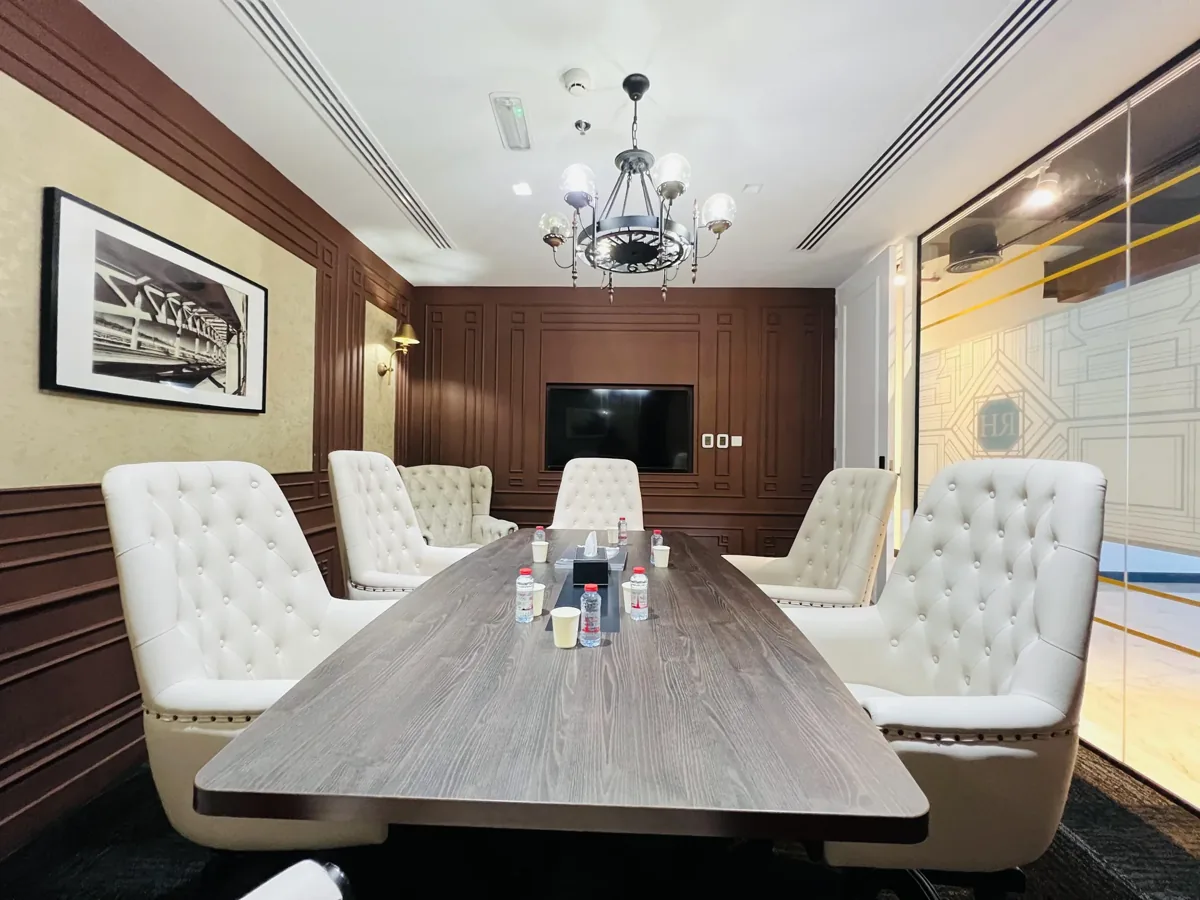
A product's initial production information is only part of a life-cycle conversation. Consider where the material will be used, how intensively it will be cleaned and how damaged sections can be replaced. A surface that looks suitable on a sample board may require different maintenance or replacement in a restaurant service area than in a quiet meeting room. The operating context belongs in the specification.
Ask suppliers for care requirements, warranty conditions and available replacement components. These documents do not prove a carbon result, but they inform a realistic comparison. Modern interior design can support longevity through repairable details and a coherent material palette rather than frequent aesthetic replacement. Any claim about extended life should be grounded in the agreed design and maintenance plan, not a general promise that a product will last indefinitely.
Separate recycled content, circularity and carbon performance
Recycled content describes an attribute that may be relevant to the brief; it does not automatically determine the product's total environmental impact. Recyclability is also different from an established local route for collection and processing after use. Ask what happens in practice: can components be separated, who accepts them and under what conditions? A possible future process should not be presented as an arrangement already secured.
Take-back schemes need written scope. Confirm the accepted product, condition, location, costs and responsible parties, along with any limitations. An interior decoration company can coordinate installation details that permit later separation, but it should not promise that every installed finish will be recycled. Record verified arrangements and unresolved questions independently so the client can distinguish a practical recovery option from a marketing aspiration.
Ask more of carbon-neutral and offset statements
If a supplier claims carbon neutrality, ask what activities and time period are covered, what emissions have been assessed and how reductions and offsets are described. The project team should understand whether the statement concerns the product supplied or a wider organisation. A label is not enough to determine what the client can accurately say about the completed interior.
Refer technically complex claims to the appointed sustainability adviser or other competent reviewer. Do not convert a supplier's statement into a CBD Projects guarantee or a whole-building claim. Public wording should reflect the evidence actually held and the scope assessed. For a procurement comparison, a transparent explanation of limitations is more useful than a strong-sounding adjective that nobody on the project can substantiate.
Create a manageable evidence register
A simple register can connect each material package with its proposed product, functional requirements, evidence supplied, reviewer, decision and revision. Include a short field for limitations: missing declarations, uncertain manufacturing sources or incompatible comparison boundaries should remain visible. Prioritise the packages relevant to the client's objectives rather than collecting large numbers of documents without a question to answer.
At tender, give fit-out companies the same evidence requirements and a clear method for identifying alternatives. Ask what is available at quotation stage and what will follow before procurement. This reduces the risk of an ambitious environmental brief disappearing into unpriced assumptions. The finish approval register guide provides a related control process; carbon-related evidence can be connected to the same product references.
Keep Dubai compliance and voluntary ambition distinct
The responsible project team must confirm the building, authority, landlord and project-specific requirements that apply to the actual premises. An international carbon guide, product declaration or voluntary target does not replace fit-out approvals or establish product acceptance. Dubai Municipality's Building Code page is an official starting reference for the wider building framework, with the relevant requirements interpreted by the competent appointed professionals.
If the client seeks a particular certification or reporting outcome, identify that brief separately and appoint the appropriate expertise. CBD Projects can coordinate the architectural specifications, procurement information and supplier interfaces within its agreed scope. This makes the interior fit-out company part of a documented process without claiming an assessment capability, certification or environmental outcome that has not been established for the project.
Close the record with what was actually installed
Before handover, reconcile the approved evidence with the final product schedules and substitutions. Retain the documents relevant to the installed materials, along with the agreed quantities and assumptions if an assessment has been commissioned. The final record should state its scope and limitations. A design-stage comparison and an as-installed result are different records, particularly where substitutions occurred during procurement.
For your next project, send CBD Projects the premises plans, material priorities and any sustainability or reporting brief through the project brief form. We can define the architectural and procurement coordination required, identify the specialist interfaces and connect those decisions with the wider commercial fit-out scope. The practical goal is a decision that can be explained and evidenced, rather than a collection of environmental labels.
Frequently asked questions
Does an EPD mean a material is automatically low carbon?
No. It provides defined environmental information that must be interpreted in context. A meaningful comparison needs compatible products, assessment boundaries, units and assumptions. Technical suitability remains a separate requirement. Ask the competent reviewer what the declaration establishes and what additional information is needed for the decision being made.
Is every Dubai fit-out required to obtain product EPDs?
This guide does not make that claim. Confirm the applicable authority, building, landlord and project-specific requirements with the responsible professionals. A client's voluntary procurement brief or certification target may add evidence requirements, but international guidance should not be presented as a universal Dubai statutory obligation.
Can we call the whole interior carbon neutral if one product has that label?
No whole-project conclusion follows from one product statement. The scope, method and evidence supporting any wider claim would need specific assessment. Keep public descriptions limited to what has been substantiated, and ask the appointed specialist to review language that implies a quantified environmental result or certification.
What should a client request in the tender package?
State the objective, relevant material packages, expected evidence, responsibility for review and the process for substitutions. Ask bidders to identify unavailable information and associated assumptions. A clear, proportionate request is easier to evaluate than a broad instruction to use sustainable materials without defining the desired evidence or decision.
References and scope
References checked on 12 November 2026. Confirm current requirements and product instructions for the actual project; these links do not constitute project approval.
Plan your commercial fit-out procurement project with one accountable team
Share your material priorities and evidence requirements with CBD Projects when defining the design and fit-out brief.
Send Your Project BriefBack to BlogRelated ServiceView Real ProjectsContact CBD Projects