
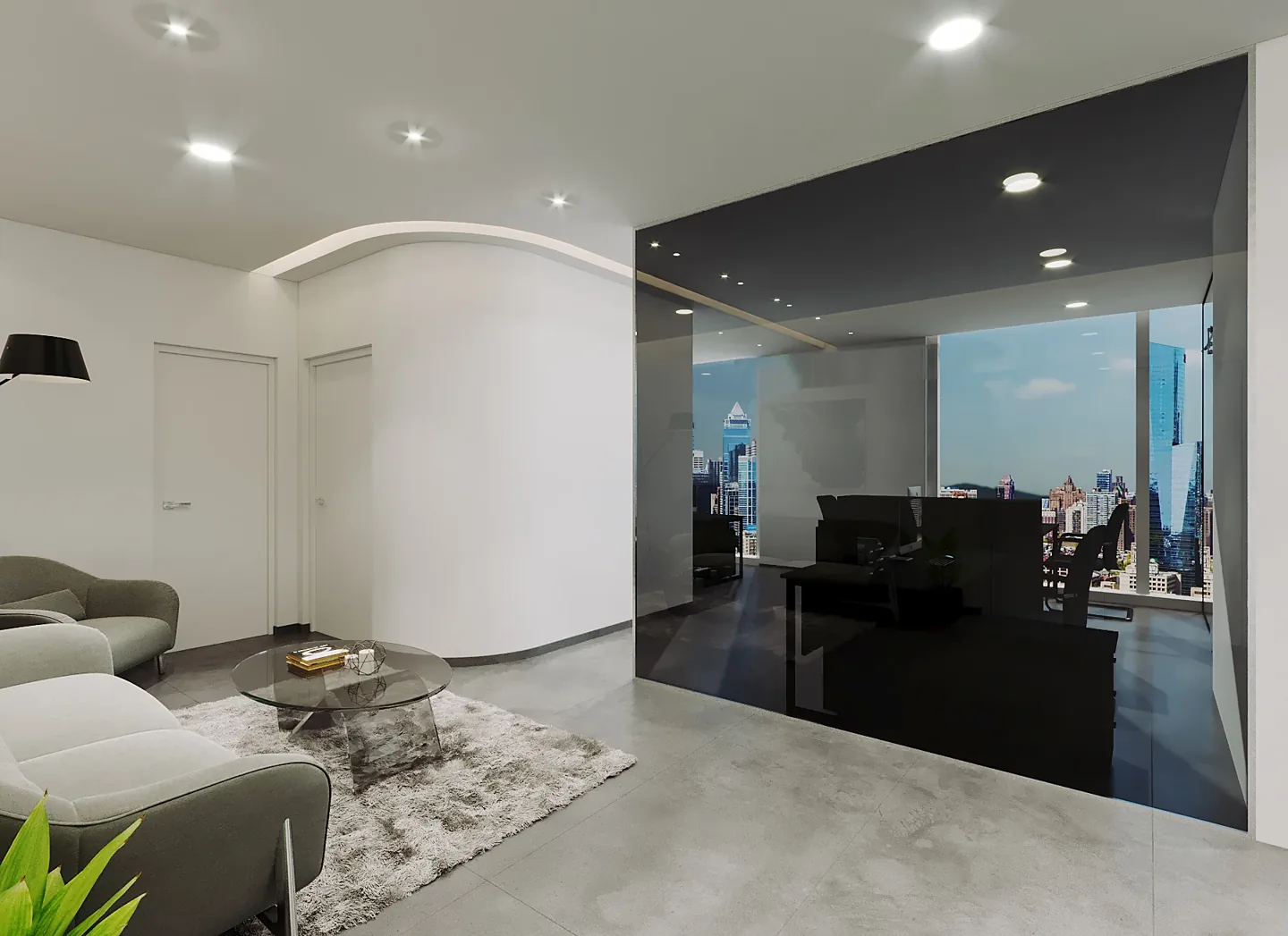
Workplace interior reference for the design review.
A fit-out quotation can exclude an item for a perfectly reasonable reason. The client may be buying it directly, the landlord may be responsible for it or another specialist may need to define the work first. The problem begins when exclusion is treated as disappearance: the cost, programme and interface remain necessary, but nobody records who will provide them.
Reviewing fit-out exclusions is therefore more than comparing the length of two bidders’ small print. It is a project ownership exercise. Each excluded requirement needs a decision about scope, information, money, timing and acceptance. This guide describes that practical review; questions about contractual interpretation, legal entitlement or insurance should go to the appropriately appointed advisers. If you are comparing fit out companies in Dubai, ask each bidder to explain what its exclusions mean in relation to the same project brief, rather than assume that every omitted line represents the same commercial position.
Jump to a section 13 topics
Separate an exclusion from an unresolved assumption
An exclusion states that something is outside a particular offer. An assumption describes a condition used to prepare it. An allowance identifies an amount or scope that may need further definition. These categories can overlap in an unclear quotation, but they should not be treated as interchangeable when the client decides what the proposal covers.
Ask the bidder to rewrite ambiguous wording against the relevant drawing or requirement. If the quotation assumes an existing system can be retained, identify who verifies it. If an item is excluded because information is missing, identify what information will allow it to be priced. The review should produce a clear action, not simply replace one vague phrase with another that sounds more reassuring.
Create an exclusion register before choosing a total
Use a register with a reference, description, source document, proposed owner, pricing status, information needed and decision date. Include a column for interfaces with other work. A spreadsheet is sufficient if the entries are specific and maintained; complicated software will not resolve a requirement whose meaning nobody has agreed.
Record exclusions from the quotation, tender clarifications and meeting notes in the same place. Avoid leaving an important verbal promise outside the written comparison. For office fit out in Dubai, the register may reveal that the visible interior is priced while furniture, IT activation or some building services remain in separate appointments. That can be acceptable, provided the overall project still has a complete and realistic plan.
Ask whether the item is genuinely needed
Not every excluded option belongs in the final project. An upgrade, an alternative material or a future expansion may be deliberately deferred. The client should distinguish those choices from requirements that are necessary for the intended operation. A useful review asks what happens if the item is not provided at opening.
Connect the answer to the approved brief. A meeting-room screen may be optional in one workplace and essential to the operating model in another. A display fixture may be a future campaign item rather than part of the base shop. Record the client’s decision and its consequences, so the project does not silently lose a required function while appearing to remain within budget.
Allocate client-purchased items as real project work
Direct purchases still need selection, ordering, delivery, storage, installation and acceptance. Identify which of those tasks the client will perform and which it expects from the fit-out contractor or supplier. An excluded purchase price does not establish that installation, connection or protection has been included elsewhere.
Prepare a schedule of client items with references and the information required by the design team. Furniture dimensions, equipment loads and service connections should arrive before the relevant coordination decisions are closed. If the client changes an item, ask the responsible parties to review its interfaces. A replacement that looks similar may require a different opening, support, cable route or delivery arrangement.
Confirm what the landlord actually provides
A quotation may exclude base-building work, landlord systems or a condition said to be part of the tenancy handover. Compare that wording with the information available from the building owner or management team. The tenant and its advisers should confirm what will be supplied, in what condition and at what stage.
Do not treat an earlier tenant’s installation as evidence that the landlord will maintain or adapt it for the new project. Record any investigation or written confirmation still needed. Interior fit out consultants in Dubai can help organise the interior and technical questions, but the relevant professional team and contractual parties must establish their own responsibilities. The exclusion register should show those dependencies rather than convert them into assumptions nobody has accepted.
Distinguish specialist design from specialist installation
A project can require both design information and physical work for the same system. One bidder may include installation to a supplied design, while another allows for a different level of specialist involvement. Clarify who designs, reviews, supplies, installs, tests and demonstrates each relevant portion of the work.
Use a responsibility matrix alongside the price comparison. Identify the documents a specialist must issue and the stage at which other trades need them. An interior fit-out company should not be assumed to provide regulated engineering, healthcare planning or another specialist discipline simply because the system sits within its construction area. Allocate those professional appointments expressly and ask appropriately qualified advisers to assess their scope.
Make authority and landlord-related costs understandable
Approval preparation, submission, fees, deposits, revisions and completion requirements may be treated differently in different proposals. Ask what the bidder has allowed for and what remains payable or appointable by the client. The applicable route must be confirmed for the actual premises and work; a general statement that approvals are excluded does not explain the remaining project task.
DDA publishes a fit-out permit service for projects within its jurisdiction. That is an example of an authority-specific route, not a universal checklist for every Dubai property. Identify the responsible parties and current requirements with the relevant authority and professional team. Keep refundable deposits, professional services and other charges distinguishable in the budget rather than combining them into an unexplained approvals allowance.
Trace the physical interfaces between excluded and included work
Choose a representative interface and follow it through the documents. If equipment is excluded, who provides its mounting, surrounding joinery, power, data, ventilation and final connection? If signage is client-supplied, who confirms dimensions and positions before the shopfront is manufactured? The same question applies whether the project is an office, clinic or retail store.
Ask each party to confirm its part in writing. The result should show a continuous chain from requirement to installed and accepted item. When comparing retail fit out companies in Dubai, an apparently complete counter package may still depend on unpriced payment equipment or security components. These gaps are easier to resolve before award than when a finished surface needs to be opened again.
Put time beside every unassigned cost
An omitted item can affect the programme before it affects the construction invoice. It may need an early design decision, a specialist review or a long procurement lead time. Record the required information date and required-on-site date, then ask the responsible party to explain the steps needed to achieve them.
A client purchase scheduled after the fit-out contractor’s handover may prevent the space from operating even if construction finishes as planned. Conversely, an early delivery can create storage and protection obligations that nobody priced. Use the exclusion register to expose these timing relationships. A complete project budget and a credible opening plan should be developed together rather than reviewed in separate meetings that use different assumptions.
Price the whole appointment without disguising uncertainty
Where information is sufficient, obtain a defined quotation from the responsible party. Where it is not, record an allowance with its basis and limitations, supported by appropriate professional cost advice. Keep that uncertainty visible. An estimate does not become a fixed commitment because it has been entered into a spreadsheet beside a firm contractor total.
Separate base scope, approved options, deferred requirements and unresolved items. Compare proposals on the same basis and show the costs the client expects to carry outside the main construction contract. The best fit out companies in Dubai query is more usefully answered through this kind of transparent comparison than through unsupported rankings. A clear explanation of what is bought is stronger evidence than an attractive total with unclear boundaries.
Resolve overlaps as carefully as gaps
Two parties can each include a portion of the same task. That may appear safer than an exclusion, but overlapping responsibility can still lead to conflicting instructions or duplicated costs. Identify whether the offers cover identical work, different stages or an interface that has not yet been properly divided.
Choose an owner for the relevant instruction and confirm how the other party’s work relates to it. Do not remove an apparent duplicate solely to reduce the total without checking that the remaining scope is complete. A joinery supplier’s installation allowance, for example, may not cover the same preparation, protection or finishing work as the main contractor’s line. Ask the relevant parties to explain the difference before changing the comparison.
Close decisions into the award documents
Once an exclusion has been allocated or brought into the selected scope, connect that decision to the final documents. Update the clarification schedule, relevant drawings and commercial comparison as appropriate to the procurement process. The client and its advisers should ensure that the agreed appointment reflects those decisions before relying on them.
Keep a record of items that remain unresolved, with named owners and decision dates. This is not an invitation to award a project with critical unknowns hidden in a general contingency. It is a way to distinguish deliberate remaining work from an accidental omission. Contractual wording and legal consequences should be reviewed by the relevant advisers rather than inferred from a design meeting note.
Use the register after award instead of filing it away
Review the open entries as the design and procurement information develops. Confirm when an item has been ordered, when its interface is coordinated and what evidence will close the action. If the project changes, update the affected responsibilities instead of assuming that the original allocation automatically covers a different requirement.
CBD Projects can discuss a design and fit-out scope that makes these interfaces understandable. Share the available plans, quotations and client-purchase assumptions through our project brief form. Our commercial fit-out service can be considered alongside appropriately appointed specialist advice. The aim is a project with clear owners, rather than a quotation that merely contains fewer lines labelled excluded.
Frequently asked questions
Is an exclusion a warning that a contractor is unsuitable?
Not necessarily. It may correctly identify work belonging to the client, landlord or another specialist. Assess whether the exclusion is clear, appropriate and allocated elsewhere. Repeated ambiguity or an unwillingness to explain important interfaces is a more useful concern to investigate.
Should we choose the quotation with the fewest exclusions?
Compare the actual scope, assumptions and responsibilities rather than the number of exclusions. A shorter list can conceal undefined items, while a detailed list may make the appointment clearer. Bring each proposal onto the same agreed basis before comparing totals.
Can a contingency cover everything outside the main contract?
A contingency should not replace the identification and allocation of known requirements. Obtain appropriate cost advice, distinguish uncertainty from confirmed omissions and identify who will procure the necessary work. An unassigned requirement still needs an owner even if the client has allowed money for it.
Who should resolve a disagreement about what the contract includes?
Use the agreed project communication and contract administration process, with the relevant commercial and legal advisers where needed. This article explains a practical scope review and does not determine legal entitlement or replace advice on a particular contract.
What is the most useful first step?
Collect the current quotations, tender information and clarifications, then create one exclusion and assumptions register. Give every necessary item an owner, information requirement and decision date. Start with interfaces that could affect design release, procurement or the intended opening.
References and scope
References checked on 13 November 2026. Confirm current requirements and product instructions for the actual project; these links do not constitute project approval.
Plan your commercial fit-out planning project with one accountable team
Share your commercial fit-out brief and known scope boundaries with CBD Projects for a practical appointment discussion.
Send Your Project BriefBack to BlogRelated ServiceView Real ProjectsContact CBD Projects