
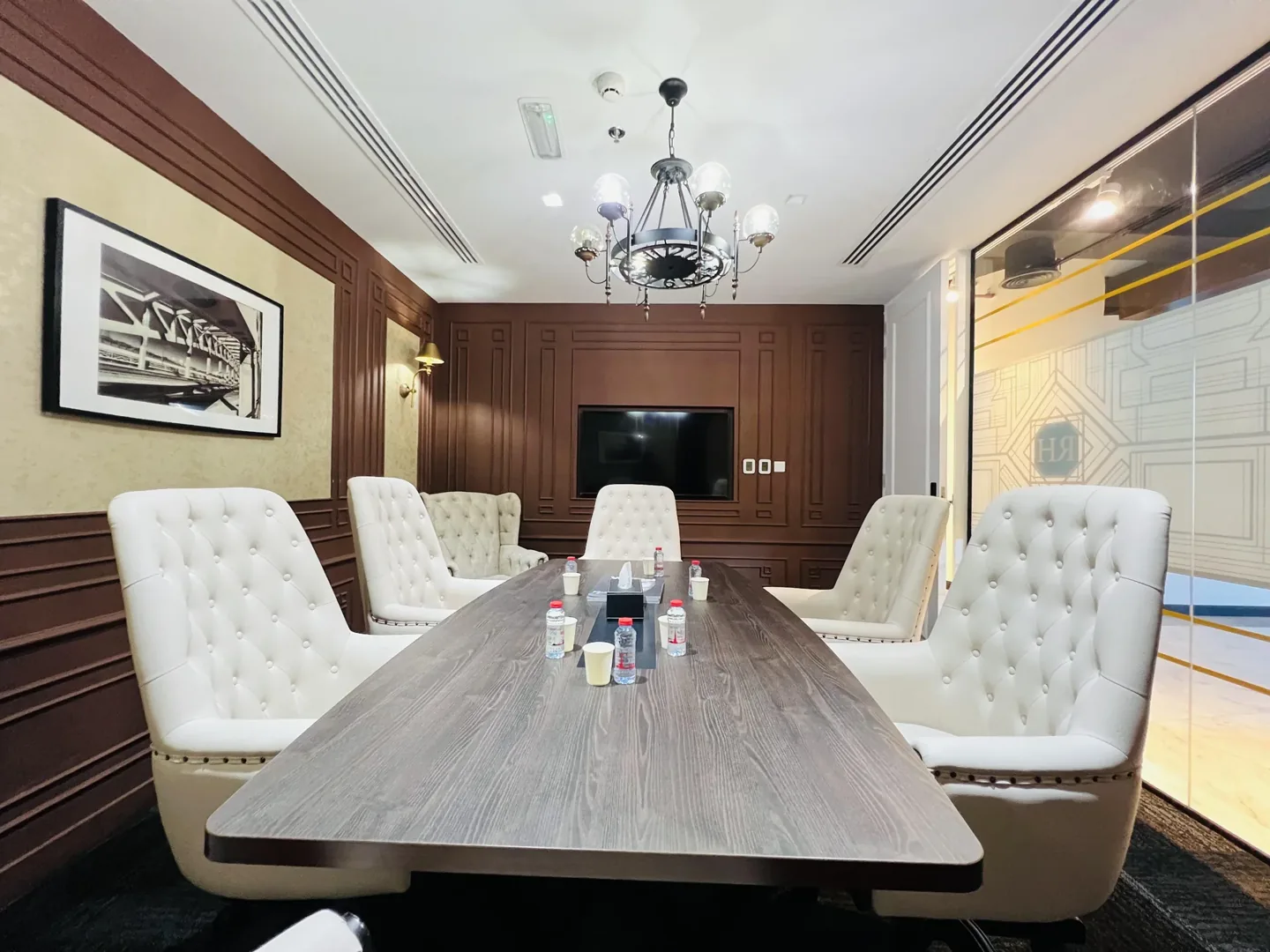
Meeting-room reference for structured project reviews and client representative briefings.
A fit-out project can continue while the person representing the client changes. An owner may appoint a new manager, an investor may hand daily decisions to an operator, or a workplace team may replace its project contact. The incoming person needs more than a collection of drawings. They need to understand which decisions are settled, which questions remain open and what authority they have to respond.
For a Dubai fit-out, the transition should protect continuity without pretending that every earlier preference is beyond review. A new representative may bring useful operational knowledge, but changes need to be considered against the work already ordered, installed or submitted. This guide explains how to transfer the brief in a form that supports decisions. It concerns the client's working arrangements; changes to formal appointments, contracts or authority records should be reviewed through the relevant responsible parties rather than assumed from an introductory email.
Jump to a section 14 topics
Explain why the handover is happening
Start with a short account of the transition. Is the outgoing representative leaving the business, returning to a different role or handing responsibility to the person who will operate the finished space? The answer helps establish what continuity is needed and which new information the incoming person is expected to contribute.
Avoid making the explanation personal or turning the transfer into an informal review of performance. The contractor and interior design consultant need a clear working arrangement, not a history of internal disagreements. Identify the date the new contact becomes active and any short overlap period. If the outgoing person remains involved in selected decisions, describe those responsibilities so that the team does not receive competing responses from two people acting as the same client contact.
Clarify the authority behind the contact role
A person who organises meetings may not be authorised to accept a price change, release a purchase or approve a final material. List the kinds of responses the incoming representative can provide and the matters that require another named client decision-maker. The arrangement should be confirmed by the appropriate client party and reviewed against the project documents.
Do not assume that access to a messaging group transfers formal authority. An interior fit-out contractor should know where to send a request and whose response is needed for the relevant commitment. Keep the working decision route distinct from any required contractual or official appointment change. The purpose is a usable communication structure that prevents an urgent question from being answered by somebody whose role has not actually been established.
Summarise the purpose of the finished space
The new representative needs the reasons behind the layout. Describe the people using the premises, the activities that matter and the priorities the client agreed at the start. Include the practical problems the work is intended to solve. A plan becomes easier to assess when its rooms and relationships are linked to those objectives.
For office fit out in Dubai, this might mean explaining how visitor meetings, focused work and shared resources informed the arrangement. In a home, it might concern privacy, storage or occupation during the works. Keep the summary concise and factual. It should help the incoming person distinguish a necessary operational requirement from a preference that can be reconsidered without changing the purpose of the project.
Identify the accepted baseline documents
Prepare an index of the current drawings, specifications, samples and other accepted project information. Each entry should be identifiable by its title, date or revision and its role in the appointment. Explain where the controlled copy is kept so that the new person does not rely on an old attachment found in a long email thread.
The index should also explain what a document does not settle. A concept image may show the design direction while a later drawing controls a particular dimension. A supplier quotation may still depend on a final site measurement. Those distinctions help the new representative review information at the right level rather than interpreting every visually complete document as an unconditional instruction to build or buy.
Transfer decisions with their reasons and limits
For important accepted decisions, record the choice and the practical reason it was made. Perhaps a cabinet depth was limited by a door opening, a material was selected for care requirements or a room relationship depended on a client-supplied item. Explain relevant limits without recreating every conversation that preceded the decision.
Include the evidence of acceptance and any conditions attached to it. An approval to proceed with a sample may not be the same as acceptance of the full production item. The incoming representative can then ask informed questions and recognise where a new proposal would change an established assumption. This is more helpful than labelling all previous work final and leaving its meaning to be reconstructed later.
Give open questions an owner and a decision date
Separate unresolved items from accepted decisions. Describe the question, the information still needed and the person expected to provide it. Identify the next useful decision point from the actual programme, including the consequence if the information is not available. A long undifferentiated list makes it difficult for a new representative to know where to start.
Keep the request specific. Rather than asking somebody to approve the kitchen, identify whether the team needs an appliance selection, an equipment dimension or acceptance of a joinery detail. The incoming person can then direct the question to the appropriate adviser or operator. Interior fit out consultants in Dubai can assist with reviewing the scope, but the client's own decision route still needs to be made explicit.
Show which commitments are already in motion
List the work that has been ordered, released for manufacture, delivered or installed. These are different states and should not be described simply as completed. Identify the document or accepted reference behind the commitment and the practical next step. This gives the new representative an understandable account of what can still change and what needs a more careful review.
Avoid presenting the list as a reason to reject every new concern. Instead, use it to assess a proposed change accurately. A finish not yet ordered may have a different consequence from a fabricated counter awaiting installation. Ask the responsible team to explain the actual cost, timing and interface effects before the client decides how to proceed.

Record the position of client-supplied packages
The client may have separately appointed technology, kitchen, equipment, furniture or other suppliers. Explain their scope, information status and contact route to the incoming representative. The contractor needs to know which interfaces are accepted and which still depend on those outside packages.
Identify deliveries, attendance or demonstrations that require client coordination. A new contact may otherwise assume that all visible items are included in the fit-out contract. Keep the boundaries readable, with a clear description of who supplies, installs and accepts each relevant element. This helps preserve continuity when the person who originally selected a vendor is no longer managing day-to-day questions on the project.
Review commercial matters through the right documents
Provide an organised account of the client decisions that affect the commercial scope. Identify accepted changes, proposals still under review and allowances awaiting information. The incoming representative should be able to distinguish an instruction already released through the agreed route from an estimate supplied for discussion.
Do not substitute a verbal financial summary for the actual project documents. The appropriate client and contractor representatives should reconcile questions through the agreed contractual process. When comparing or reviewing fit out companies in Dubai, a clear record of scope and change responsibilities is more useful than asking a new contact to infer the commercial position from informal messages or a single headline budget figure.
Explain the current site and occupation arrangements
Give the new representative a practical account of where the work stands. Identify the areas released for construction, retained belongings and any agreed arrangements for occupants or trading. Include the responsible contact for arranging a site review rather than expecting a new client contact to enter the work area without coordination.
Explain which parts of the installation can be reviewed now and which depend on a later stage or responsible specialist. The transition meeting should not become an unplanned inspection of concealed or inaccessible work. A well-arranged visit can help the incoming person connect the document record with the property while leaving technical assessment and site management responsibilities with the appointed team.
Present permissions as a status record, not a promise
Where the appointment involves fit-out approvals, provide an index of the relevant submissions, comments and current documents. Identify the responsible person who can explain their purpose and any action still needed. The new representative should understand which client information or signatures remain outstanding.
A change in client contact does not automatically amend every property, authority or contractual record. Ask the relevant responsible parties whether formal updates are required for the actual project. This guide does not prescribe a universal administrative route. Its practical aim is to prevent somebody from assuming that an informal handover has settled responsibilities that sit elsewhere in the appointment.
Run a focused transition meeting
Circulate the brief summary, document index and open-question list before the meeting. Ask the outgoing and incoming representatives to identify anything missing or unclear. Include the contractor's project contact and relevant design or specialist participants when their information is needed, keeping the discussion focused on the transfer rather than reopening every project decision.
Work through priorities in order: role and authority, project purpose, accepted baseline, urgent open matters and the next review dates. Record actions with an owner. Where the new representative raises a change, place it into the agreed assessment route instead of treating a first impression as a construction instruction. The meeting should leave the team knowing how to proceed the following day.
Confirm the new communication arrangement in writing
Issue a short transition record after the meeting. Identify the current client contact, the agreed decision route and any responsibilities retained by others. State where the project information is stored and how new requests should be issued. Obtain confirmation from the appropriate client party so that the working arrangement is recognisable to the team.
Keep superseded contacts and earlier records available as history where appropriate, but make the current route easy to find. Avoid quietly removing access or deleting correspondence without considering the client's own information procedures. A tidy current contact list, linked to the controlled document index, is usually more useful for day-to-day coordination than adding another messaging channel that nobody knows how to govern.
Test the transfer against the next real decision
Use an upcoming decision to check whether the transition works. Can the new representative find the relevant drawing, understand the question and identify who must accept the response? Can the contractor connect that response to the current information? A small practical test can reveal gaps that an apparently complete document folder leaves hidden.
CBD Projects can discuss the coordination needed within a defined interior design and fit-out appointment. If you are preparing a new enquiry or clarifying a changed client brief, share the property information and priorities through the project brief. The aim is continuity of purpose and a clear decision route, so that a personnel change does not turn accepted work and open questions into an uncertain new starting point.
Frequently asked questions
Must the new representative accept every earlier decision unchanged?
They should first understand what was accepted and what commitments follow from it. A concern can still be raised through the agreed review route. The team should assess the actual scope, cost and programme implications before a change is released, rather than assume that a new contact resets every previous decision.
Is a shared folder enough for the transfer?
A folder helps only when the current information is identifiable and its status is explained. Include a brief summary, an index of accepted documents and a clear list of open matters. The incoming person also needs to know which decisions they can make and who handles questions outside their role.
Should the contractor manage the client authority change?
The client should confirm its own representative and decision route through the appropriate party. The contractor can explain the communication it needs for the appointment. Any formal contractual, property or authority-record change should be handled through the relevant responsible parties and project documents.
What if the outgoing person is unavailable?
Use the existing controlled records and ask the appropriate client decision-makers to confirm the working arrangement. Identify gaps explicitly, prioritise the questions affecting imminent commitments and obtain clarification from the responsible project participants. Do not fill missing history with assumptions presented as accepted instructions.
Plan your client coordination project with one accountable team
Share your property brief and project coordination requirements with CBD Projects to discuss the appropriate appointment.
Send Your Project BriefBack to BlogRelated ServiceView Real ProjectsContact CBD Projects