
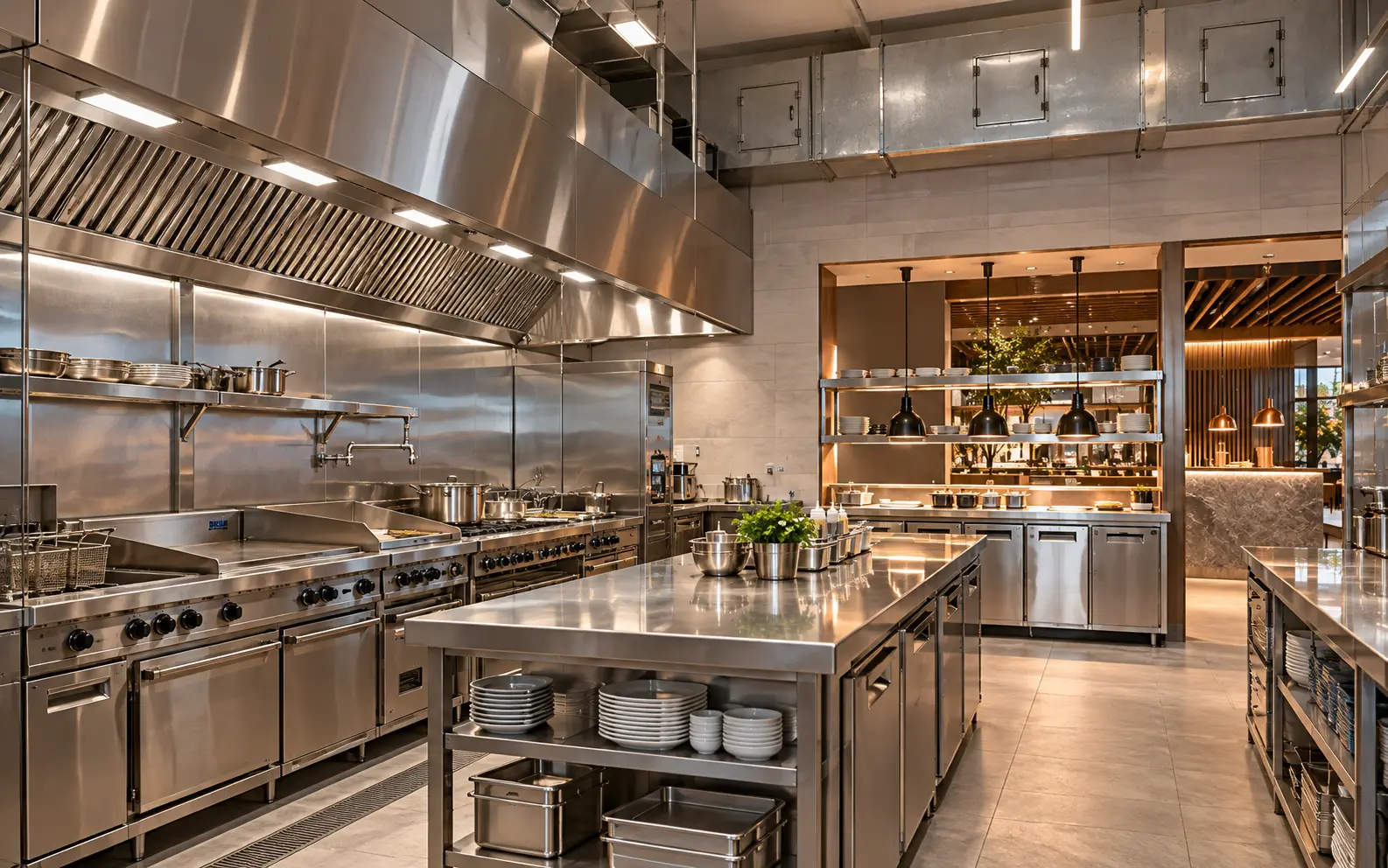
AI-generated illustrative design concept; not a completed CBD Projects project, approved drawing or technical compliance detail.
A refrigerator, combi oven or fabricated counter may fit the kitchen plan but not pass through the service lift or final doorway. Late discovery can require dismantling finished work or changing equipment. Delivery and replacement access should be checked during design.
Create an equipment logistics schedule with packaged dimensions, weights, handling method, delivery route, staging and installation prerequisites. Verify the route physically before purchase and again before dispatch.
Use packaged and final dimensions
Obtain shipping dimensions, weight, lifting points and permitted orientation from suppliers. Packaging can be larger than the installed equipment, while site assembly may create different access needs.
Identify which items can be dismantled without affecting warranty and which require specialist handling.
Survey the entire route
Check loading bay, security, lift, corridors, doors, corners, thresholds and kitchen entrances. Include protective coverings and turning space. Confirm building booking rules and permitted delivery times.
Measure after critical finishes where tolerances are tight; do not rely only on tender drawings.
Sequence floors, plinths and services
Coordinate equipment bases, floor finishes, drainage, hoods and utility points with delivery timing. Some items need to enter before door frames or counters close; others should wait until dusty work ends.
Use the café equipment coordination guide as a smaller-scale interface checklist.
Plan staging and protection
Allocate a clean, controlled area for inspection and temporary storage. Keep exits, fire equipment and active work routes clear. Record responsibility for floor, wall and equipment protection during movement.
Remove packaging promptly under the approved waste route without losing manuals or loose components.
Inspect, install and commission
Check delivered models and damage before positioning. Qualified installers should connect and commission equipment within their scope. Test service access after adjacent counters and panels are installed.
Record serial information, warranties and supplier contacts. Preserve a future replacement route rather than closing it with permanent joinery.
Frequently asked questions
Should the delivery route be checked before equipment purchase?
Yes. Confirm packaged dimensions, handling and the complete route before committing to equipment that may not reach its position.
Can equipment be delivered before the kitchen is finished?
Only with agreed readiness, staging, protection and installation sequence. Early delivery can expose equipment to damage and dust.
Plan your retail and hospitality fit-out project with one accountable team
Share your equipment schedule, building logistics manual and kitchen programme with CBD Projects for coordinated delivery planning.
Send Your Project BriefBack to BlogRelated ServiceView Real ProjectsContact CBD Projects