
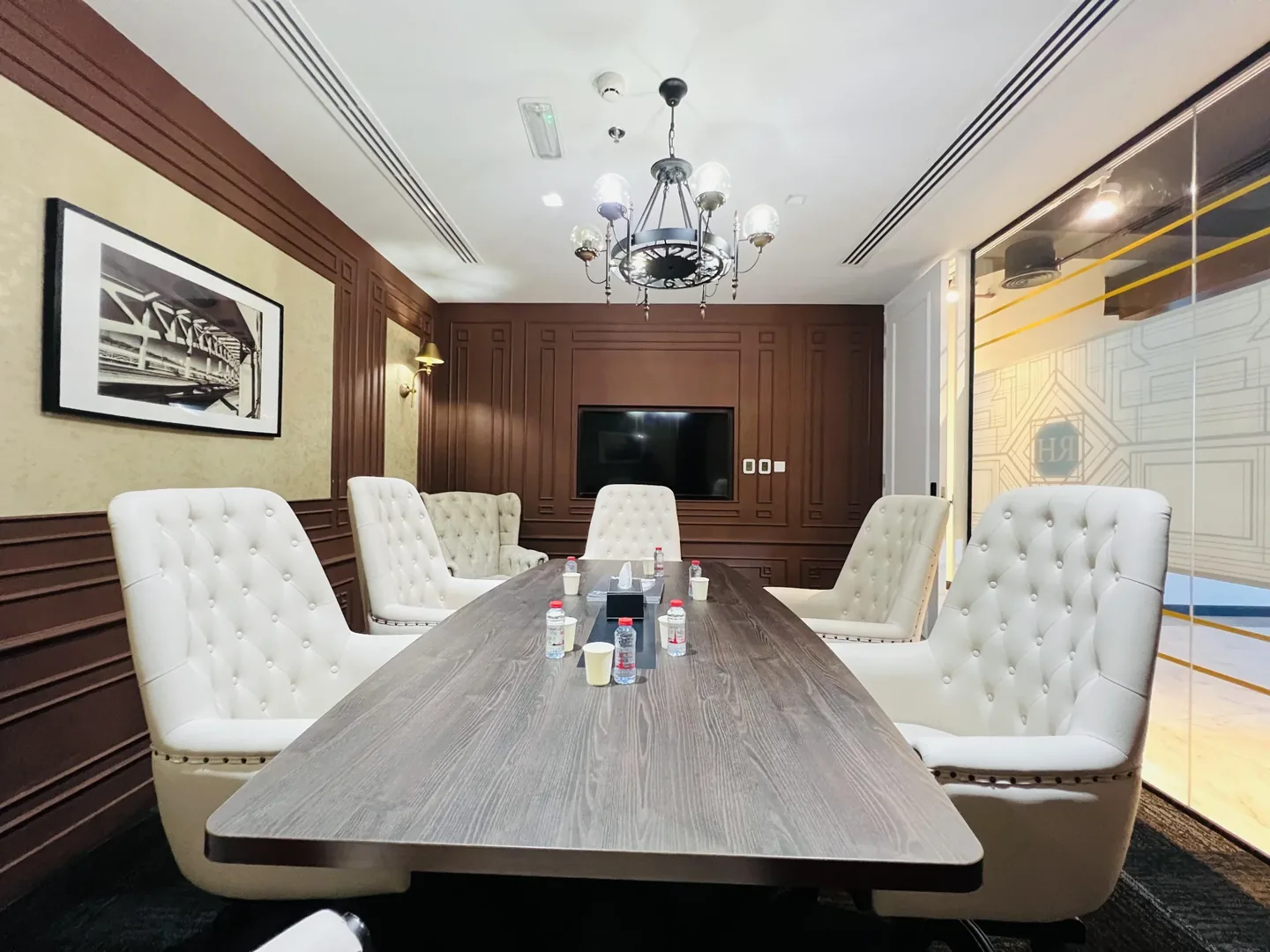
Workplace interior reference for the design review.
Two interior design fee proposals in Dubai can look similar while purchasing different services. One might stop at a concept presentation; another might include developed interior drawings, tender clarification and selected construction-stage reviews. Comparing their totals without understanding those boundaries can leave a client with an appointment that does not reach the decision it needs to make.
This guide focuses on the design consultant's fee proposal, rather than the construction price or the choice between design-build and separate appointments. Its purpose is to help a business owner connect stages, deliverables, reviews and payment milestones to the actual project. Commercial and legal terms should still receive appropriate professional review before the client commits.
Jump to a section 13 topics
Write the decision the appointment must support
Start by describing why the consultant is being appointed now. You may need to decide whether a property is viable, choose between layouts, establish an interior concept, issue tender documents or support selected reviews during construction. These are different outcomes. A proposal should be judged against the next decision and the work needed to support it.
Write that purpose in a short client brief and give the same starting information to each consultant. Identify the project location, intended use, available plans and known constraints. Explain what has already been approved and what remains uncertain. This gives an interior design company a common basis for proposing services instead of requiring each bidder to imagine a different project.
Turn stage names into a document schedule
Concept, developed design and technical design are useful labels, but they do not establish the actual contents of an appointment. Ask what will be issued at each stage: plans, elevations, schedules, details, visualisations or decision records. Identify the intended use of those documents and the format in which they will be delivered.
A concept plan may support discussion while remaining unsuitable for fabrication or a complete construction price. A rendered view may clarify atmosphere without defining the materials and junctions needed for procurement. Ask the consultant to make these limitations understandable. The comparison should connect the fee to reviewable outputs, not assume that an identical stage name means identical information in every proposal.
Identify the starting information each fee assumes
A consultant may price its work on the assumption that accurate measured drawings, equipment schedules or an approved operating brief will be supplied. Another proposal may include some investigation or briefing work. Those differences affect the fee and the reliability of the programme. List the inputs each proposal expects from the client or another appointed party.
Ask who checks the information and how discrepancies are handled. An interior design consultant should not be expected to verify every structural or engineering matter simply because a floor plan has been provided. Equally, the client should understand when the proposed design will rely on unverified dimensions or provisional equipment. Assumptions are useful when they are visible, specific and connected to the next action.
Compare options and revisions without treating them as unlimited
A fee might include one developed concept, a stated number of layout alternatives or a defined review process. Clarify what the proposal means by an option, a revision and a change of brief. A correction needed to address a documented design issue is not necessarily the same as the client introducing a new business model after accepting a stage.
Ask how comments will be consolidated and who can approve the response. Several stakeholders can create conflicting instructions even when each is making a reasonable request. A clear process protects the client's opportunity to review the work while giving the consultant a defined basis for progressing. Avoid assuming that unlimited changes are automatically better value; an open-ended promise may obscure how the project will reach an agreed decision.
Map specialist appointments and coordination duties
Interiors depend on information from engineers, equipment suppliers, acoustic advisers, branding teams or other specialists relevant to the project. A proposal should identify which services the interior consultant provides, which are by others and how their information will be coordinated. The word coordination should lead to understandable tasks, meetings and document interfaces.
When reviewing interior fit out consultants in Dubai, ask who checks a specialist input against the interior package and who retains technical design responsibility. Coordination does not automatically transfer every professional obligation to one party. Make unresolved appointments visible in the project budget and programme. Otherwise a low design fee can appear complete while the client has not yet purchased essential supporting work.
Separate tender documents from tender assistance
Issuing a package that contractors can price is different from supporting the tender process after issue. Ask whether the fee includes clarification responses, review of interior qualifications, comparison of proposed material alternatives or assistance with a scope reconciliation. Define what the consultant will assess and which commercial or technical matters need other advisers.
This distinction matters when approaching fit out companies in Dubai. Bidders may price different interpretations of a provisional detail or identify exclusions that the client needs help to understand. A consultancy appointment can provide useful design clarification without becoming legal review, cost consultancy or full procurement management. The fee proposal should explain that boundary before the tender timetable starts.
Define construction-stage services precisely
Selected shop drawing reviews, sample reviews, site observations, contract administration and supervision are different activities. Ask which are included, how often they occur and what they are intended to establish. A proposal that includes occasional design observations should not be compared as though it purchases continuous inspection of all work.
Agree submission procedures and response expectations that fit the procurement programme. A consultant needs suitable information and enough time to review it before manufacture or closure. The contractor remains responsible for its own appointed duties and methods. Clear wording helps the client understand what a review comment means, rather than interpreting every approval mark as acceptance of concealed conditions or specialist performance.
Check the treatment of authorities and third-party charges
Identify whether the consultant prepares interior information for an application, coordinates a submission or performs another defined role. The relevant landlord and authority route depends on the actual premises and scope. DDA's published fit-out permit service is one example within its jurisdiction; it should not be used as a universal process for every project in Dubai.
List application charges, specialist appointments and other third-party costs separately from the consultant's professional fee. Ask who pays them and whether they are included, reimbursable or outside the appointment. A promise to help with fit-out approvals is useful only when the associated tasks are clear. It should not be read as a guarantee of an authority decision or a fixed opening date.
Connect payments to an understandable delivery record
A payment schedule should be reviewed alongside the services and deliverables. Ask what establishes completion of a stage and what information the client receives at that point. A presentation date, a submitted document package and formal client acceptance are different events. The appointment needs wording that the parties understand consistently.
Commercial arrangements also need to address pauses, changes, cancellation and additional services appropriately. Obtain relevant professional advice on the terms rather than relying on a design comparison sheet as a contract review. The practical client task is to identify the questions and connect them to the proposed work. A clear payment schedule should support delivery and decision-making, not conceal uncertainty about what remains to be produced.
Ask how additional services are instructed
Projects change. A revised tenancy boundary, additional room, new equipment package or different opening strategy can create work beyond the original appointment. Ask how the consultant identifies that additional service, explains its effect and receives authorisation. The client should be able to distinguish an agreed extension from an instruction that is still being discussed.
Maintain a short record linking the request, affected deliverables, fee or programme proposal and authorised decision. This is particularly useful when several departments can request changes. Do not allow a workshop comment or supplier suggestion to become an unreviewed instruction to redesign the interior. Equally, keep genuine unresolved design obligations visible rather than labelling every remaining task as an extra.
Check whether the proposed review calendar is workable
Compare review obligations with the programme the client actually intends to follow. If purchasing needs a decision before a manufacturing slot can be reserved, the relevant design information and client response need to arrive in time. A proposal offering a certain number of meetings is less useful if nobody has connected those meetings to the decisions required for ordering or tender issue.
Ask how long the consultant needs to prepare each stage and what client or specialist inputs must be available. Identify what happens when those inputs arrive late or conflict with a previously accepted decision. The objective is a realistic shared sequence, not an unsupported promise that every review can be completed immediately. Record dependencies alongside the fee so that an apparent saving does not rely on the client supplying information it does not yet have. A clearly described programme also helps distinguish a genuine change in scope from a delay caused by an outstanding decision within the original appointment.
Use a comparison table that preserves real differences
Create columns for each proposal and rows for the next decision, starting information, stage outputs, options, revisions, specialist interfaces, tender support and construction-stage duties. Add exclusions, third-party charges, additional service procedures and payment milestones. Mark information that has not been provided and request written clarification before drawing a conclusion.
The objective is not to force every proposal into an identical format or assume that the lowest total is unsuitable. Different appointments can be valid choices when the client understands what each purchases. Compare the proposed work with the actual brief and identify the services still needed from others. Looking for the best fit out companies in Dubai may start a broad search, but a consultant appointment requires a more specific judgement about scope, competence and responsibilities than a ranking phrase can provide.
Commission the scope that fits your project stage
An early concept appointment may be the right next step when the operating brief or property choice is unresolved. A coordinated documentation appointment may be more useful when the client is ready to seek construction prices. Neither is automatically superior. The fee comparison should explain how the selected service moves the project towards its next decision and what remains afterwards.
Ask CBD Projects to describe the design deliverables and review obligations proposed for your commercial interior. Use the project brief form to provide available plans, location, intended activity and current decision status. If you also need a construction appointment, review our commercial fit-out service separately so that design advice, procurement and execution remain understandable commitments.
Frequently asked questions
Should I compare design fees per square foot?
Area can be one reference, but it does not describe all the work. Compare starting information, design stages, document requirements and review responsibilities first. Similar areas can involve different briefs, specialist interfaces and levels of investigation.
Is a concept package enough for a contractor to build from?
Not necessarily. Ask what the package is intended to support and what technical information remains. Concept approval should not be treated as permission to fabricate details, proceed with regulated works or assume that specialist systems are coordinated.
What is the most useful clarification to request?
Ask for a stage-by-stage deliverable schedule with inclusions, exclusions and information required from others. Then connect each stage to review meetings and the client decision it is intended to support.
Does a lower fee always mean a weaker proposal?
No. It may describe a smaller or more focused appointment. Assess whether that scope meets the current brief and identify any additional services still required. A comparison should make differences visible rather than infer quality from price alone.
Can one proposal include design and construction?
Yes, a design-build offer may include both, but the professional services and construction commitments should still be understandable. This guide addresses comparing consultancy fee scopes, not replacing a wider procurement or contract assessment.
References and scope
References checked on 13 November 2026. Confirm current requirements and product instructions for the actual project; these links do not constitute project approval.
Plan your commercial design consultancy project with one accountable team
Share your project stage and available information with CBD Projects to discuss a clearly scoped interior design consultancy proposal.
Send Your Project BriefBack to BlogRelated ServiceView Real ProjectsContact CBD Projects