
Sit in the styling chair your team uses most often and look at the wall behind you through the mirror. The worn corner beside the trolley may be more visible to a customer than the feature finish that looks so prominent on the floor plan. Now stand behind the chair with a colour swatch. Can you show it to the client without turning away from the mirror or moving into the next appointment? These are useful starting points for decorating an established salon that already has the right number of chairs and working connections.
CBD Projects LLC can scope a decoration contract around the renewal of existing styling stations. The work begins with one measured station, samples of the proposed finishes and an agreed trial before committing to a whole row. It can include wall and joinery finishes, mirror surrounds, replaceable trims, interior elevations and installation coordination. Tell us what you intend to retain, which chairs earn revenue at your busiest times and what you most want to improve for the person sitting in them.
Find out why the current finish needs replacing
Walk a typical appointment with the stylist and then walk the reset between customers with the person who prepares the station. These two views explain different kinds of wear. A stylist may point to a counter edge that catches a brush handle. The person cleaning the area may point to a narrow gap behind the mirror surround that is difficult to reach. Photograph those details with the station empty. Client photographs, treatment histories and appointment records are unnecessary for a decoration survey.
Make a short list of issues by station number. Record the damaged surface, what usually comes into contact with it and whether the same issue occurs elsewhere. If only the station nearest the entrance has a battered end panel, inspect the delivery and trolley route before specifying a harder material for every station. Moving a parking position or providing one replaceable end piece may solve more than renewing a whole run of joinery. Ask for the reason behind each proposed replacement to appear beside it on the scope.
Choose a representative chair for the trial
The best trial position usually has a little of everything the operator needs to assess. Choose a station that staff use for consultations as well as routine appointments, with the same retained chair and mirror type used elsewhere. Record any condition that makes it unrepresentative. For example, the station nearest a glazed shopfront receives daylight that the last chair in a deep unit may never see. If the finish looks promising at the first chair, take a loose sample to the last one before ordering the full quantity.
CBD can prepare an elevation identifying the edges and surfaces to remain, the proposed changes and the dimensions that must be verified on site. Add an operator’s note identifying who can release the station and who will decide whether the trial is ready to repeat. A useful outcome is a named finish, an accepted edge detail and a short list of exceptions. “Looks good” on an image does little to help a second installer reproduce the result on a differently shaped wall.
Use the mirror to review the whole composition
A mirror changes which surfaces belong to the same view. The client may see a product display, an open cupboard or another client reflected behind the stylist. Sketch that view at the normal seated position and again from the stylist’s standing position. Bring the proposed colour and texture into both views. A strongly patterned surround may look generous from across the salon but occupy most of the background when the client and stylist are discussing a small section of hair.
For a colour-consultation station, invite the lead stylist to compare familiar swatches in the existing setting with the proposed sample surround in place. Keep the chair, sample and lighting arrangement consistent during the comparison. Ask whether the team can explain its choices comfortably in that setting. If the issue appears to come from lighting or reflections, record it for the appointed lighting specialist before committing to a decorative change. The trial gives the operator evidence for a design decision. It cannot certify colour performance or predict a treatment result.
Specify the whole edge, including the part people touch
An attractive face material may work perfectly well while its junction with the worktop wears quickly. Draw the edge where a trolley passes, the return beneath the counter and the junction beside the mirror. Identify surfaces touched repeatedly by hands, tools and cleaning equipment. Request a sample that includes the proposed corner or joint. A thin, flat finish chip gives the owner no way to judge what that corner feels like, how it casts a shadow or whether an adjacent panel can be removed independently.
For areas exposed to products used by the salon, give the finish supplier the intended use and the operator’s normal care products. Ask for written compatibility and maintenance information for the proposed material and its edges. Have the appropriate supplier demonstrate agreed cleaning on a sample in line with its instructions. Record anything that dulls, discolours or becomes difficult to maintain. Staff should not have to change an established hygiene procedure simply to preserve a decorative surface. If the supplier cannot support the intended use, keep that option out of the purchase release.
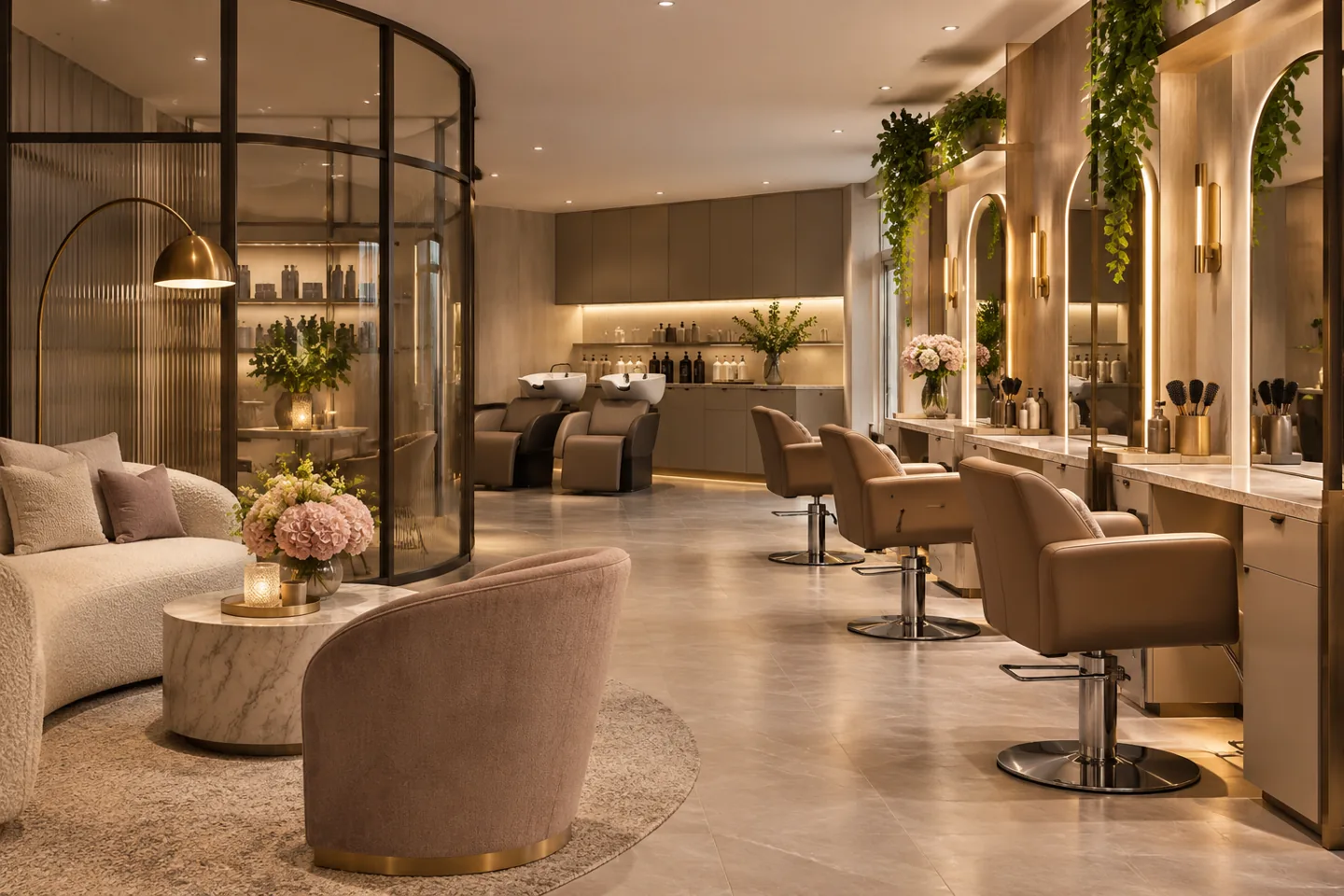
Keep the retained chair and equipment in the drawing
A station survey should include the chair in its working positions, the trolley where it normally stops and the storage that opens into the stylist’s reach. Mark what moves and what is fixed. If a deeper mirror surround hides the edge of an existing shelf, check that bottles can still be lifted off without tipping. If a new panel sits proud of the wall, test whether a drawer opens all the way with the trolley alongside. A quick trial with the actual equipment gives the owner a clear answer before several identical parts are fabricated.
Separate decoration changes from requests to move sockets, basins or ventilation equipment. Show any such request on the plan and obtain a properly scoped technical review before including it in a construction price. For a Dubai salon, the operator should also check the guidance applicable to its licensed activities and any building requirements for the proposed work. Dubai Municipality publishes its technical guidelines online. CBD can coordinate applicable fit-out applications within its appointment. The responsible reviewer determines whether a particular proposal is accepted.
Plan a serviceable finish for the next repair
Ask what happens if one station face is damaged six months after the decorating work. An identical replacement may depend on the direction of a grain, the order of printed panels or a special finish batch. Agree which parts should be individually replaceable and what the owner will need to order one later. A removable insert on the most exposed end of a station can preserve the surrounding work. Mark its reference on the detail drawing so the maintenance team knows exactly what to request.
Discuss spares in practical quantities with the supplier. A spare piece that will warp, fade or get damaged in the only available cupboard may be of little value. In some cases, a stored reference sample, dimensions and a reliable reordering specification suit the salon better. Where a spare is worthwhile, label its station, orientation and finish reference. Include care guidance for the spare material as well as for the installed surface. This conversation can change the choice between two finishes with almost identical purchase prices.
Build the programme around bookable chairs
Establish the minimum working capacity for each part of the week. An operator may have enough space to close three positions on a quiet morning yet need a particular accessible consultation position throughout the day. Mark those constraints on the installation plan. Identify where a stylist can set up temporarily and how the proposed work zone will be handed over to the contractor. If customers or staff cannot use an adjacent area during part of the work, allow for that loss when comparing programme options.
Walk the handback sequence as well. Installation, curing or drying according to the selected product, cleaning, replacing loose equipment and checking the station all take place before another client can sit down. Set the next booking against the confirmed readiness of the complete station. Where an overnight programme depends on materials arriving in a particular sequence, agree which booking changes the operator will make if a delivery is incomplete. No scheduling benefit comes from removing a functioning surround while its accepted replacement is still awaiting fabrication.
Ask bidders to price the trial and the repeat work separately
A comparable proposal identifies the number of different station types and the quantity of each. It distinguishes the survey, drawing and sample work from repeated production. Ask who removes and protects retained mirrors, who makes good the backing where existing finishes come away, and who returns equipment after cleaning. A proposal priced per station might assume a simple flat wall while the final two stations wrap around a column and require individual end pieces. Show those exceptions on the tender elevation.
Use the trial to decide which changes earn their cost. Suppose the client likes a new surround but the staff find the counter edge difficult to maintain. Price the accepted surround with an alternative edge and review only that detail before releasing the row. Keep allowances visible for concealed backing conditions and tell the operator what evidence would trigger a variation. The owner can then commit to the repeated pieces knowing which part of the price is settled and which still depends on site findings.
Bring your brief into focus
Share two views of one empty chair and tell us which finish is wearing first. CBD can scope an elevation, a sample and the cost of repeating the accepted detail.
Send your project briefSign off the station from both sides of the chair
Return the client chair, bottles, equipment trolley and loose shelf items to their usual positions. Ask a stylist to take a colleague through the consultation position, open the drawers and use the mirror from the normal working angles. Then ask the person responsible for cleaning to demonstrate access around the altered surfaces. Note defects against the specific station and elevation. A position awaiting a replacement trim can then be tracked independently of another position that has passed the agreed inspection.
The handover record should identify the accepted sample, final material references, supplier care instructions and any items still with the operator or a separately appointed specialist. Retain a view of the whole station as well as photographs of significant details. If the owner renews another branch, these records give the next team a starting point. The new branch still needs its own measurements, finish review and operating programme.
Frequently asked questions
Is this suitable for a salon that already has an approved interior design?
Yes. Send the existing drawings or photographs and identify what you want to preserve. We can confine the survey and sample work to the stations that need renewal and record where the current design continues.
Can different stations use the same finish but different details?
Yes. Use the measured trial as a reference and list the exceptions, such as an exposed end beside reception or a shorter station against a column. The proposal can then distinguish the repeated face finish from the individual edges and returns.
Do we need to replace every mirror?
Condition and installation method determine what can be retained. Ask the survey team to record each mirror, its surround and the access needed to work around it. Price any uncertain removal or replacement separately before releasing the decoration order.
What should we share to get started?
Send photographs of one empty station from the customer’s and stylist’s positions. Include the number of similar stations, the finish problem you want solved and when that chair can be released for a trial. CBD can use those details to scope the survey and the first installation.