
A kitchen can have a correctly specified washer and still run short of clean pans at the end of a batch. The biggest stockpot cannot be set down near the wash position, trays are waiting for a rack to empty, and clean equipment has to travel back through the queue of dirty items. The bottleneck sits around the machine as much as inside it.
CBD Projects LLC can coordinate a dedicated pot-wash and cookware-return fit-out for a Dubai industrial kitchen. We start with the chef’s actual vessels, trolley movements and production cycle. The scope can include return and clean handback positions, equipment interfaces, adjacent finishes and the sequence for installing the station in a kitchen that is still operating. The food-service consultant, operator, equipment suppliers and responsible building professionals define hygiene controls and technical requirements for the activity.
Count cookware at the end of the batch
List the items that return together after a representative production run. Include oversized pots, deep trays, lids, mixing attachments and the awkward pieces that have never fitted the current bench. Record dimensions, weights under normal handling conditions and what the equipment supplier permits. A count of meal portions alone will not show how many large pans arrive together or where a bulky piece waits while another item is being dealt with.
Observe what happens immediately before the busiest cooking team needs its equipment back. One vessel type may be used in consecutive batches, while another can wait until later. Ask the chef to name the item whose absence stops production. That item should be part of the layout trial. If a clean pan must get back to a particular workstation quickly, the handback route matters as much as the throughput quoted for a machine.
Separate cookware from crockery, cutlery, delivery containers and waste handling unless the operating team specifically intends them to share facilities and has reviewed that arrangement. A customer dishwashing stream and an industrial pot-wash stream have different shapes and timing. Mark their physical interfaces on the survey plan. Otherwise the station can appear to have plenty of space because everyone has counted the same unallocated piece of bench.
Draw where the item changes hands
Start with the person releasing a used pan and end with the person accepting it for reuse under the operator’s procedures. Note where equipment is first received, where it waits, which specialist process handles it and where it is placed afterwards. Identify any point where the operative has to reverse, make a tight turn with a trolley or put something down to open a door. Bring those observations to the food-service team before fixing a wall line.
The physical brief should reflect the operator’s accepted separation of returned and clean cookware. A coloured arrow on a floor plan does not provide the necessary separation if two full trolleys have to use the same holding position. Ask the responsible food-safety lead to review normal and peak arrangements. If the proposed area cannot accommodate the required operation, examine a different position, equipment choice or production sequence. Do not rely on an informal workaround becoming the permanent procedure.
Prove the largest piece outside the machine as well
Obtain the actual vessel or an accurate full-size model for a supervised dry trial in an unused area. Use the appointed equipment supplier’s loading information and let the operator’s competent staff assess handling. Follow the item from its trolley to the nominated preparation position, through the proposed equipment interface and to the clean-side position. Some vessels pass through the machine opening but leave insufficient room for an operator to approach or for the trolley to turn afterwards.
Test lids and detachable parts separately. A lid can occupy almost as much footprint as a pan while having no stable place on a rack selected for deeper items. A detachable component may need to stay associated with its vessel through the approved cleaning process. Decide where the operator will maintain that association. A simple tray position or identifiable rack bay can solve a recurring mismatch without changing the main washing equipment.
Look at the station when the clean-side rack is full. Can finished cookware leave without returning through the waiting queue? If the chef cannot accept it immediately, where does it remain under the operator’s controls? Record the maximum trialled load and what operators do when the clean side reaches capacity. This is a more useful handover reference than a photograph taken while all racks are empty.
Coordinate water, drainage, ventilation and access with named specialists
Request current manufacturer drawings for the proposed equipment and any approved accessories. Verify connection and access requirements against site conditions through the appropriate professionals. A nominal machine footprint does not show the space for a door to open, a filter to be serviced or a part to be replaced later. Ask the maintenance representative to walk the proposed service access with the drawings before counters and splashbacks are released for fabrication.
Have the responsible specialists review drainage, water availability, ventilation, power, floor conditions and any effects on adjoining work areas. Define who assesses the existing building, who designs each interface, who carries out testing and who receives the records. CBD prepares design details and shop drawings within the agreed appointment and coordinates the relevant submissions. Approval decisions, utility work and specialist sign-off belong to the parties responsible for them.
Dubai Municipality lists layout assessment for food establishment licensing among its food-safety services. For a retrofit, the operator and project team should establish what review applies to the actual premises and scope. Provide the project history and existing approved information where available. An equipment replacement and a relocation involving new drainage or a revised kitchen arrangement can raise different questions. Include confirmed review steps in the programme before introducing changes into an operating kitchen.
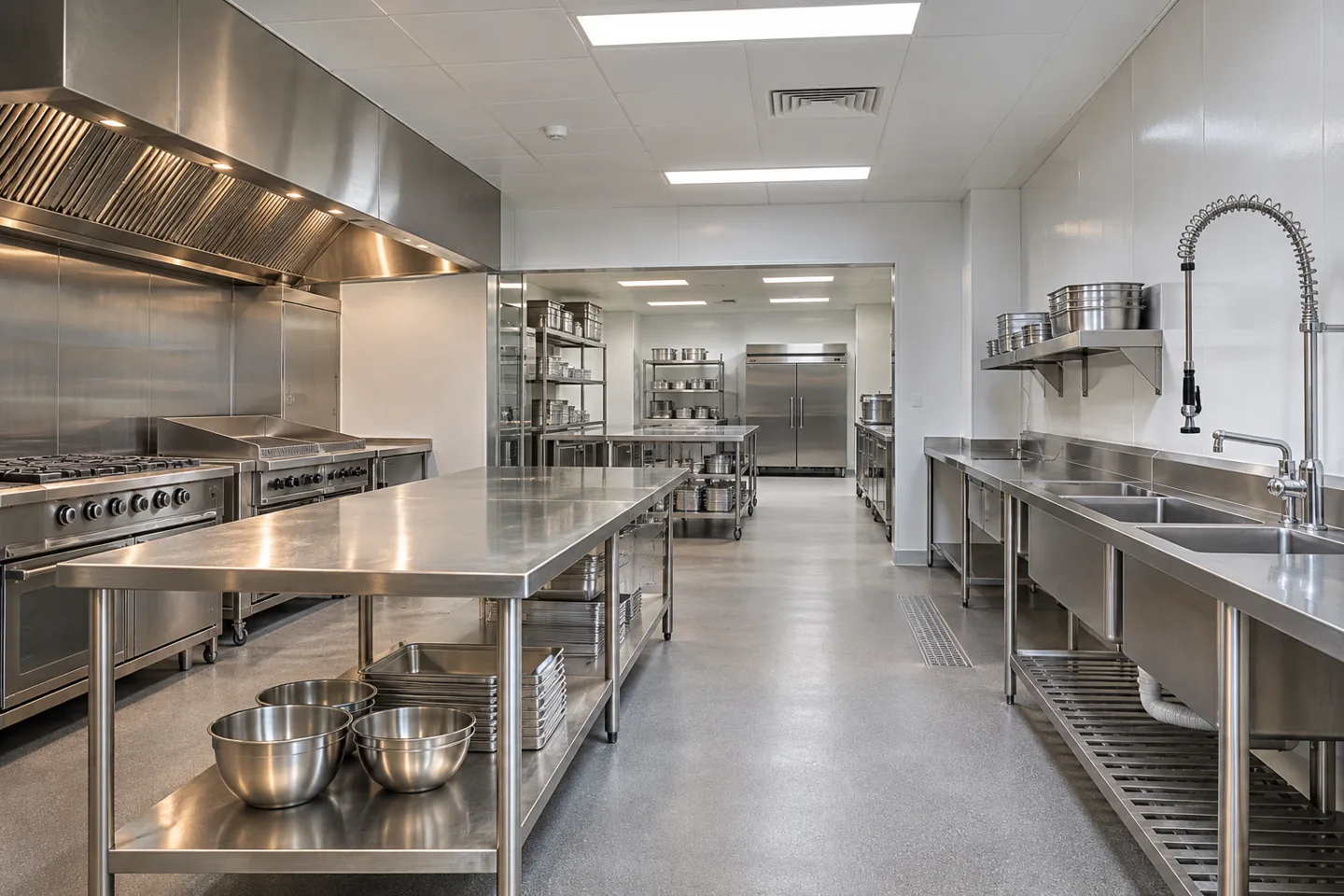
Detail the holding surfaces and the room around repeated work
Use the trial to determine which surfaces need to receive a large hot or recently processed item under the operator’s procedures. Ask the food-service supplier to confirm materials, supports and compatibility with the proposed use and cleaning regime. Check the junctions behind equipment, the wall protection along trolley contact points and access to the underside of benches. An inaccessible strip of floor can create a maintenance problem even when the visible worktop looks continuous.
Review the existing room with the people who clean and maintain it at the end of a shift. Where can a rack be put while the area is cleaned? Which fittings must remain accessible when equipment is serviced? Who reinstates a seal or finish after a machine is removed? Keep these responsibilities on the drawing and in the quotation. Allow for replacement of high-wear contact pieces where practical without disturbing a whole wall or shutting the larger kitchen.
Phase the work around production and release
Record which kitchen periods can be interrupted and who has authority to release the station. If a temporary washing arrangement is proposed, the operator must agree its suitability with the responsible food-safety and site teams before relying on it. Establish the capacity and limits of that arrangement. Merely identifying another sink on the drawing is not evidence that the kitchen can continue its normal production through the works.
Programme isolation and removal, inspection of any concealed conditions, building work, equipment installation, specialist testing, cleaning and operational release. Give the operator a decision point if opening up reveals an unexpected service or a floor condition requiring further assessment. Agree where equipment awaiting installation will be stored and how contractors reach the area without compromising adjacent activity. In a shared Dubai property include building management’s access arrangements and the actual delivery slots.
Compare bids using the same production case
Send every bidder the same vessel list, batch pattern, equipment schedule, return and handback drawing, work hours and scope split. Include removal and disposal of old items, making good, supplier attendance, tests, training and documentation. Identify whether each interface is a firm price, a provisional allowance or an operator-supplied item. A machine-only quote cannot be compared fairly with a fitted, commissioned station on total price alone.
Separate capacity gained by the equipment from capacity gained by better handling. A faster machine may be of limited value if the clean-side storage never clears. A longer bench may add cost without helping the staff who must return each large pan to a distant workstation. Ask bidders and the food-service team to explain how their option addresses the bottleneck observed during briefing. Keep the assumed workload with the final equipment choice so a later shift change can be reviewed on a common basis.
Hand the station back with a repeatable operating trial
Have the supplier and relevant specialists complete their required tests and provide the corresponding records. Then run the operator’s accepted sequence using the representative vessel mix. Compare the installed arrangement with the trial, including the largest lid, the full return trolley and a busy clean-side handback. Record defects by location and give each to the party able to correct it. A successful dry walkthrough is useful evidence about space, but it is separate from food-safety acceptance and equipment commissioning.
Give the client final drawings, equipment references, service contacts, care instructions and the agreed responsibility list. Retain the private production assumptions that justified the size and number of holding positions. A kitchen adding a second daily production batch may be able to reuse the arrangement as it stands, or may need another review. The handover should make it clear which question to ask first.
Bring your brief into focus
Send a vessel list, washer details and the point in production when clean pans run short.
Send your project briefCompare a machine upgrade with a change to the holding arrangement
Suppose the largest pan is cleaned on time but remains on the clean-side trolley because the cooking team cannot collect it until a batch is complete. A faster machine will simply place more work on the same trolley. Test a revised handback slot or an operator-approved additional holding position before attributing the loss of capacity to the equipment. Conversely, if the clean side clears immediately and unprocessed cookware continues to accumulate, the equipment proposal deserves closer review with its supplier.
Ask for the two options to be illustrated using the same peak batch. Identify where the last item waits and which team can release it. The result may support an equipment upgrade, a change to the physical arrangement or a different release time. Keep the trial with the cost comparison. When the chef later introduces a new vessel or production frequency, the team can repeat the test using evidence specific to the kitchen instead of treating the earlier price or machine rating as a universal answer.
Frequently asked questions
Can this be done without replacing our washer?
Yes, where the equipment is suitable and suppliers and specialists confirm the interfaces. Start by observing waiting, loading and return. A revised receiving surface or clean-pan handback may address the constraint. Keep any retained equipment, necessary maintenance and changes to its surroundings explicit in the scope.
Does a pot-wash room also need to handle dining-room dishes?
That depends on the operator’s activity, approved process and professional food-service advice. Include both streams in the first brief if there is a proposed overlap. Compare their timing, equipment needs and destinations before committing to shared surfaces or a common room.
What should our chef provide for the first meeting?
Bring the largest difficult vessel and lid dimensions, a representative batch list, the current machine details and a simple layout. Explain when clean cookware is needed back and what currently causes delay. If work must take place during trading, state the available shutdown periods and any existing arrangement the responsible operator can approve for temporary use.