
A repair can stop for a missing adapter even when the main tool is sitting in its drawer. If the technician who used it yesterday has gone home, the person issuing it today needs a way to spot the missing piece without opening a catalogue. That small exchange is a useful starting point for designing the shared-tool room in a working Dubai garage.
CBD Projects LLC can fit out a tool store, issue counter and return point within an existing car repair workshop. We develop the layout around the workshop’s actual sets, cases and shift handovers. The appointment can cover a measured storage schedule, case and drawer trials, counter joinery, supplier coordination and a phased move from the existing store. Vehicle repair equipment and calibration decisions remain with the workshop and its appointed specialists.
Count the sets that people share
Choose a representative shift and record what travels between bays. Include the large boxed puller set, the small accessory that usually lives elsewhere and the kit borrowed only by a visiting specialist. Record the case in its closed and open position. A cupboard can hold a case perfectly well yet leave the storekeeper nowhere to open it while someone waits at the counter. Note the tools technicians own personally and those the workshop issues. They may look identical and have entirely different custody arrangements.
Ask the foreman to identify the few missing or incomplete tools that routinely delay work. Give those priority in the mock-up. A full count is useful for procurement, but frequent exceptions reveal what the fixture must do. If a kit comes back incomplete, where can it wait while still being identified? If a tool must go to a specialist before reuse, what prevents it returning to the ready drawer? The operator sets the procedure. The layout should make the intended route practical.
Locate the exchange from both sides of the counter
Map a technician’s approach from a typical bay with a wheeled case. Then map the storekeeper’s route between the counter, ready stock and the place for unverified returns. Look at the exchange during shift change when more than one person arrives. The next customer waiting at reception and the parts supplier delivering cartons should not have to cross a queue for workshop tools. Retain the workshop’s existing controls over access to vehicle areas.
Decide who opens a case and who records its condition. If the check happens at the counter, allow the lid to stay open while both people can see the contents. Include space for the operator’s terminal or paper record outside the area occupied by the open case. Test again with a second kit waiting. If the first return has to be closed and placed on the floor to serve another technician, the proposed counter is too small or the process needs a separate return position.
Show the difference between available, out and held
A silhouette or shaped insert helps identify an empty position, but it cannot explain why it is empty. Discuss which information belongs in the operator’s tool register and which needs to be visible in the physical room. A slot with a numbered set can correspond to a loan record without exposing staff details to everyone at the counter. A simple location code also helps a new storekeeper find the right drawer without relying on a familiar colleague.
Allow a distinct location for items returned for inspection. A tool may appear undamaged while its case carries a note requiring review. The storekeeper should be able to accept that return without presenting it as ready for another job. Establish who can release a held item and how the record travels with it. CBD can provide the agreed fixture and labels. The workshop determines serviceability, calibration intervals and permission to put an item back into circulation.
Choose storage by how the kit opens
Lay out common sets on a work surface before choosing cabinet modules. A shallow drawer may suit small pieces that can be counted at a glance. A boxed kit used by several bays may be quicker to issue in its original case. Some equipment arrives with supplier-specific packaging that protects it between checks. Keep those requirements in the schedule and ask the equipment supplier to confirm storage restrictions. Avoid committing every item to one type of insert.
Compare proprietary workshop cabinets with custom joinery using the same kits. Modular workshop systems such as those illustrated by FACOM show how drawers, cabinets and wall units can form a coordinated range. Ask the proposed supplier about drawer load ratings, usable opening, replacement runners, available spare keys and continuity of module sizes. A modular label alone tells you little about whether a drawer accepts the workshop’s longest case or can be replaced independently.
For tools kept on boards, test whether the operator can read the location from its usual working position and distinguish similar sizes. A board behind an open cupboard door may look excellent when photographed and be invisible for most of the shift. Agree what happens if the workshop buys a newer version of a kit. A replaceable insert can be worth more than a beautifully fitted arrangement that becomes redundant when one tool shape changes.
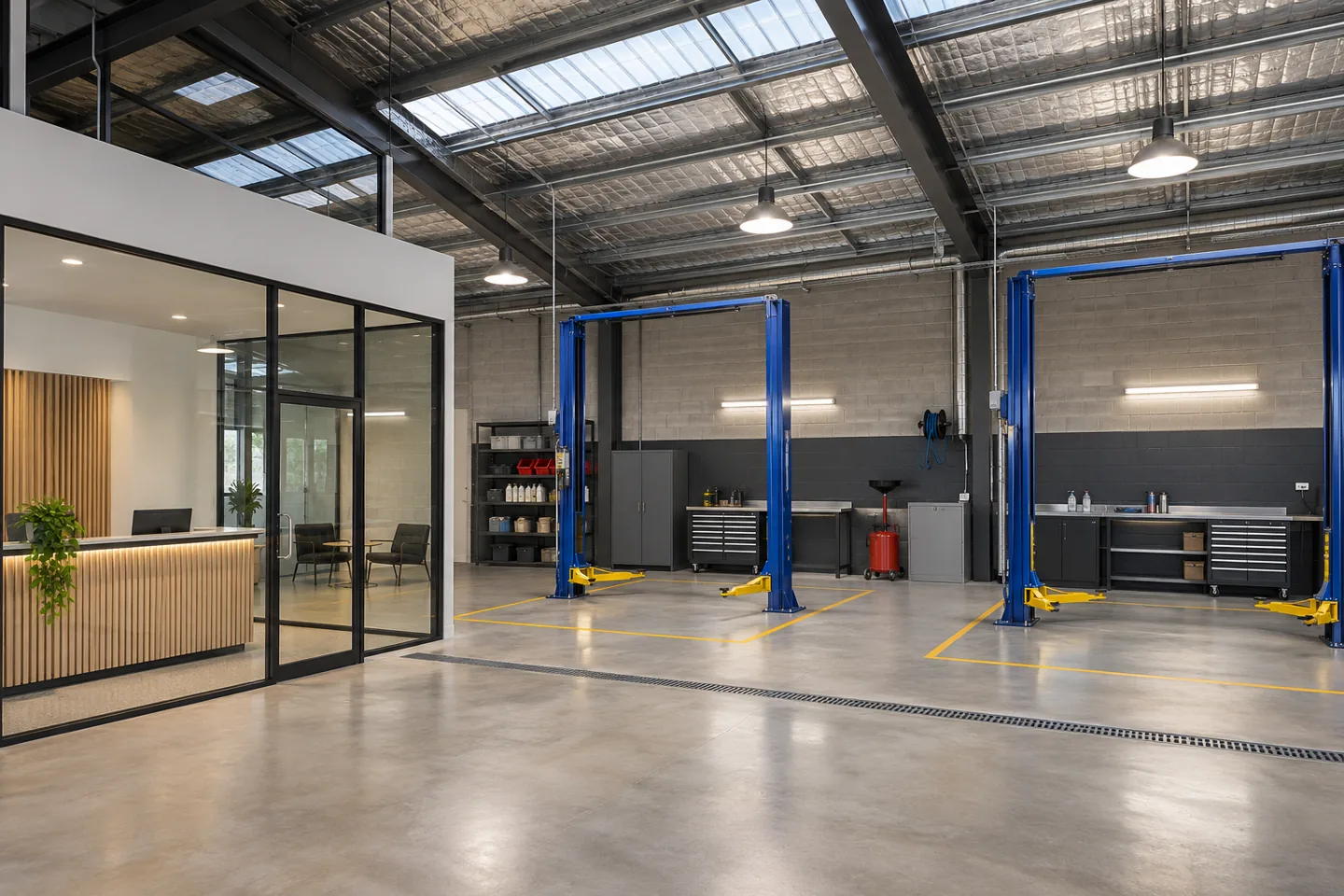
Prove the room with an incomplete return
Bring a representative empty demonstration case to the layout trial and deliberately leave one harmless sample component out. Have a technician return it, a storekeeper identify the exception and a second technician request that same set. Watch where the case stands while the next transaction takes place. The room passes this exercise when the operator can follow its own exception process without placing the incomplete kit among available stock.
Repeat the trial at handover between shifts. The outgoing storekeeper should be able to indicate what is still out with a bay, what is due for collection by a supplier and what is ready for immediate use. If the explanation requires walking to several unlabelled corners, revise the arrangement and the location codes. This is also the time to test the largest trolley turn and the reach into the lowest position with the workshop’s appointed team.
Plan the move without losing the inventory
In an operating Dubai workshop, reserve a period with the foreman for the stock transfer. Identify the tools that must remain available for booked repairs and those that can move earlier. Use a temporary, operator-controlled collection point if the old counter has to close before the new one opens. Give that point a clear owner and transfer outstanding loans with the stock list. Two issue points using two different lists make it hard to reconstruct a missing set.
Label new locations before the move. Count kits by the identity the operator uses rather than by the number of loose boxes visible on a shelf. Photograph sample arrangements only with permission and keep job cards, registration details and customer information outside the image. Give the foreman an exception list at the end of the transfer. The handback can then distinguish a genuinely empty new slot from a kit that was already out on a repair before the move.
Compare proposals for the same working store
Ask bidders to show the numbers and sizes of drawers, cabinets, case positions and work surfaces. Include installation, backing or supports where required, floor repairs after old cabinets are removed, hardware, keys, labels and the first set of inserts. Confirm whether a stock module price includes delivery into the workshop and assembly. An inexpensive cabinet can cost more to place if a route or doorway limits how it can be moved.
Price the first installation separately from change later. Request a cost basis for a new drawer insert, one extra location board and a replacement lock. State who supplies the final inventory and approves the layout before custom cutting. If the price relies on reusing existing cabinets, inspect them with the operator before assuming a drawer will transfer smoothly. The proposal should identify items awaiting supplier confirmation and the effect on the work if those items change.
Hand over a store people can keep organised
Walk the agreed sample loan through the installed counter. Open the largest case, return an item for inspection and find a replacement location from the printed schedule. Ask a technician from another shift to interpret the labels. If they cannot find a common set without verbal guidance, adjust the labels before making duplicates. Retain a photograph of the accepted empty position and the approved arrangement for each sample drawer.
Provide the operator with the final location plan, cabinet details, key handover, hardware sources and a blank update sheet. Include a method for recording additions and retiring old sets so that an empty silhouette does not become a permanent mystery. The workshop retains control of the inventory and its technical records. The fit-out gives those processes a consistent place to happen.
Bring your brief into focus
Tell us which kit most often stops a job, the largest case size and the busiest time for returns.
Send your project briefGive an outside specialist a workable exchange
Consider a kit that occasionally leaves the garage for service. A collection driver may reach the counter during a busy run of technician returns. The operator needs a place to set down the outgoing case, confirm its identity and retain the service paperwork. A case placed on the normal ready shelf simply because it is packed and closed can be issued in error. Give these planned outbound movements a marked position with enough space for the cases the store actually sends away.
Now follow the same kit when it comes back. Its case may carry fresh paperwork, a replacement part or a new identifier. The physical exchange should let the responsible lead reconcile the kit before it returns to normal circulation. Record who updates the location record if that identifier changes. If a supplier collects several kits together, use the trial to see whether the storekeeper can stage that group without blocking the return counter.
A second design decision follows from this exercise. A garage with one occasional external collection might use a labelled shelf inside the controlled store. A higher-volume operation may justify a separate holding cabinet or scheduled collection period. Compare those arrangements using the workshop’s actual collection history before adding a permanent fixture.
Frequently asked questions
Can we keep technicians’ personal tool chests in the same area?
They can be considered in the layout if the workshop agrees how ownership, access and movement will work. Mark personal chests separately on the schedule, identify who may move them and retain the appropriate routes. Their drawers should not quietly become overflow space for shared kits when the new store fills up.
What if we already use a digital tool register?
Keep the identifiers from the existing system where practical. Test a physical label against the normal scan or entry process before producing a full set. CBD can coordinate a location for the operator’s device and any agreed services. The operator or its software provider remains responsible for records, access rights, backups and the system itself.
How should we brief the first visit?
Send a simple plan, photographs of the existing store without customer details, the approximate number of shared sets and the largest case dimensions. Identify the time when loans and returns coincide and one recurring difficulty. That gives us a concrete transaction to test before you commit to cabinet quantities or a replacement counter.