
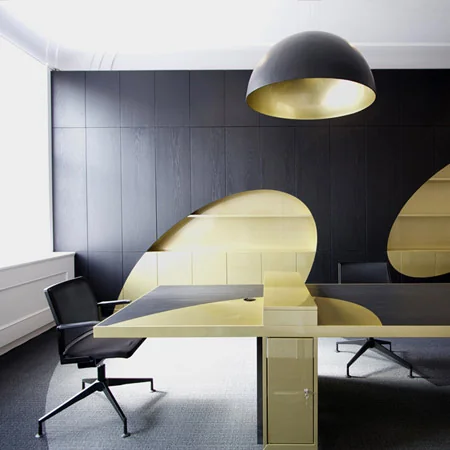
A real office fit-out from the CBD Projects portfolio.
Sustainable fit-out is most effective when it starts before materials are selected. The largest opportunities often come from keeping usable elements, reducing unnecessary area, designing for change and coordinating services efficiently. A long list of “green” finishes cannot recover the waste created by premature demolition or a layout that will be rebuilt after the next organisational change.
Set project-specific goals and a baseline
Agree what matters: waste reduction, retained elements, energy, water, indoor environmental quality, responsible sourcing or a certification pathway. Record the existing condition and available consumption data where possible.
Assign each target an owner, evidence requirement and design checkpoint. This turns sustainability from a late marketing exercise into project governance.
Retain, repair and adapt before replacing
Audit partitions, doors, ceilings, raised floors, lighting, furniture, joinery and MEP equipment. Classify items for retention in place, relocation, refurbishment, donation, recycling or responsible disposal.
Selective strip-out requires better surveys and coordination but can reduce waste, cost and programme. Retained items should be tested and incorporated into the design intentionally.
Design less space—and make it adaptable
Use occupancy and activity data to avoid overbuilding. Shared settings, flexible rooms and modular components can support changing needs without sacrificing function. Avoid bespoke geometry where it creates large offcuts or prevents future reuse without a strong benefit.
Document how partitions, furniture and services can be changed. Accessible connections and standardised modules improve future adaptability.
Reduce operational energy and water
Coordinate efficient lighting, controls, zoning and HVAC operation with occupancy. Prevent simultaneous cooling problems through correct controls and commissioning. Use task lighting where it allows lower ambient levels without compromising comfort.
Consider efficient fittings and leak detection where relevant. Operational savings depend on correct setup and user guidance, not product labels alone.
Specify materials for health, durability and evidence
Prioritise durability, repairability, cleanability and appropriate emissions information. Request credible product documentation and avoid comparing environmental claims that use different scopes or assumptions.
Use finishes suited to the actual wear and cleaning regime. Replacing a fragile “eco” material frequently may create more impact than a durable alternative.
Procure, build and hand over the intent
Include sustainability requirements in tender and subcontract scopes. Track substitutions, waste streams and retained items. Protect absorptive materials from moisture and dust during construction.
Commission systems and provide a concise user guide covering controls, maintenance and adaptable features. Review performance after occupancy when the project goals require it.
Frequently asked questions
Does sustainable fit-out always cost more?
No. Retention, right-sizing and simpler material strategies can reduce cost, though some specialist products or evidence requirements may add cost. Evaluate whole-project value.
What is the best first step for a greener renovation?
Complete a detailed existing-condition and reuse audit before demolition is specified. Decisions made at that point often have the largest influence on waste.
Can an office remain premium while using reused elements?
Yes. Retained items can be repaired, refinished or repositioned within a coherent design. Quality depends on detailing and condition control.
How can sustainability claims be made more credible?
Use specific targets, product evidence, quantities, photographs, waste records and commissioning results rather than broad unsupported statements.
Plan your commercial fit-out project with one accountable team
CBD Projects LLC provides interior design and fit-out coordination across Dubai and the UAE. Share your space, location, target opening date and budget range for a practical first review.
Send Your Project BriefBack to BlogRelated ServiceView Real ProjectsContact CBD Projects