
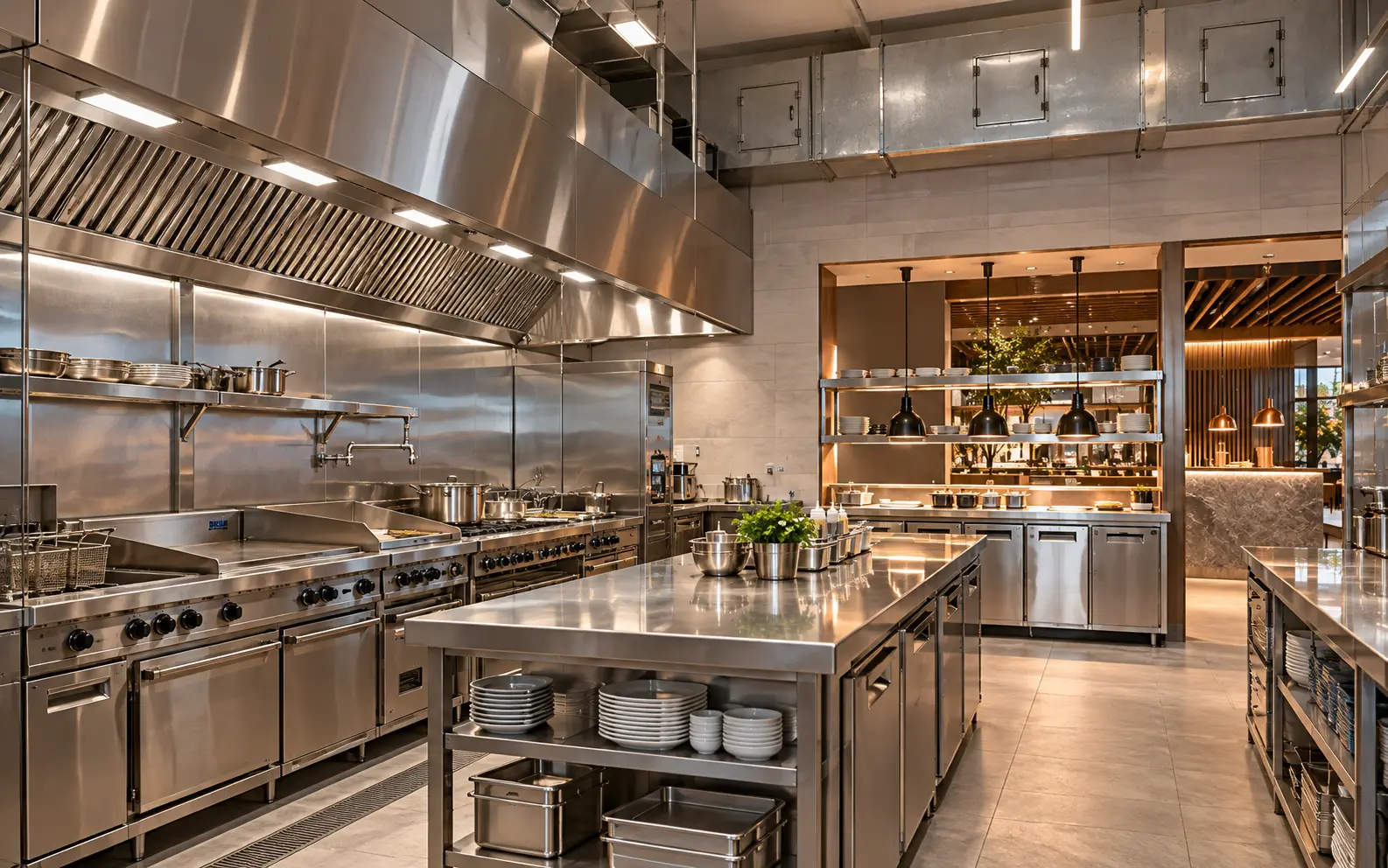
Restaurant interior design concept. Illustrative setting for the planning discussion.
Record what the owner buys and who verifies every surrounding construction, connection, installation and demonstration interface.
Buying kitchen equipment directly can make the restaurant investor feel more in control of the specification. It can also leave the fit-out contractor preparing connections for a model that has not been confirmed. The equipment supplier assumes the builder will provide everything around the machine; the builder assumes the owner has purchased a complete installation. The missing work is discovered when the item arrives.
Before committing to owner-purchased restaurant equipment, prepare an interface record for each significant item. It should describe the selected product, its physical and service requirements and who supplies, installs, connects and demonstrates it. For a restaurant fit-out in Dubai, this is part of coordinating the business investment with the construction package. It does not replace a manufacturer's instructions, specialist design or the approvals applicable to the premises and activity.
Explore CBD’s restaurant interior design and fit-out service for the main project scope.
Jump to a section 12 topics
Define what the owner is actually purchasing
An equipment quotation can include the machine while excluding accessories, supports, delivery handling, installation or commissioning. Read the offer with the supplier and record what is included in the particular purchase. Identify optional components that the operator regards as essential. The word complete is only useful when the parties agree what a complete working installation contains.
Ask the operator to explain the intended task as well. A technically suitable item may still be the wrong selection for the menu or service pattern. The chef or operational lead should confirm that business decision; the design team then coordinates the selected item with the surrounding space. Avoid asking the fit-out contractor to infer the final cooking or production requirement from a brand name written beside a rectangle on an early layout.
Use one model reference across the project
Assign the item a project reference and attach the exact selected model and relevant supplier documentation. Use that same reference on the equipment plan, services information and procurement record. If the order includes a variant, identify it. A model suffix or optional attachment can change dimensions, connections or access requirements even when the sales description appears almost identical.
Keep the status clear: shortlisted, selected, ordered, delivered or accepted for the stated purpose. These milestones mean different things. A supplier's preliminary recommendation should not be treated as an ordered product, and payment does not establish that the design team has reviewed the current technical information. A modest status register helps a remote investor and a Dubai site team work from the same selection rather than different versions of the purchasing conversation.
Obtain the information that changes construction
Ask the relevant supplier and designers to identify the information needed for coordination. Depending on the item, that may concern dimensions, access, weight, ventilation interfaces, water, drainage, power or another service. Record who is responsible for confirming each requirement and developing the associated design. A list of connection types is not evidence that the building's existing services can support the proposed installation.
The fit-out team can then show which parts of its work depend on that information. A service point behind fixed joinery may be difficult to change after fabrication. A support or opening may require a separate technical assessment. Mark unconfirmed requirements before the corresponding work is released. This allows the client to see the practical consequence of a delayed equipment selection instead of being surprised by a later request for redesign or intrusive alteration.
Clarify the physical boundary of each package
Draw the boundary between the equipment supply and the surrounding works. For a counter-mounted item, identify the counter opening, support, finish edges and access arrangement. For a larger installation, identify where the equipment supplier's assembly meets the building or another specialist package. Ask each party to describe its connection point and the work needed on the other side.
This exercise often reveals exclusions that were invisible in the headline prices. A connection lead, a mounting accessory or an installation component may appear in neither quotation, or both suppliers may have allowed for the same element. Resolve the overlap through the appointment and coordinated documents. Do not simply choose the lower total without understanding which physical work disappears with the allowance. The owner needs one complete scope, even when several companies deliver it.
Separate delivery acceptance from technical acceptance
Receiving a crate confirms something about its arrival. It does not necessarily confirm the equipment is undamaged internally, compatible with the design, correctly installed or ready for operation. Agree the checks and responsible parties at each stage. The purchase terms and the relevant specialist advice should establish how discrepancies and damage are reported and what evidence is required.
For the fit-out programme, identify who receives the delivery and where it can be held under the agreed arrangements. Our separate equipment-delivery planning guide addresses the physical journey into the premises. Here the key question is responsibility after the item reaches the project. The contractor should not be assumed to accept an owner's purchase on technical or commercial grounds merely because someone signs a delivery note at the door.
Plan custody and protection explicitly
An owner-supplied item may arrive before its installation area is ready. Record who controls it during that period, who can move or unpack it and what protection is required under the agreed arrangements. Identify the point at which the relevant installation specialist needs access. The supplier's handling and storage instructions should be available to the parties responsible for the item.
Avoid using general site photographs as the only custody record. Record the item reference, condition observations, date and receiving party through the project's agreed process. If packaging is opened for inspection, record what was checked and what remained inaccessible. These records help establish facts when a discrepancy is discovered later. They are not a substitute for the purchase terms, insurance arrangements or professional advice needed to resolve liability.
Connect installation to the construction sequence
Work backwards from the point at which the item needs to be installed. Identify which supports, finishes and service provisions must be ready first, and which surrounding work must remain accessible until the installation has been checked. Ask the responsible specialist to confirm the sequence rather than allowing every trade to complete its own package independently.
A fixed joinery panel can look finished while concealing a connection still awaiting inspection. Conversely, leaving every surrounding finish incomplete until every item arrives can disrupt the programme unnecessarily. The coordinated sequence should distinguish work that can proceed from work dependent on a particular decision or installation. Record those dependencies against the equipment references so the client understands which delayed purchase affects which part of the restaurant.
Review substitutions before accepting a cheaper alternative
If an ordered item becomes unavailable, compare the proposed replacement with the confirmed original. Ask the operator to review the functional change and the appropriate technical parties to review the interfaces. Differences in dimensions, maintenance access or service requirements may affect construction even when the purchase price is lower. The saving should be assessed with the associated design and installation consequences visible.
Document the decision before treating the replacement as the live specification. Identify the drawings, quantities and appointments that change, along with any relevant approval implications. A supplier's statement that the item is equivalent should be supported by the information needed for the actual project. The client can then accept a conscious trade-off instead of discovering that a procurement substitution has silently changed the restaurant layout or technical scope.
Agree what a demonstration must establish
Installation, technical commissioning and operator familiarisation are related activities with different responsibilities. Ask the relevant supplier or specialist to describe the demonstration within its appointment and the evidence it will provide. The operator should identify who needs to attend and what information is needed to use and maintain the item appropriately. Do not expect the interior contractor to certify equipment outside its professional or contractual role.
Record outstanding issues against the correct package. If the machine is awaiting configuration, that is different from an incomplete fixed connection or a damaged counter edge. A clear issue record prevents the parties from treating every problem as somebody else's snag. Where a defect affects surrounding work, coordinate the corrective sequence so access and protection are maintained. The aim is a traceable acceptance process rather than one signature implying that every possible obligation has been discharged.
Keep the authority process separate from purchasing decisions
A privately purchased item still forms part of the proposed restaurant operation and physical layout where relevant. Bring changes into the project's applicable design and approval review rather than assuming that owner supply makes them outside the fit-out scope. The actual authority route depends on the premises, proposed activity and work, and should be confirmed by the appointed team.
Dubai Municipality publishes information for food establishments, including its Food Code and establishment guidance. Use the current relevant requirements with the responsible professionals. This article does not reproduce those standards or prescribe food-safety operating conditions. It explains the commercial and design coordination record that helps the investor and project team know what equipment is being installed, what information is missing and who must resolve each interface.
Compare the full investment rather than two invoices
Prepare a combined view of the equipment purchase and the work around it. Show the owner's supply cost separately from the contractor's fixed works, specialist installation, unresolved accessories and other identified project costs. Avoid counting the same allowance twice. Where a cost remains unknown, state which information or decision will resolve it rather than presenting an unexplained contingency as a final price.
When comparing fit-out companies in Dubai, ask each bidder to use the same equipment and responsibility schedules. Direct purchasing can be sensible for a particular client, but it does not automatically remove coordination effort or transfer installation responsibilities. A well-defined proposal lets the investor compare delivery routes on equivalent scope. It also gives the operator a practical explanation of what remains to be arranged after the equipment order is placed.
Bring a small evidence pack to the first meeting
Start with the equipment list, supplier quotations, selected model information and proposed layout. Identify which items are already ordered and which remain options. Add the names of the responsible roles: owner purchasing contact, operator, equipment supplier, technical designers and fit-out team. Confidential pricing can be shared through an agreed project channel when needed; the general design brief does not require unrelated commercial records.
CBD Projects can review the interior coordination and construction scope in a free initial consultation. We can identify missing interfaces and explain the design details, shop drawings and application-support work relevant to our appointment. The next step should be a defined project proposal with responsibilities visible. The design concept imagery accompanying this article illustrates commercial interiors and is not evidence that CBD supplied, installed or commissioned a named restaurant's equipment.
Related reading: Commercial Kitchen Equipment Delivery in Dubai: Prove the Route Before Ordering.
Frequently asked questions
Does owner supply mean the fit-out contractor has no responsibility for the item?
Responsibility follows the actual appointments and agreed interfaces. A contractor may have work around an owner-purchased item without supplying or commissioning the machine itself. Record those boundaries before pricing and installation. Do not infer the allocation from the words owner supply alone, and obtain appropriate contractual or professional advice where the parties need it.
What if equipment has already been ordered before the layout is final?
Provide the exact order information to the design team promptly and identify what can still change. Review dimensions, service requirements and the surrounding works before releasing dependent construction. If the selected item cannot be accommodated as intended, compare the available design or procurement options with their consequences visible. An earlier payment should not conceal an unresolved technical conflict.
Can one supplier confirm the entire installation is ready?
Only to the extent covered by that party's role, competence and appointment. Ask what its confirmation includes and which other records or decisions remain necessary. The project team should reconcile equipment, construction, specialist and applicable authority milestones. A supplier demonstration is valuable, but it should not be described as permission to open the restaurant or approval of unrelated work.
References and scope
References checked on 26 November 2026. Confirm current requirements and product instructions for the actual project; these links do not constitute project approval.
Plan your restaurant project with one accountable team
Send the equipment list, supplier information and restaurant layout to discuss the fit-out coordination scope.
Send Your Project BriefBack to BlogRelated ServiceView Real ProjectsContact CBD Projects