
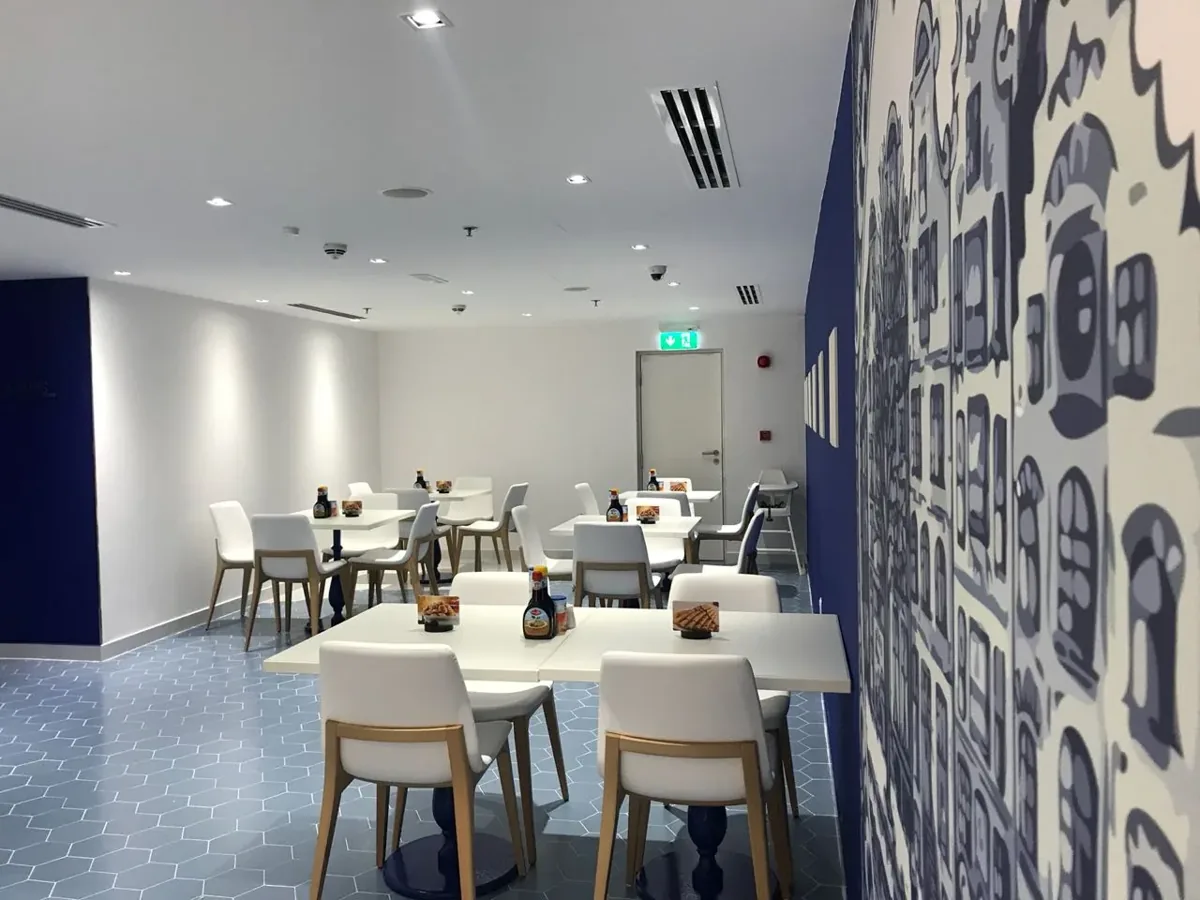
Interior reference for restaurant allergen-service design coordination.
A guest asks about an ingredient while the server is clearing another table. The current menu information is held on a device at the counter, the chef needs to clarify a variation and a second employee begins taking the order. The restaurant may have a documented process, but its physical setting makes the information handoff difficult. Allergen-service design coordination connects the operator’s approved process to the places, equipment and staff positions needed to carry it out. It does not create an allergen-management system or establish that a meal is suitable for an individual guest. The food business and its qualified advisers own those decisions. A restaurant interior design company in Dubai should receive their defined requirements early enough to coordinate service, storage and technical interfaces rather than improvise a solution after the dining room is complete.
Jump to a section 14 topics
Define the service commitment before drawing a special station
Ask the operator to describe how ingredient and allergen enquiries are handled, who is authorised to answer and how current information is maintained. Separate that process from marketing language about the menu. The designer needs to know the tasks the premises must support, not invent an assurance based on the presence of a particular counter, utensil or cupboard.
Dubai Municipality publishes food-establishment resources. The responsible food-safety team should confirm the current applicable requirements and the operation's controls. Record its physical brief in plain terms: people involved, information used, equipment or storage required and questions still open. A defined reviewed process gives the fit-out team something concrete to coordinate while keeping food suitability and operational acceptance with the responsible parties.
Build the information brief from the actual menu
The operator should identify the menu and variations included at opening, with its appropriate ingredient and supplier information. Do not use a decorative menu layout as the only source for planning. A guest enquiry may concern an accompaniment, optional addition or product change that is not visible in the dish's short description.
Ask the food-safety and culinary team which service tasks follow from the reviewed offer. The designer can then identify where staff consult information or communicate a question. It should not compile an allergen matrix from product photographs or assume two similar dishes create identical requirements. Keep future menu ideas distinct from the confirmed opening basis. The menu-change fit-out guide explains how a revised offer can affect the wider physical scope beyond a rewritten menu page.
Give an enquiry a place in the guest interaction
An enquiry can take longer than an ordinary order and may need a nominated colleague. Ask the operator how the guest is kept informed and where staff can consult the current information without abandoning other duties. A loud exchange across the dining room can be inconvenient and a poor basis for accurate communication.
Compare a suitable discreet service position, a portable approved information tool or another operator-defined arrangement. The right choice depends on service style and staffing. For a hypothetical counter-service venue, an enquiry might overlap with the next customer paying. Model both interactions rather than assume a larger counter resolves the handoff. The design should provide a usable position and route while the operator defines the conversation, escalation and decision about what it can offer.
Identify the authoritative information source
Ask which record staff should use and who maintains it. Printed information, a controlled digital system and a supplier document have different roles. The operator should define how current information is distinguished from withdrawn material. The interior team coordinates equipment and storage around that arrangement rather than choose the source because a shelf happens to be available.
For an illustrative service review, give staff fictional current and superseded menu information and ask them to locate the accepted reference. A problem may concern naming, access or ownership rather than insufficient furniture. Do not leave several equally presented versions in different stations. Any proposed digital device needs coordinated connections, support and a usable position so its screen is not routinely moved to make room for payment equipment or a stack of plates.
Trace the order handoff through the operator’s process
The operator and relevant system suppliers should define how a reviewed enquiry or instruction is communicated to the appropriate staff. The design brief needs the resulting devices, work positions and physical interfaces. Do not create new abbreviations, colours or ticket conventions that staff are expected to interpret without the operator's approved system.
Use a fictional order to follow the information from the guest-facing position to the relevant kitchen or service role. Identify where clarification occurs and who closes the question. A printed ticket and a verbal message can reach different people if their handoff is not defined. The designer's task is to reveal those physical dependencies and coordinate the agreed solution, not determine a safe preparation method or authorise a particular substitution on behalf of the food-safety team.
Review the kitchen and pass as a combined interface
Ask the responsible kitchen and food-safety specialists which reviewed preparation, identification and handover arrangements need physical provision. Their requirements may affect equipment, storage, working surfaces or task separation. The general interior team should not infer those controls from a generic restaurant plan or decide that a spare ledge provides an acceptable solution.
Show the relevant requirements on coordinated drawings with named owners. For an illustrative handover, the culinary team may need a defined information view while the service team receives completed orders. Identify the exact location and equipment using the operator's process. Review it alongside other pass activity so a required surface is not simultaneously assigned to unrelated storage. Keep technical and food-safety acceptance distinct from the client's visual approval of the counter or adjacent finishes.
Specify storage only after its operating purpose is confirmed
If the qualified team requires identified equipment, tableware, ingredients or other items to be stored in a particular way, record that requirement precisely. The designer should ask about quantity, container size, access and replenishment without prescribing a universal arrangement. A labelled cupboard alone should not be described as establishing a controlled food-safety process.
Use representative objects to test the reviewed storage. Check the open door or drawer, staff position and the route to the task. If the contents change, return to the responsible team rather than assume the same physical label settles suitability. Keep ready items and anything awaiting an operator decision distinguishable through its procedures. The fit-out can support clear organisation, but the operator remains responsible for deciding what belongs in each location and how it is maintained.
Keep waiter-station information available during service
A server may need to consult approved information while another replenishes tableware or clears used items. Review these activities together. The relevant waiter-station design guide covers ordinary service support; the additional question is whether the operator's information task remains practical when the station is busy.
Test the actual device or document format and its storage. A reference placed beneath service equipment can be technically present but difficult to use. Conversely, a large information display can consume the surface needed for the station's core task. Compare locations with the operating team and supplier. Record the selected arrangement so a later tableware change or promotional display does not quietly remove the provision that made the communication process workable.
Treat self-selection as a different service format
If the restaurant offers a buffet, display or other self-selection, ask the food-safety team to define its applicable controls and information requirements. Guests encounter products differently from a table-service order. The designer needs the reviewed relationship between product, information, staff assistance and the surrounding route.
Do not assume that adding signs to a conventional counter establishes an adequate allergen arrangement. Use the operator's actual scenario and relevant specialist assessment. For an illustrative display change, ask who updates information and confirms the final arrangement before service. A replacement dish or moved label should not be treated as merely a visual merchandising adjustment. Keep the responsible acceptance step visible, with no promise that a guest's individual needs can be resolved by a fixture or symbol alone.
Include changed and interrupted orders in the review
A service process should be assessed under the operator's realistic exceptions, not only a successful staged order. Ask the responsible team to define a fictional changed order, an unavailable item or a question requiring further information. The design trial follows that approved scenario without testing food safety on real guests.
Observe who receives the update, where staff pause and whether information remains consistent through the handoff. If a difficulty occurs, classify it accurately. A missing view of the system differs from a procedure or training question. The physical review should not produce improvised food-handling advice. Give each issue to the party able to resolve it, and update the drawing or equipment brief where the accepted response changes the fit-out.
Coordinate takeaway and delivery information with the same care
The operator should establish how its reviewed information and order process apply to takeaway or delivery. Packaging, identification, checking and collection can introduce different physical tasks. The designer needs those tasks and the relevant supplier dimensions, not a generic assumption that a bag label settles every communication issue.
For a hypothetical collection, trace the approved order reference from preparation to the authorised handover. Identify where staff consult information and where the waiting person stands. Keep customer records within the operator's appropriate process. If packaging or the collection method changes, review the affected physical provision. The objective is a coherent handoff under the business's food-safety system, without the interior designer making assurances about a meal based on its packaging or collection shelf.
Reopen the brief when products or service channels change
A new supplier, recipe variation or ordering channel may change the operating information and physical tasks. The food-safety and culinary team should assess that change before it becomes the assumed service. The designer can then identify affected storage, devices, surfaces and technical interfaces.
Keep the accepted opening basis and later decisions traceable. A new menu file should not silently authorise equipment or construction changes, while a new appliance should not become the reason staff invent a procedure around it. The client needs a coordinated response showing the work, responsible reviews and commercial implications. Do not promise that a room fitted for one reviewed offer automatically accommodates every later dish or promotional event.
Buy the defined physical scope across supplier boundaries
List the actual requirements established by the operator and qualified advisers, then allocate design information, supply, installation, connections and acceptance. Include client-direct systems and kitchen suppliers as well as general fit-out. The restaurant tender-scope guide can help keep those responsibilities comparable between bids.
Avoid an undefined promise that all allergen requirements are included. A useful offer identifies the reviewed brief, supplied components, assumptions and outstanding information. If a specialist process is unresolved, describe its effect on the affected package rather than conceal it in a general contingency. The client's visual approval and purchase authority remain separate from the responsible team's food-safety assessment. Each should be recorded through the actual project process before dependent work is released.
Rehearse with fictional orders and preserve the operating boundary
Once relevant installation checks are complete, let the operator lead a rehearsal using dummy information and its approved procedure. Include an enquiry, a clarification, an ordinary order alongside it and a defined exception. Review the physical support and information handoffs without preparing a demonstration intended to prove that a meal is safe for a particular person.
Record physical defects, system issues, missing information and procedural questions separately. The operator and qualified team retain responsibility for training, food-safety controls and decisions about service. A restaurant interior design consultant can keep the accepted spatial and equipment references aligned with those decisions. At handover, the manager should understand what the fit-out supports, which records are current and whom to contact when a proposed change needs review. That is a practical result without claiming that design alone establishes an allergen-free environment.
Frequently asked questions
Can a dedicated counter establish an allergen-safe service?
No such assurance should be inferred from a counter or label alone. The food business and qualified advisers establish the applicable controls and service decisions. The designer coordinates the physical requirements they specify.
What should the operator give the designer?
Provide the confirmed service model, authorised information process, equipment and storage requirements, staff roles and open specialist decisions. Use fictional orders for design trials rather than personal guest records.
Does this guide prescribe preparation or cleaning procedures?
No. Those procedures, product suitability and any necessary technical controls belong to the responsible food-safety, culinary and specialist teams. The article concerns the physical and information interfaces that support their reviewed process.
When should a menu change trigger a design review?
Ask the responsible team whether the change affects information, equipment, storage, surfaces, service or technical interfaces. Review the actual consequence before treating the existing arrangement as suitable for the revised offer.
Plan your retail and hospitality interiors project with one accountable team
CBD Projects LLC provides interior design and fit-out coordination across Dubai and the UAE. Share your space, location, target opening date and budget range for a practical first review.
Send Your Project BriefBack to BlogRelated ServiceView Real ProjectsContact CBD Projects