
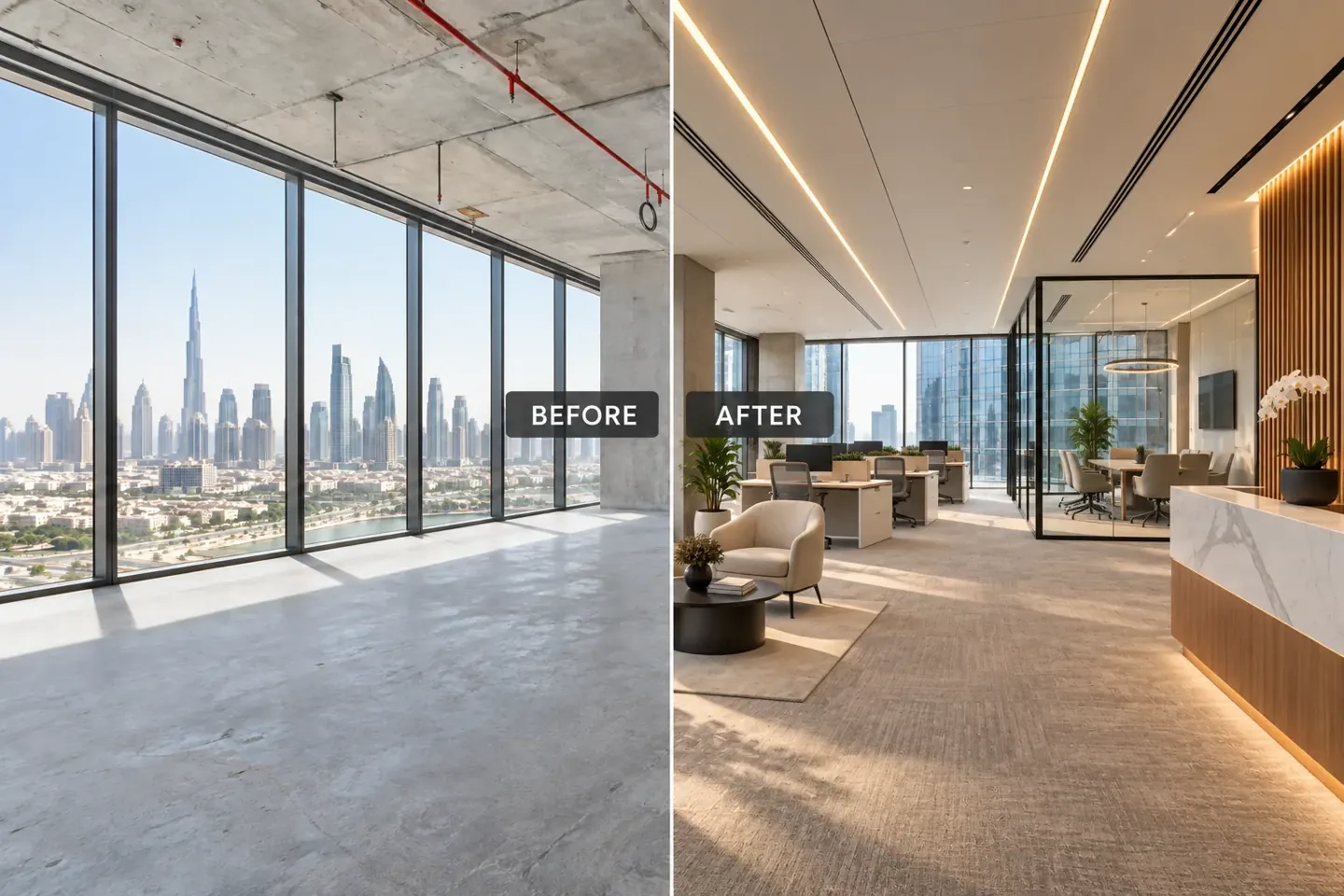
Workplace interior reference for the design review.
A fitted interior is ready for its users only when they can understand the functions they are expected to operate. A meeting-room control, a lighting scene or a specialist item of equipment may be familiar to the installer and unfamiliar to the person opening the premises each morning. A useful handover demonstration connects the installed scope with those real operating tasks.
This guide explains how a Dubai client can brief the learning required by the team, organise suitable participants and keep track of questions that remain open. It concerns operator understanding rather than a technical commissioning test or a collection of handover documents. The manufacturer, appointed specialist and responsible contractor should define the correct operation and maintenance boundaries for the actual products. The client can then make sure the right people receive and understand that information.
Jump to a section 13 topics
Describe what people need to do in the finished space
Begin with a short list of ordinary activities. An office team may need to start a meeting, adjust permitted lighting settings and leave rooms in a known condition. A retail supervisor may need to open the premises, operate approved displays and explain a cleaning routine to colleagues. These tasks are more useful starting points than a general request for training on everything in the building.
Relate each activity to the installed scope and the people responsible for it. Some actions belong to ordinary users, while others are restricted to a trained operator, building management or a specialist. Ask the relevant provider to define that boundary. The training brief should make the division understandable so a helpful demonstration does not become an invitation for someone to interfere with equipment beyond their role.
Separate the audiences and their responsibilities
The person welcoming customers, the workplace coordinator and the maintenance representative may need different information. Identify the roles before selecting attendees. A single crowded session can leave ordinary users overwhelmed and technical staff without enough detail. The right arrangement may be several focused demonstrations linked by one client coordinator who keeps track of the overall brief.
For each audience, record who must attend, who can act as a deputy and who receives the final reference information. Consider staff who join after opening or work different shifts. A demonstration attended only by the project team does not automatically transfer understanding to the operational team. Discuss how the agreed information will reach the people who will actually use the space after the contractors leave.
Agree who is qualified to explain each item
Ask the contractor which demonstrations it can provide directly and which require the product supplier, installer or appointed specialist. The answer should follow the systems and responsibilities in the contract. A general interior design company may coordinate the room arrangement and user intent, while a specialist explains the correct operation of its installed controls or equipment.
Lutron's official commercial support information describes training options for client teams using its control systems. That illustrates why product-specific support should be discussed with the relevant provider; it is not an assumption that a particular training service applies to every installation or is included in every fit-out proposal. Establish the scope, provider and practical arrangements for your actual products, including any separately agreed service or attendance requirements.
Define the ordinary operating condition first
A demonstration should explain what the user is looking at and what the space should do in an ordinary operating state. The provider can identify the relevant controls, the functions available to the attendee and the reference information that supports their use. Keep the explanation connected to the actual room names and installed labels so the team can recognise the same items later.
Ask how the intended starting and leaving conditions are communicated. For a meeting room, this might mean understanding the agreed room settings and the permitted user controls, rather than learning an installer menu. The responsible specialist should explain any limits or conditions. A good brief lets users ask specific questions while keeping technical adjustments and restricted settings with the appropriate authorised party.
Use practical scenarios instead of a long feature tour
Choose a few realistic scenarios from the business or household brief. A workplace coordinator could demonstrate how an ordinary meeting is prepared using the installed facilities, while a shop supervisor could walk through the agreed routine for customer-facing areas. The task should be appropriate to the attendee and use the instructions supplied by the responsible provider.
The value is in connecting an action with an outcome someone can recognise. A description of every available feature may be less helpful if attendees cannot relate it to their work. Keep a short list of the scenarios covered and the questions they raised. The instructor should explain when a proposed task needs further training, a different specialist or additional information before it can be treated as part of the normal operating routine.
Ask users to show understanding within their role
Where the provider considers it appropriate and safe, invite attendees to explain or repeat the ordinary task they have just been shown. This can reveal an unclear room label, a missing reference or a misunderstanding about the permitted controls. The purpose is to help the user understand the system, with the instructor supervising within the scope of the session.
Record what was covered without turning attendance into a broad claim of competence. A person may have learned an ordinary user function and still need specialist support for other actions. Avoid using a generic signature sheet as proof that every task has been mastered. The useful record connects the named roles, the specific demonstration and any follow-up needed for the activities relevant to the finished interior.
Link the explanation to the correct product references
The operating information should identify the installed item, room and relevant manual or guide. A large folder of unrelated product documents is difficult to use during an ordinary question. Ask the provider to show which reference supports the demonstrated function and where the client should find updates or further support. Check that the product identification corresponds with the installed scope.
A quick-reference note can help with routine tasks if it is prepared or approved by the responsible provider and remains consistent with the manufacturer's instructions. It should not replace the complete product information or omit important conditions. Record the document title, revision where available and the client custodian. This makes later questions easier to direct to the appropriate source rather than relying on somebody's memory of a demonstration.
Treat maintenance awareness differently from technical work
Users may need to recognise when an item requires attention without being responsible for carrying out the work. The provider should identify the routine observations appropriate to the role and the route for reporting a concern. Technical maintenance, inspections or adjustments can require a different appointment and competent personnel. Those boundaries need to remain clear throughout the explanation.
The client can ask where the relevant maintenance information is kept, which contacts apply and how responsibilities change between a tenant, landlord and specialist. The demonstration should not encourage access to restricted areas or the opening of equipment by unqualified attendees. An interior fit-out contractor can coordinate the agreed explanations, while the relevant specialist defines the safe operating and maintenance requirements for the actual installation.
Keep unresolved questions visible after the session
A demonstration may reveal an unclear label, a missing guide or a function that cannot yet be shown. Give each question an identifier, location, responsible party and proposed next step. Distinguish a request for clearer explanation from a possible installation issue so the right person can investigate. The record should make the status understandable to the client without attempting an unsupported technical diagnosis.
If a session depends on an outstanding item, agree whether part of it remains useful and what must be repeated later. A photograph or short description can help identify the question where appropriate, subject to the site's information rules. Close the action only when the required response or demonstration has been delivered and the client has a usable reference for the remaining operating task.
Organise the timing around readiness and staff availability
Schedule demonstrations when the relevant installation is ready for the intended explanation and the appropriate attendees can take part. The provider should identify any dependencies, such as the availability of its specialist or completion of a particular setup. A date close to occupation may be convenient, but convenience alone does not establish that every session can be delivered effectively.
Allow the client team time to prepare questions and read the relevant short reference material. If several providers are involved, coordinate the room names and sequence so demonstrations do not conflict or repeat incompatible instructions. For clients comparing office fit out companies in Dubai, it is useful to ask how operator training is included in the proposal, who arranges it and what happens if an agreed demonstration needs to be completed after the initial handover meeting.
Protect access information and sensitive business content
Operating a finished interior may involve access arrangements or information that should not be shared with every attendee. Ask the client and relevant provider to define the permitted audience. Ordinary user guidance can usually be separated from restricted configuration, security information and administrative access. The project record should identify the appropriate custodian without circulating confidential credentials in a general training pack.
If video or photographs are proposed as a reference, agree permission and content before recording. Keep business screens, personal information and security details out of material intended for wider circulation. A recording also has practical limits: it may become outdated when settings or products change. The responsible provider should confirm how it can be used alongside the current product guidance and where users should direct questions about a later difference.
Leave a concise record for the operator and future colleagues
The client record can identify the session date, location, provider, attendees by role, items demonstrated and references issued. Add open questions and any follow-up arrangements. It should be possible for a later workplace or facilities coordinator to understand what was covered without assuming that the record is a complete technical assessment of the installation.
Choose a custodian and an accessible location within the client's document system. Relevant information should follow the operator when responsibilities change. A summary can also identify which demonstrations may be useful for new staff and whom to contact for additional support. This makes training part of practical occupation rather than a one-time meeting that leaves no clear reference after the project team has moved to its next task.
Include the requirement in the appointment early
Training is easier to coordinate when its purpose is described before the completion stage. State the operational audiences, expected subject areas, provider responsibilities and the record required. The contractor and specialists can then identify the arrangements and any limits within their proposals. A request made only at the last meeting may concern services or products outside the agreed appointment.
CBD Projects can discuss operator understanding alongside the wider commercial fit-out scope and the client priorities recorded through our project brief. The initial conversation should explain who will use the space, who will maintain it and what support they need at occupation. This helps connect the interior design and fit-out appointment with a finished environment that its actual users can operate with the appropriate guidance.
Frequently asked questions
Does operator training replace technical commissioning?
No. The demonstration helps the relevant users understand agreed operating tasks. Technical testing, commissioning and any required inspections have their own purpose and responsibilities, which should be identified separately in the project scope.
Should every employee attend the same session?
Select attendees according to their roles and the functions they are expected to use. Several focused sessions may be more useful than one broad presentation, with a client coordinator retaining the overall record and follow-up questions.
Can the client record the demonstration?
Discuss permission with the provider and the site before recording. Agree the audience, protect sensitive information and retain the current written product guidance, since a recording can become outdated after later changes.
What if the team still has questions after moving in?
Use the agreed support contacts and reference information. Keep the question linked to the actual room, item and task, then ask the responsible provider to explain whether further guidance, a specialist visit or another action is appropriate.
References and scope
References checked on 16 November 2026. Confirm current requirements and product instructions for the actual project; these links do not constitute project approval.
Plan your project handover project with one accountable team
Describe the team that will operate and maintain your fitted premises in the project brief so training expectations can be discussed with the appropriate appointed parties.
Send Your Project BriefBack to BlogRelated ServiceView Real ProjectsContact CBD Projects