
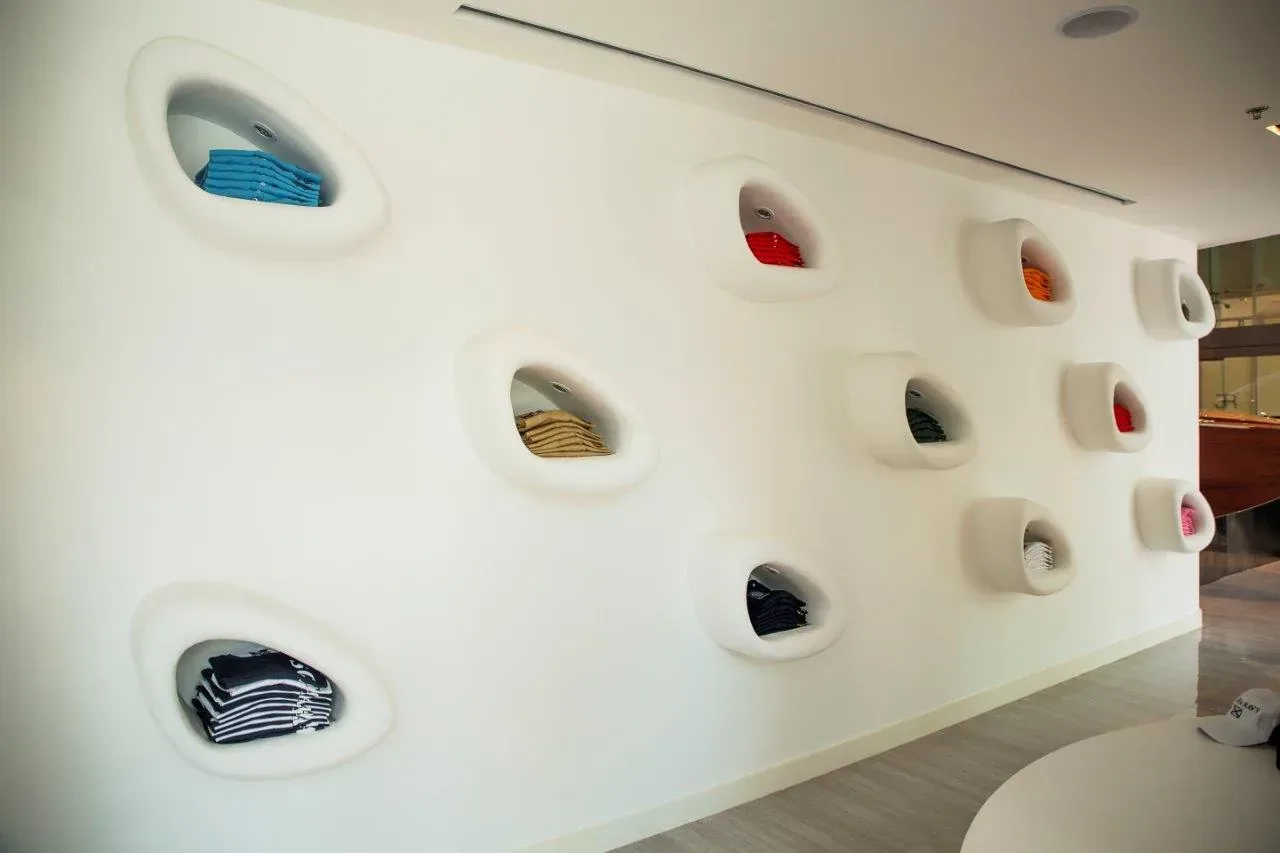
Retail interior reference for the design review.
A finish can look convincing on a sample board and still be a poor match for the way a workplace or shop is cleaned. The problem may be the exact coating, a proposed maintenance product, an awkward junction or a routine that nobody has discussed with the operator. Checking cleaning compatibility before approval gives the client a chance to resolve these questions while alternatives are still available.
This is a finish-selection and evidence process, not a chemical cleaning recipe. Use the current instructions for the exact product, qualified supplier advice and the organisation's trained cleaning team. An interior design company and fit-out contractor should help connect those inputs to the proposed specification. They should not replace missing product evidence with a broad claim that a material is durable, hygienic or suitable for every commercial setting.
Jump to a section 12 topics
Separate appearance approval from operational acceptance
A colour and texture approval answers whether the finish suits the design. It does not establish whether the proposed cleaning method is appropriate, whether the product suits its position or whether the operator can maintain it. Record those decisions separately so a signed sample does not acquire a meaning that the client never intended.
For office fit out in Dubai, the facilities or cleaning representative should be involved while the material schedule is still being developed. In a retail project, the operator may need to coordinate its own cleaning contract and brand requirements. Ask who accepts the care routine, who supplies the product information and who checks the final installed product. Clear responsibilities prevent an appealing sample from moving into procurement with an unresolved operational question attached.
Identify the exact product and finish
Begin with a precise product reference. A description such as stone counter, timber wall or resilient floor is too broad to support a compatibility decision. Record the manufacturer, range, product code, colour, finish and any coating or treatment relevant to the supplied item. Note whether the sample is representative of the actual order or an early design reference.
Include related products where they matter, such as grout, sealant, edge treatment or a protective coating. The visible surface may be only part of the assembly exposed during cleaning. A supplier substitution can also change the care requirements while leaving the general appearance similar. Give each approved selection a traceable reference so the installation and later handover can be checked against the same information used during the design decision.
Describe the real cleaning context
Ask the operator how the area will be used and maintained. Identify expected soil, cleaning frequency, available equipment and the people responsible for the work. A reception desk, pantry counter and meeting-room wall have different contact patterns. Treating them all as one generic commercial finish can obscure the conditions that should influence selection.
The exercise should describe the actual operation rather than prescribe a new cleaning method. Ask the cleaning team to identify its proposed products and processes, then take any compatibility uncertainty to the relevant manufacturer or supplier. If the operation requires a particular routine, tell the design team before approval. A material that depends on care the organisation cannot provide may need a different position, a different specification or a clearly accepted change to the operating plan.
Request current manufacturer care information
Obtain the document that applies to the exact product and market, with its date or revision where available. Look for instructions covering routine care, spills, periodic maintenance and products or methods that should be avoided. Keep the document with the material submission rather than relying on an undated statement in an email or a supplier's verbal reassurance.
Official manufacturers illustrate why this matters. Interface publishes product-specific maintenance guidance for its flooring categories, while Cosentino provides a dedicated care section for Dekton surfaces. Those resources are examples of where to obtain product information, not a reason to transfer one manufacturer's method to another surface. If the submitted guidance does not clearly cover the proposed use or cleaning process, request a written clarification before treating compatibility as resolved.
Review the whole detail, not only the middle of a sample
A loose sample does not show every junction that will be cleaned. Review corners, joints, trims, recessed handles, skirtings and changes between materials. Ask where residue could collect, how a cleaning tool will reach the area and whether repeated contact affects an adjacent finish. These are design questions that should be coordinated before the detail is released.
A useful example is a counter with a decorative front, a work surface and a sealant joint. The cleaning method acceptable to one component may not automatically be suitable for the others. Ask the suppliers and responsible designer how the assembled detail should be cared for. Do not simplify the answer to the strongest material in the group. The final specification should communicate the compatible assembly and relevant limitations clearly enough for the operator to use it.
Agree a representative trial where it is useful
A trial may help the client understand appearance after an agreed cleaning process, but it must be planned with the supplier and cleaning team. Define the sample, the question being investigated, the authorised method and the acceptance criteria. Do not experiment with unapproved chemical mixtures or assume that a successful visual result proves long-term durability.
Use a representative sample or mock-up that reflects relevant joints and adjacent finishes where practical. Record the method and conditions so the outcome can be interpreted properly. A trial can reveal visible residue, an awkward cleaning route or an unacceptable change in appearance; it cannot substitute for every product requirement, warranty condition or specialist performance test. Keep the conclusion limited to what was actually observed and refer unresolved technical questions back to the manufacturer.
Compare alternatives through the same evidence questions
If the preferred finish creates an unresolved issue, compare alternatives using a consistent set of questions. Does each option have an identified product reference, applicable care guidance, acceptable detailing and a realistic operating routine? A cheaper or more expensive alternative should not escape review merely because it resembles the approved sample.
When selecting interior fit out companies in Dubai, ask how material alternatives are documented and approved. A substitution should state what changes in appearance, installation, care and cost, along with any information still pending. The client can then make an informed decision rather than accept an undefined equivalent. This approach also helps an interior design consultant maintain the design intent without making unsupported claims that all products in a broad material family perform identically.
Resolve conflicts before the procurement instruction
Conflicts can arise between a brand preference, a cleaning contractor's standard routine and the product instructions. Identify the conflict explicitly and allocate an owner for the response. The design team may adjust the finish, the supplier may clarify the instruction or the operator may consider a properly reviewed change to its routine. None of those outcomes should be assumed without agreement.
Keep the procurement status clear. A sample can be aesthetically accepted while still awaiting an operational response, and that distinction should be visible to the person placing the order. Record the final decision and the information on which it relies. The purpose is not to create indefinite paperwork, but to avoid ordering a finish while the team knows that the intended cleaning method has not been reconciled with its requirements.
Protect the approved selection during installation
Check that delivered products correspond to the approved references and that any substitution has followed the agreed review. The installer should understand applicable storage, protection and installation instructions, including what information is needed before initial cleaning. A damaged or contaminated surface should not be treated as an opportunity to improvise a stronger cleaning method.
Construction cleaning and routine operational cleaning are different stages and may involve different teams. Ask the responsible parties to define the handover between them. The fit-out contractor should identify the products installed and make relevant supplier guidance available within its scope. If residue or a defect appears, document the location and seek appropriate advice. The appearance of the finished room does not establish that every cleaning action taken during construction was suitable.
Give the operator a usable finish-care record
A handover record should connect locations to exact products and applicable care documents. A folder full of unrelated brochures is difficult to use. Organise the information by room or finish reference, identify the installed selection and include the relevant supplier contact. Keep the record proportionate to the project, but make it traceable.
Discuss whether an explanation or demonstration is needed for the cleaning team. Record questions and outstanding clarifications rather than implying that handing over a file proves understanding. If the operator later changes its cleaning supplier or routine, the product requirements should remain available. This is particularly useful where several different surfaces look similar but have different care instructions. The goal is continuity between the design approval and the people caring for the interior after occupation.
Use a short decision record instead of a blanket claim
For each priority finish, a concise record can capture the product reference, location, supplier guidance, proposed operational routine, any trial and the decision owner. Include a status such as accepted, accepted with an identified condition or pending clarification. These statuses should have an agreed meaning within the project; they are not a substitute for the contract's formal approval process.
Describe the conclusion accurately. A reviewed care document and agreed sample trial support a specific decision, not a guarantee that a finish will never stain, scratch or deteriorate. Avoid statements such as maintenance-free or suitable for all cleaning chemicals unless they are justified for the exact product and use. An evidence-based description helps the client compare options and understand what ongoing care remains necessary.
Keep the approved sample reference and the final document revision together, especially where a product changes during procurement. If the delivered item differs, reopen the relevant question rather than copying the earlier acceptance onto a new code. A short change note showing what was reconsidered helps the client and operator understand the decision without reading every project email.
Bring the review into the initial fit-out brief
Tell prospective designers and contractors who will operate and clean the space, which routines are important and who can attend material reviews. For an office, include facilities input; for a shop, include the operator and relevant brand representative. A workplace design brief or retail interior brief can then connect finishes to their actual use.
CBD Projects can discuss those requirements as part of a defined interior design and fit-out scope. Share the existing information through the project brief form and identify any products already selected. Cleaning compatibility is one decision stream within the wider project. Addressing it early gives the team an opportunity to clarify evidence and adjust details before the finish is treated as a completed procurement decision.
Frequently asked questions
Does a stain-resistant description prove compatibility with our cleaner?
No. A general performance description does not identify every acceptable product or method. Obtain the current care instructions for the exact finish and ask the manufacturer or supplier to clarify the proposed routine where it is not clearly covered.
Can our team test any cleaning product on the sample?
Do not improvise a trial. Agree the purpose, method and limitations with the supplier and trained cleaning team. Use applicable product instructions, and keep the result limited to what was actually observed rather than treating it as universal performance evidence.
Who should accept the operational cleaning requirements?
The project should name the responsible operator or facilities representative and coordinate that decision with the design and procurement process. The cleaning team and supplier provide important inputs. Formal acceptance responsibilities depend on the actual appointment and contract.
Is this the same as checking access for maintenance?
No. Maintenance access concerns reaching or replacing components. This review concerns whether the selected finish and assembled detail can be cared for through the intended routine. The two topics can interact, but one completed check does not settle the other.
References and scope
References checked on 15 November 2026. Confirm current requirements and product instructions for the actual project; these links do not constitute project approval.
Plan your commercial interior finish selection project with one accountable team
Tell us who will clean and operate your space, and include any selected finishes in your project brief.
Send Your Project BriefBack to BlogRelated ServiceView Real ProjectsContact CBD Projects