
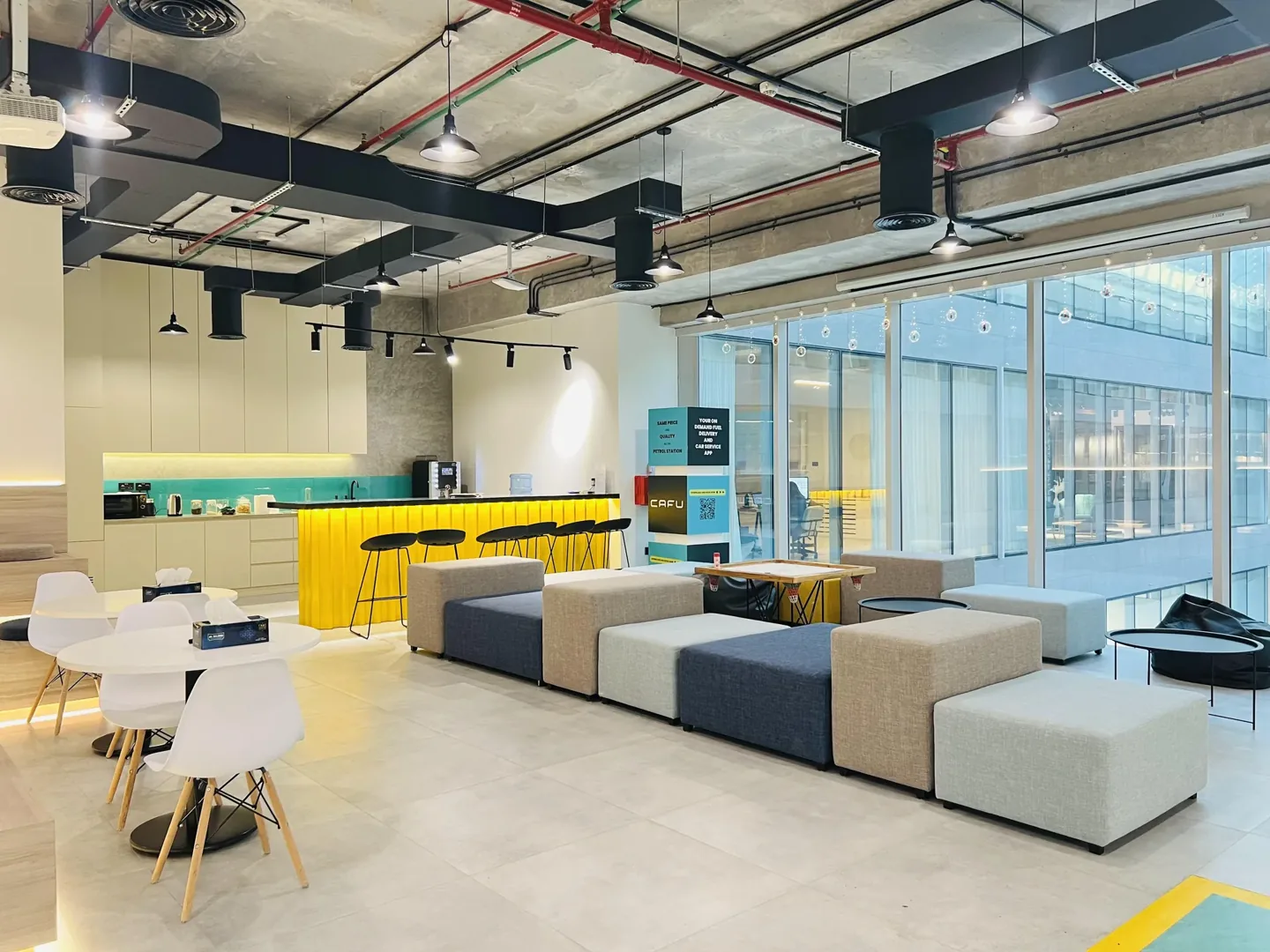
Workplace interior reference for the design review.
Fit-out decision deadlines become useful when they explain what a decision must achieve. A date beside a finish name is not enough. The client needs to know which information will be reviewed, who can accept it, what the supplier will do next and what happens if the choice remains unresolved. Otherwise a programme can appear complete while the orders it depends on are still based on assumptions.
For an office fit out in Dubai, the same meeting may involve furniture preferences, landlord comments, technical coordination and commercial approvals. Those decisions do not become ready in the same way. This guide sets out a client-side method for connecting decisions to procurement commitments. It does not prescribe supplier lead times or a universal approval programme. Use actual project information and the responsible team’s advice, then maintain a register that people can act on rather than a spreadsheet of unexplained urgent dates.
Jump to a section 12 topics
Start with the commitment, not the reminder date
Identify the action that the decision will release. It might be a purchase order, a fabrication drawing issue, a material reservation or installation in a particular zone. Ask what becomes difficult or expensive to change after that action. This gives the client a reason for the deadline and makes it easier to distinguish a genuine procurement constraint from a date added simply to encourage a response.
An interior design consultant can help explain which design information the commitment depends on. The contractor and supplier should explain their purchasing and manufacturing sequence. A reminder date is then derived from those inputs, with time for the actual review and any required correction. Do not assume that a finish must be approved immediately merely because somebody has labelled it long lead.
Ask suppliers to explain the route to delivery
A quoted delivery period may begin after a deposit, an accepted drawing, a final measurement or another defined event. Confirm the starting condition and the information on which the supplier relies. Separate design development, material availability, production, transport and site access where they affect the project. A single number can conceal several dependencies that the client still needs to resolve.
Keep the supplier’s current confirmation with the register. If the product, quantity, delivery location or order conditions change, ask whether the stated sequence remains valid. Fit out companies in Dubai should make relevant procurement assumptions visible rather than carry an old verbal estimate through successive programme revisions. The client cannot make an informed decision from a delivery date whose underlying conditions have been lost.
List the information needed for an informed approval
Define the review package for each decision. A material choice may require a physical sample, location schedule, relevant product information and a view of adjoining finishes. A furniture decision may depend on the actual model, dimensions, accessories and technology interfaces. The package should answer the question the client is being asked to decide, instead of relying on an attractive image that leaves important details unresolved.
Name the party responsible for preparing each part. The interior design firm may coordinate visual intent while engineers or specialist suppliers assess technical matters. The client should not be expected to accept responsibilities outside its role because a review package arrived late. If essential evidence is missing, record that condition and seek a clear project decision rather than disguise an incomplete review as a fully informed approval.
Separate preference, technical acceptance and commercial authority
A director may approve the appearance of a reception desk without having reviewed its construction details or the supplier’s commercial conditions. Equally, a specialist’s acceptance of a technical submission does not necessarily authorise the client to spend against an unapproved order. Identify these separate decisions so that one email saying approved is not interpreted as releasing every aspect of the purchase.
Use simple responsibility descriptions in the register: visual selection, technical review, budget acceptance and order release. Some projects combine roles, but that should be an explicit arrangement. An interior fit-out contractor needs to know which confirmation it is waiting for and who may provide it. The client needs to understand the scope of its own sign-off before accepting a deadline for a decision it does not control.
Allow a real review window
A deadline should account for how the client actually makes decisions. A sample might need to be seen at the premises, considered with another material or reviewed by an operating team that meets on a particular day. A remote stakeholder may need a different presentation method. State these needs early rather than discover, at order release, that the authorised reviewer has never seen the relevant information.
Include a reasonable opportunity to clarify questions and resolve conflicting comments. The appropriate duration depends on the project and the decision; this guide does not prescribe a fixed number of days. A review window is not useful if the package changes halfway through it without anyone recognising the new revision. Record when complete information was issued and which version the reviewers are considering.
Check measurements and interfaces before releasing repeated work
Repeated joinery, partition modules or furniture settings can multiply a small unresolved issue. Identify which dimensions need confirmation and which services or equipment affect the detail. The responsible contractor, supplier and designers should agree how measurement and interface checks fit into the release sequence. A client’s acceptance of colour should not be treated as confirmation of site dimensions it has not verified.
For joinery fit out companies in Dubai, a release may depend on final equipment information, approved shop drawings and a defined sample. Ask which items can proceed independently and which must wait for the coordinated detail. This helps the team avoid a false choice between ordering everything immediately and stopping the entire project. A clearly bounded partial release can be considered where the responsible parties confirm its scope and consequences.
Keep permissions separate from material choices
Landlord or authority decisions may influence what can be built, but they should not be merged with the client’s selection of a product or finish. Confirm the applicable route for the premises with the responsible project team. For example, DDA publishes a fit-out permit service for projects within its jurisdiction; that does not establish the procedure for every Dubai property.
Record which procurement actions depend on a particular permission or reviewed design condition. A supplier’s willingness to accept an order does not establish that the installation is permitted. Likewise, an interior rendering accepted by the client is not an authority-approved construction package. The decision register should show those boundaries so that commercial pressure does not turn an assumption about approvals into an unsupported instruction to proceed.
Use alternatives as a controlled decision, not an automatic escape
If the preferred product cannot meet the required sequence, ask for clearly described alternatives. Compare the actual item, evidence, installation interfaces, appearance, maintenance implications and cost. A visually similar product can affect more than the finish schedule. The relevant designer and specialists should explain the differences within their appointment before the authorised client representative chooses an option.
Record why the alternative was selected and what it replaces. Update the affected drawings, schedules and purchasing information rather than leave the original specification circulating beside an accepted substitution. Interior design and fit out companies in Dubai can make this process easier by presenting a concise comparison, but the project still needs named reviewers and an explicit release decision. Availability alone does not make a substitute equivalent.
Distinguish an allowance from permission to choose anything
A budget allowance can make an early estimate possible while a selection is pending. It does not define the final product, prove availability or confirm the associated installation scope. Keep allowances visible in the cost plan and identify the decision needed to replace each one with an agreed specification and commercial position. Otherwise an apparently approved budget can contain important choices that nobody has actually made.
When comparing interior contracting companies in Dubai, ask how allowances and client selections are managed. Clarify whether the allowance includes associated preparation, installation, accessories and other relevant interfaces. The responsible commercial advisers should address contractual interpretation. The practical design task is to make the remaining decision understandable, with enough information to assess its implications before the procurement commitment becomes difficult to reverse.
Escalate a missed decision with options and consequences
If a deadline will be missed, report the specific unresolved matter and the action it affects. Explain which facts have changed and which implications are confirmed by the responsible parties. Avoid presenting an unverified programme consequence as inevitable. A useful escalation might identify a revised supply route, a different sequence, an alternative product or a decision to accept a later installation, each with its own conditions.
Keep the authorised client decision separate from the recommendation. The contractor should not silently choose a substitute merely because the original response was late, and the client should not assume that a missed date has no consequence. Record the agreed response, responsible owner and any revised scope or programme assessment. This makes the conversation practical and prevents urgency from becoming a substitute for clear instruction.
Make a small decision register that stays current
For each significant item, record the decision required, location, current reference, information owner, reviewer, approval scope, required response date and the commitment it releases. Add the actual status and a link to the accepted record. Use language that makes the next action obvious. Pending client is less helpful than waiting for the named representative to select between two identified samples after the completed technical review.
Review the register with the programme and procurement information, not as an isolated administration exercise. Close a row only when the required decision is evidenced and communicated to the people who act on it. Keep changed items traceable without leaving contradictory versions in circulation. A concise, maintained register is more useful than a comprehensive list that has not been updated since the first design meeting.
Start the process before the first urgent order
At appointment stage, ask how design reviews, client decisions and supplier releases will be connected. Identify likely high-impact items and the information that may take time to obtain. The objective is to expose dependencies early, not to create a culture where every selection is described as critical and clients receive constant unexplained requests to approve quickly.
CBD Projects can discuss the design and fit-out coordination scope around your premises, intended use and operating priorities. Send available drawings and known procurement concerns through the project brief form. For a wider delivery discussion, review our commercial fit-out service and make the responsibilities for design decisions, purchasing and client approval explicit from the beginning.
Frequently asked questions
Should every finish be approved before construction starts?
The appropriate sequence depends on the project, permitted work, design information and procurement dependencies. Ask the responsible team to identify what each work package requires rather than assume that all decisions share one universal deadline.
Does approving a sample authorise the supplier to manufacture?
Not necessarily. The project should state the scope of that approval and the separate conditions for manufacturing release, including relevant drawings, dimensions, technical reviews and commercial authority.
What should happen when the client changes a selection?
Record the new request, identify affected drawings and commitments, and ask the responsible parties to assess the design, cost and programme implications. The authorised client representative can then make a clear decision with the available evidence.
How can we avoid constant urgent approval requests?
Agree the decision register and review arrangements early. Each request should identify the complete review package, named owner, required response date and procurement action it releases. Escalate genuine changes with options rather than unexplained urgency.
Is a supplier lead time a guarantee of site completion?
No. A delivery statement normally concerns specified goods and stated conditions. Site readiness, installation, commissioning and other project activities require their own coordination and confirmation from the responsible parties.
References and scope
References checked on 13 November 2026. Confirm current requirements and product instructions for the actual project; these links do not constitute project approval.
Plan your commercial fit-out planning project with one accountable team
Share your project brief and procurement concerns with CBD Projects to discuss design decisions, review stages and fit-out coordination.
Send Your Project BriefBack to BlogRelated ServiceView Real ProjectsContact CBD Projects