
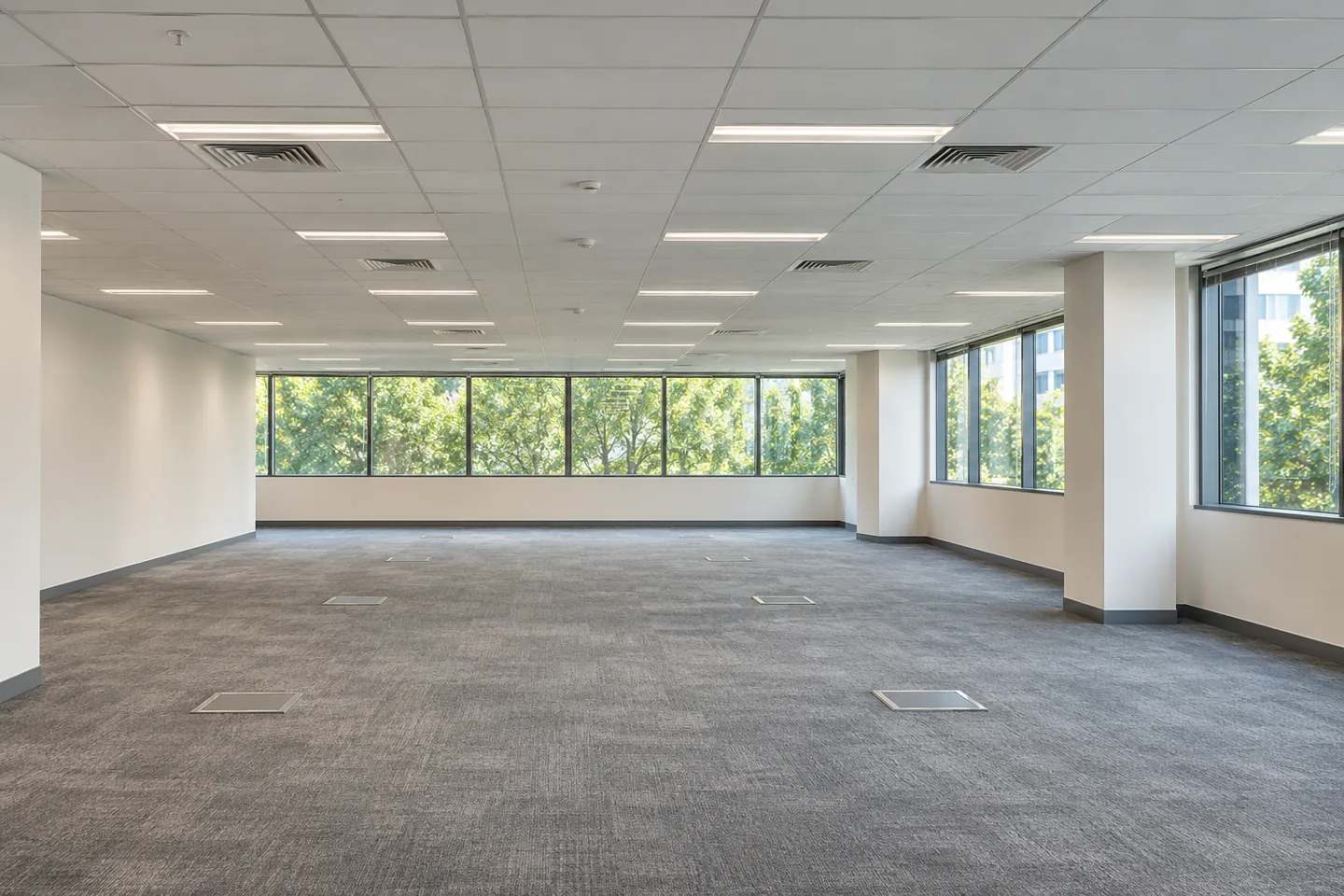
Office reinstatement in Dubai starts with the condition the tenant is required to return, not an assumption that every office must become an empty shell. The lease, landlord instructions and accepted property records can describe different outcomes. Before anyone removes a partition or orders replacement finishes, establish the proposed return condition and the people authorised to agree it.
CBD Projects LLC can discuss office reinstatement surveys, scope development, removal and making-good works within an agreed fit-out appointment. We coordinate the interior work with the appointed building-services specialists and the property-management process. Lease interpretation, deposit recovery and contractual disputes remain matters for the tenant and its appropriate advisers. Our role is to help turn an accepted return brief into identifiable construction tasks, an accountable programme and useful handover evidence. No reinstatement quotation should promise that a landlord will release a deposit or waive obligations that have not been reviewed and accepted.
Establish the accepted return condition
Request the relevant lease information, handover records and current landlord reinstatement instructions. Identify whether the proposed outcome is a bare unit, a retained fitted office or another agreed condition. If those documents appear inconsistent, the tenant should obtain clarification through the proper commercial or legal route before treating a contractor's interpretation as authority to proceed.
Record the physical scope that the client and landlord accept for pricing. Drawings, photographs and a concise schedule can identify the agreed outcome more clearly than a general instruction to reinstate everything. The construction team needs a defined reference against which removal, repair and completion will be assessed, particularly where previous alterations are not accurately represented in the available records.
Survey the actual office before defining removals
Check the existing partitions, doors, ceilings, flooring and fixed furniture against the available drawings. Identify obvious alterations and areas where the condition remains concealed. The survey should distinguish verified observations from assumptions that require investigation by the relevant specialists before the scope can be fixed responsibly.
Describe the relationship between tenant additions and retained building installations. A ceiling or partition may conceal services that must remain, be altered or be made safe under another appointment. Photographs alone rarely establish those responsibilities. Agree the additional inspections needed and how discoveries will be reported so that the estimate does not quietly depend on removing items whose ownership or technical function is uncertain.
Separate tenant assets from landlord property
Prepare a schedule of items proposed for removal, retention, transfer or disposal. Include fixed furniture, loose furnishings, equipment and visible service components where relevant. Ask the client to identify who owns each item and who has authority to approve its movement. The reinstatement team should not decide asset ownership from appearance or from who currently uses an object.
Where another party may retain part of the fit-out, obtain an identifiable instruction describing the arrangement. Keep that agreement connected to the return scope and the items concerned. This prevents a useful asset from being removed unnecessarily or an unwanted item from remaining because everyone assumed another party had accepted responsibility for it.
Coordinate specialist isolation before interior work
Identify the technical appointments needed before removals start. Electrical, mechanical, fire-related, data and other installations can cross the proposed work boundary. The competent specialists and building management should establish the permitted isolation, alteration and testing arrangements for the actual systems; an interior removal plan does not replace that assessment.
Set clear release points between the specialist work and the interior package. The contractor should know which areas are ready for removal and which remain restricted. Record the evidence required before a concealed installation is disturbed or a service route is closed. A planned sequence reduces reliance on informal assurances at the moment a trade discovers an unexpected connection.

Draw a practical boundary for partial reinstatement
A tenant may be returning one unit while retaining another, or handing back a portion of a larger floor. Describe the accepted boundary and how existing services, access and finishes relate to it. A line on the lease plan is not necessarily the location at which technical systems can be separated without additional work.
The responsible designers and specialists should establish the construction information for the proposed arrangement. Confirm who accepts interfaces with the retained business or neighbouring tenancy. The reinstatement scope should identify temporary and permanent conditions separately so that a finished-looking boundary does not conceal an unassigned service dependency or an unresolved property-management decision.
Plan the exit around business continuity
The business may need to remove equipment, records and furniture before construction access becomes available. Agree the client's move-out responsibilities and the condition in which the contractor will receive each area. Identify any authorised occupants or separate suppliers who still need access during the proposed reinstatement period.
Connect the programme with the actual release of rooms rather than assuming that the entire office will be vacant on one date. Where continuing use is proposed, obtain the relevant technical and management review before promising phased working. A practical exit plan identifies the activities that can overlap, the boundaries that must remain protected and the decisions needed before the next stage begins.
Organise removal routes and receiving arrangements
Review the path from the work area to the approved loading or collection point. Large furniture, boards and dismantled components may have different handling needs from ordinary office contents. Confirm the current building arrangements for lifts, shared routes, receiving times and temporary holding with the people managing those spaces.
The removal method should reflect the actual item and accepted route. Identify who is responsible for protection, handling and checking adjacent retained finishes. Avoid assuming that an available lift booking establishes permission for every load or activity. Coordinate the relevant supplier and management requirements before committing resources or bringing dismantled materials into shared areas.
Define making-good work by surface and location
Making good can mean different things to different reviewers. Identify the actual surfaces and junctions affected by removals: wall edges, ceiling openings, floor patches, door surrounds and retained joinery. Describe the intended finish and the extent of repair so the quotation can distinguish local work from replacement of a larger area.
Where an existing product is no longer available, obtain a decision on the proposed alternative before ordering. A close colour match may still produce a visible difference in texture or condition. The client and landlord should understand what is being offered and how its appearance will be reviewed, instead of relying on an undefined promise that every repair will become invisible.
Bring your brief into focus
Share your premises information, plans and project priorities through the project brief to discuss an appropriate scope with CBD Projects LLC.
Send your project briefReview floors and ceilings after investigations
The return brief may require removal of tenant finishes or retention of part of the existing assembly. Establish the accepted requirement and obtain the relevant technical input before disturbing substrates or retained systems. The condition below a finish can affect the resources needed for the next stage, so record what remains unverified at quotation stage.
Agree how the team will report findings after authorised opening-up. Photographs, locations and a short explanation can support an informed decision about repair or replacement. Treat that process as a controlled scope review rather than an automatic instruction to perform unlimited additional work. The client needs to understand the change before the contractor commits it.
Establish the applicable permission route
Confirm the property jurisdiction, building-management rules and proposed scope with the appointed approvals lead. DDA publishes separate fit-out permit and completion services within its remit, while other properties may follow different requirements. Reinstatement should not be assumed exempt merely because the tenant is leaving rather than opening a new office.
Identify the documents, competent appointments and current permissions that apply to the actual work. A change affecting use, structure or building systems may require a different review from simple removal and making good. Keep landlord access permission, technical acceptance and authority requirements identifiable; none should be represented as interchangeable evidence that every proposed activity is authorised.
Keep disposal responsibilities explicit
Agree who arranges removal of unwanted materials and which parties must approve the proposed destinations or handling method. Separate reusable client assets from construction waste and other items requiring specialist attention. The site team should receive a practical instruction rather than an assumption that everything left behind can be discarded.
Request the records included in the removal appointment and retain them with the close-out information. Avoid claiming recycling outcomes without evidence from the responsible parties. The objective is an accountable removal scope with clear ownership and documentation, allowing the tenant to understand what left the premises and who was responsible for its subsequent handling.
Price the defined return rather than an assumed shell
The cost of reinstatement depends on what must be removed, what remains, the extent of service changes and the accepted repair standard. Building access, phasing, hidden conditions and specialist testing can also affect resources. A quotation should connect those factors to identified work instead of presenting a general area rate as a complete explanation.
When comparing office fit out companies in Dubai for an exit project, ask how survey assumptions, exclusions and landlord review are addressed. Confirm the client's move-out obligations and the method for pricing discoveries or scope changes. A lower initial figure can reflect an omitted responsibility rather than a more efficient delivery method.
Agree inspection points before final handover
The landlord or management team may need to review the condition at defined stages. Establish the relevant contacts, accepted reference documents and notice arrangements before the work is nearly complete. A review of a concealed interface or retained service may be useful at a different point from the final appearance inspection.
Record comments by location and responsible party. Distinguish an incomplete construction item from a new request or a disputed lease interpretation. The contractor can respond more effectively when the required outcome is identifiable. Keep acceptance and commercial release decisions with the parties authorised to make them rather than allowing an informal site comment to become a guarantee of final landlord approval.
Provide a usable close-out record
The agreed handover package may include completion photographs, accepted repair references, relevant technical records and a schedule of outstanding items. Confirm what the landlord and tenant need from the construction appointment. The documents should describe the actual work completed, without implying that the contractor can certify matters outside its competence or appointment.
Keep the final return condition linked to the accepted scope and any recorded changes. The tenant can then discuss remaining property or commercial matters with its advisers using an organised construction record. This is more useful than a folder of unlabelled photographs or a blanket statement that the office has been reinstated without defining the condition being handed back.
Send the information needed for a first review
Share the office location, available lease-return instructions, original handover records, current drawings and intended exit date. Identify the landlord contact and explain what the business plans to remove itself. CBD Projects can review the available information and discuss surveys, specialist coordination and construction tasks required for a defined appointment.
Use the project brief to describe the premises and priorities. The office fit-out service provides a related construction scope where the enquiry includes a new workplace as well as the return of the old one. Keep those two projects commercially and technically clear so the new-office programme does not conceal unfinished exit responsibilities.