
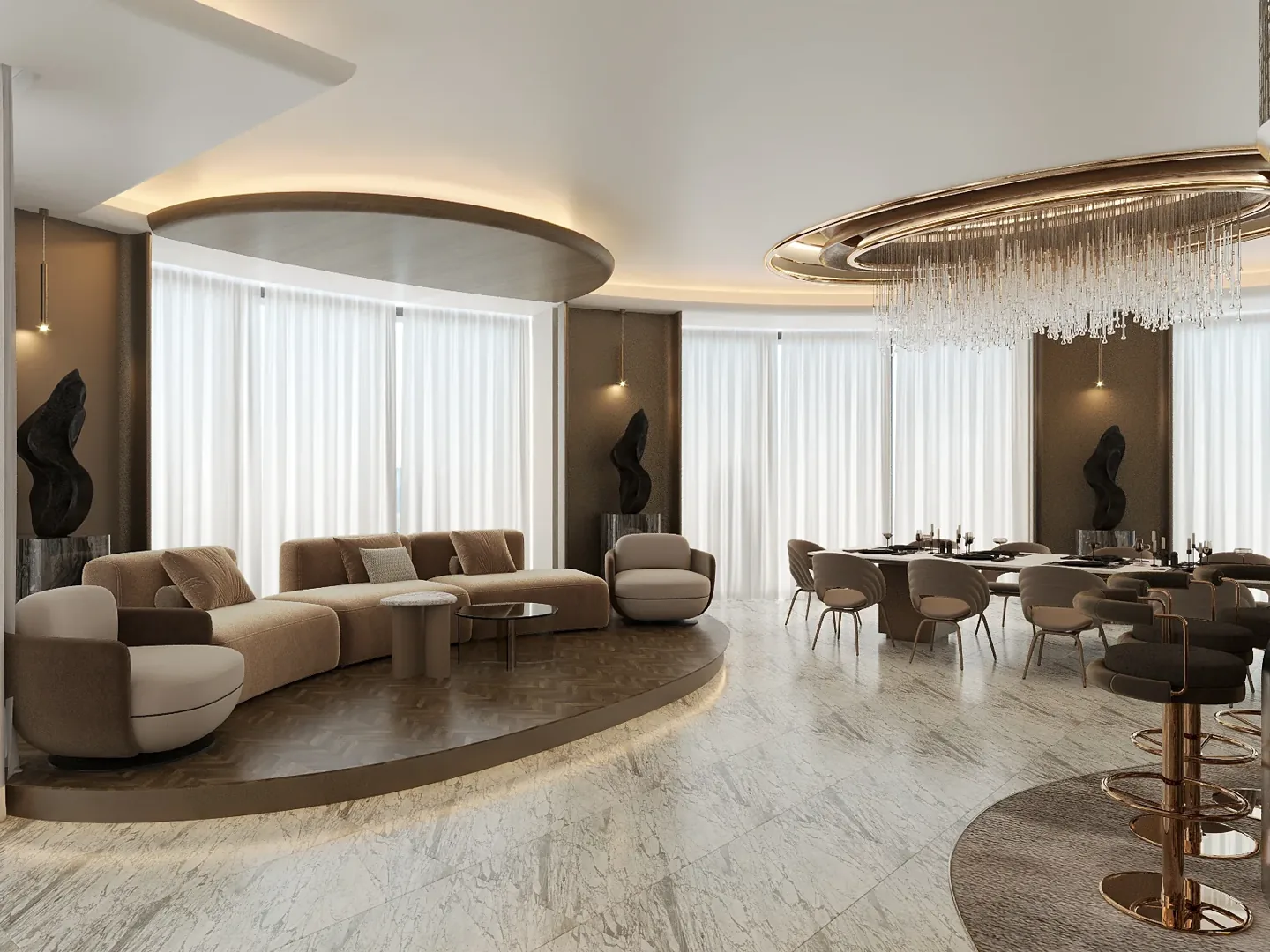
Residential interior reference for the design review.
An interior accessories and styling appointment in Dubai can mean very different things to different clients. One person expects a list of cushions, lamps and objects to buy. Another expects the designer to source, receive, place and photograph everything before the space is occupied. Both may describe the request as finishing the room, yet the work, responsibilities and budget are quite different.
This guide explains how to define that final layer as a useful appointment. Styling should support the people using the interior, its existing materials and its daily care. It also needs an agreed purchasing and installation process. Whether you are working with an interior design company on a home or coordinating the last stage of a commercial fit-out, clarify what will be selected, who owns each decision and what happens when the room is handed over.
Jump to a section 13 topics
Decide what styling needs to achieve
Describe the room's intended use and what currently feels unresolved. It may lack a comfortable reading setting, a visual connection between furniture and finishes or a suitable place for the owner's existing objects. A commercial lounge may need a more coherent welcome without making its surfaces difficult to reset. These are more useful starting points than asking for accessories in a particular colour alone.
Agree the outcome in ordinary language. A room can feel complete without every shelf being filled. The appointment should explain whether it concentrates on atmosphere, practical finishing needs, display composition or several of these together. This gives the stylist a basis for selection and gives the client a way to review the result beyond the appeal of individual products.
Separate the finishing layer from unresolved design work
Styling cannot reliably solve a furniture layout that does not function or a room whose lighting and services remain undecided. Before selecting objects, confirm the principal furniture positions, usable surfaces, circulation and the relevant lighting arrangement. Identify unfinished construction or specialist work that may affect placement. A decorative purchase should not become the accidental solution to an unresolved technical interface.
If the appointment sits within an office fit out in Dubai, clarify the relationship with the main contractor and the client team. For a home, establish whether existing furniture is fixed or still open to review. A short readiness discussion can identify where additional design work is needed before the accessory schedule can be meaningful. Keep that extra scope visible rather than assuming it is part of ordinary styling.
Define the rooms and the items included
Use a room list and an item list rather than a broad promise to style the whole interior. Categories might include loose cushions, throws, table lamps, rugs, small decorative objects and selected tabletop pieces. Decide whether books, plants, mirrors, wall-mounted items or seasonal changes are included. Each category can involve different purchasing, care and installation responsibilities.
Record items that are deliberately excluded or supplied by the client. An existing artwork, family object or branded commercial display may influence the composition without becoming a purchase under the styling appointment. The schedule should distinguish those roles. This helps an interior decoration company and its client understand what is being coordinated and prevents a photograph of a reference room from becoming an unintended list of everything to procure.
Review the existing possessions before adding more
A useful styling exercise begins with what is already available. Ask the owner which objects are meaningful, regularly used or intended for display. Photograph and measure them where appropriate, noting any special handling or care advice. Do not assume an item can be moved, cleaned or fixed in place without the owner's agreement.
Consider how existing pieces relate to the room as a group. Some may benefit from another position or a different amount of space around them. Others may need specialist advice that falls outside the appointment. The aim is to create an understandable setting rather than replace personal character with a complete set of new objects. Identify anything that must be stored or returned to the owner before the installation visit.
Give the accessory schedule a clear decision status
The schedule should let the client distinguish an idea from an approved purchase. Useful information includes the room, intended position, product reference, dimensions, finish, quantity and proposed supplier. Record whether an item is selected, awaiting review, accepted or unavailable. A photograph without a reliable reference may be difficult to procure later or may represent a different size from the intended piece.
Check dimensions against the actual furniture and available space. The arrangement should allow ordinary use of tables, seats, doors and storage. Where several similar products are proposed, explain their roles rather than leaving the client to judge isolated images. This makes the review a room-level decision and helps avoid a collection of attractive purchases that never form a coherent interior.
Agree purchasing authority and the handling of alternatives
Decide who may place an order and what approval is required first. The designer may recommend products while the client buys directly, or procurement may be included through a separate arrangement. Establish the spending authority, payment route and responsibility for checking the order. A recommendation should not be treated as permission to purchase an unspecified substitute.
Availability can change between selection and order. If an alternative is proposed, review its size, colour, care and relationship with adjacent items. A similar product image does not guarantee the same result. Record the revised choice and the client decision before purchase. These distinctions are particularly useful when interior design and fit out companies in Dubai coordinate several suppliers alongside a wider completion programme.
Clarify ownership, returns and temporary items
Some styling arrangements include trial pieces or items borrowed for review. Others involve purchases that become the client's property immediately. State which applies and who remains responsible while the items are in the property. If any object is temporary, identify it clearly in the private schedule so it cannot be mistaken for part of the final handover.
Returns and exchanges should follow the actual supplier's terms, with responsibility for decisions, transport and deadlines agreed in the appointment. Do not assume that every purchased item can be returned after placement or that a supplier accepts an opened or assembled product. The client should understand any relevant conditions before approval, particularly where the product is customised or ordered specifically for the room.
Coordinate delivery with the room's readiness
Accessories are vulnerable when they arrive before heavy work, cleaning or furniture installation has finished. Establish a suitable point in the programme for receiving and placing them. Confirm the access arrangements and the person authorised to accept deliveries. A large number of small packages can still create storage, identification and checking work that needs an owner.
The receiving record should distinguish an accepted delivery from an item already checked for condition and completeness. Agree how discrepancies are reported and how packaging is retained where required for a claim or return. The styling appointment should state whether the designer attends delivery, organises a later placement visit or works with the client's receiving team. Each arrangement has different practical consequences.
Treat placement and fixing as separate responsibilities
Placing a cushion or a small freestanding object is different from installing a mirror, lamp or wall-mounted item. Identify anything that needs electrical work, fixing, assembly or specialist handling. The responsible installer should confirm the substrate, product instructions and appropriate method. Styling approval should not be used as an instruction to drill into an unknown wall or connect equipment without the necessary competence.
Supplier service boundaries also differ. IKEA UAE's published terms, for example, distinguish delivery and assembly from mounting several decorative items. That is a supplier-specific example, not a rule for every contractor. Check the actual purchase and installation terms for the selected products. Where furniture requires attachment under its instructions, that requirement belongs in the responsible installer's scope rather than being treated as an optional aesthetic choice.
Balance a composed room with everyday operation
A final arrangement should leave room for the activities the interior supports. A side table may need space for a drink, a bedside surface for daily essentials and a commercial reception counter for working equipment. Discuss which objects are handled regularly and which remain primarily decorative. The client should not have to dismantle the composition each time the room is used.
For workplaces or hospitality settings, involve the person who resets or cleans the area. Ask whether an item creates avoidable handling, obstructs a route or conflicts with the operating routine. For a family home, consider children, pets and the way the household uses shared surfaces. These practical observations help modern interior design retain its clarity after the styling visit, not just during the first presentation.
Collect the relevant care information
Different materials need different care, even when their colours are similar. Keep the relevant supplier instructions for fabrics, finishes and decorative products. Where a cleaning method is uncertain, obtain advice from the supplier rather than assume a product used elsewhere is suitable. Sensitive objects or valuable collections may need a separate specialist's guidance.
The final record should make the important information easy to find. Identify replaceable parts, product references and any specific placement conditions supplied by the manufacturer. If the client later changes the arrangement, those instructions should remain available. A useful styling handover gives the owner practical knowledge about the items, instead of leaving a room that looks complete but is difficult to manage confidently.
Agree what the installation visit and review include
State the number and purpose of visits. An initial survey, sample review, delivery inspection and final placement session are different activities. Confirm who must be present to approve the arrangement and what happens if the room is not ready. A review should consider the complete setting from normal positions in the room, including the places where people sit and work.
Record any outstanding items, alternatives or further decisions after the visit. If photography is proposed, obtain the owner's agreement on its purpose and permitted use; a styled private interior should not automatically become public project evidence. The appointment should also explain whether later seasonal adjustments or replacement sourcing are included. These boundaries protect both the client and the designer from different expectations about ongoing service.
Compare appointments through deliverables and responsibility
The cost of styling depends on the rooms, item categories, sourcing effort, purchasing arrangement, visits and installation coordination. A consultation with a recommendation list differs from a service that procures and places every item. Compare those deliverables alongside product expenditure, delivery and specialist installation rather than placing unrelated totals together.
Ask an interior design firm to explain the decision process, procurement boundaries and final records. A fit-out company may coordinate styling within a broader project, but the same responsibilities still need to be clear. Use our project brief to describe the rooms and unresolved finishing decisions, or review the wider interior design services. A focused appointment should make the finishing stage easier to understand, purchase and maintain.
Frequently asked questions
Does styling automatically include buying the accessories?
No. The appointment may provide recommendations only, or it may include an agreed procurement service. Clarify purchasing authority, payment, supplier terms and who checks deliveries before accepting the proposal. Product expenditure should be distinguishable from the design and coordination service.
Can we include personal objects we already own?
Yes. Share photographs, dimensions and any care or handling requirements. Identify items that must remain, may be moved or need specialist advice. Existing possessions can inform the composition without becoming purchases or fabricated evidence of a new completed project.
Who installs mirrors, lights and fixed accessories?
The scope should identify the competent installer and the required product and substrate information. Delivery, assembly, placement and fixing are separate activities. Confirm the actual supplier terms and relevant project permissions rather than assuming every decorative item is covered by a standard installation visit.
What should we receive at the end?
Ask for the agreed item schedule, product references, relevant care information and a record of outstanding actions. Any temporary or borrowed pieces should be identified. The handover should explain what belongs to the client and whether later adjustments or replacement sourcing are included.
References and scope
References checked on 18 November 2026. Confirm current requirements and product instructions for the actual project; these links do not constitute project approval.
Plan your residential and commercial interior styling project with one accountable team
Share your plans, current room photographs and the finishing decisions you need help with through the CBD Projects project brief.
Send Your Project BriefBack to BlogRelated ServiceView Real ProjectsContact CBD Projects