
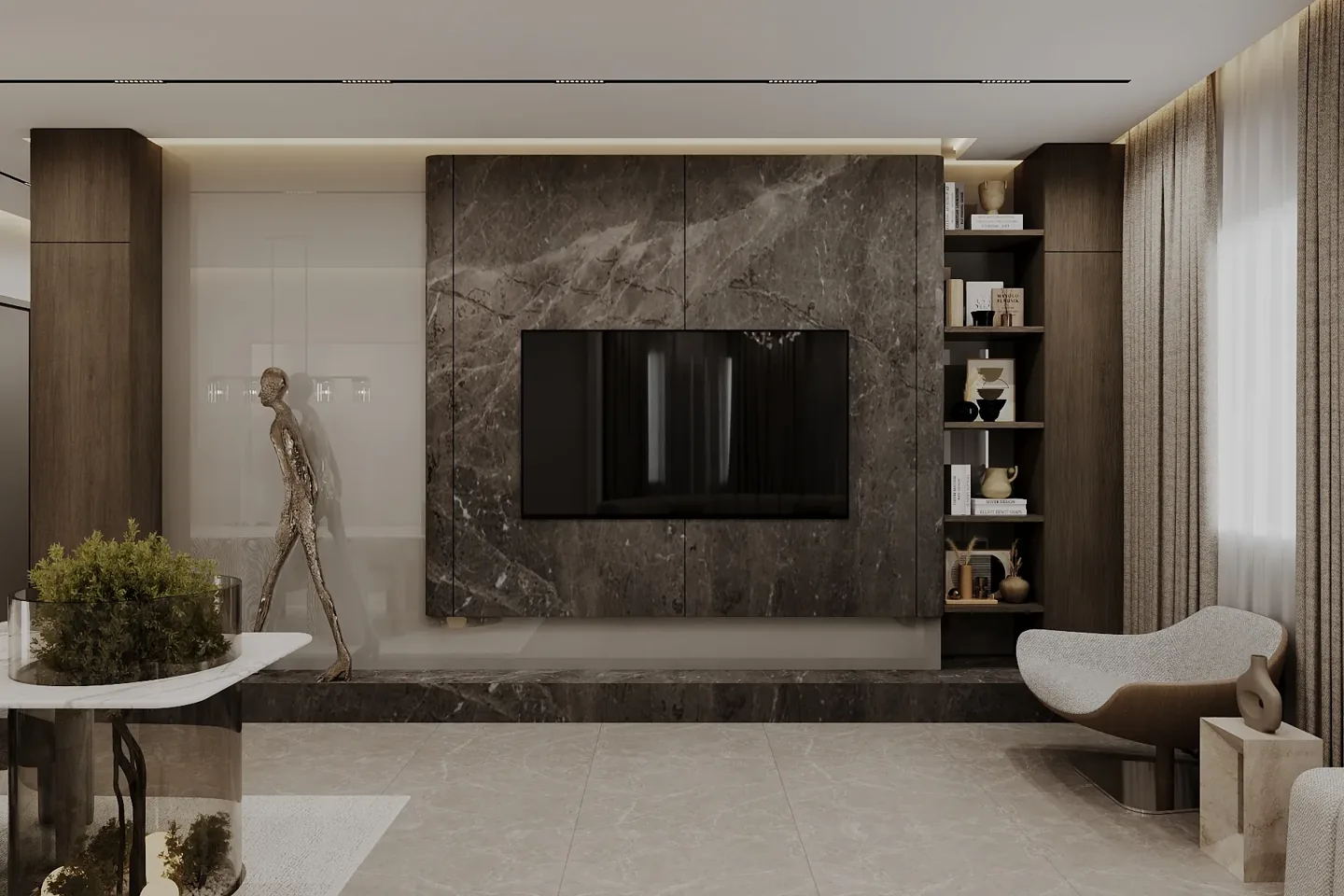
Interior reference for reviewing coordinated stone, timber and finish selections.
A finish sample helps a client make a design decision, but it does not always predict the appearance of every piece that arrives on site. Natural materials vary, manufactured products can come from different production batches, and the lighting used for a review can change what the eye notices. The useful question is not simply whether two pieces look identical. It is what the accepted selection allows, how the delivered material has been checked and who can decide whether installation should proceed.
For a Dubai fit-out, these decisions should be made while the material can still be identified, separated and reviewed. This guide explains how a client can organise that process with an interior design consultant, fit-out contractor and supplier. It is not a laboratory test or a substitute for the product manufacturer's technical requirements. Its purpose is a clear decision record that connects the sample, order, delivery and installed result.
Jump to a section 16 topics
Begin with the actual material and the supplier information
Ask what the product is, how it is made and which variations the supplier describes as normal. A printed surface, a coated metal panel, timber veneer and natural stone have different characteristics. Do not transfer expectations from one material to another because they have a similar colour in a presentation.
Obtain the relevant product reference, finish code and written guidance. Identify whether the sample represents a particular production run or only a general selection. If the information is incomplete, request clarification before placing an order whose appearance is important to the overall interior.
Understand the limits of a small sample
A small piece can communicate colour and texture while concealing the range visible across a large installation. Veining, grain or pattern may become much more prominent when repeated over a wall or floor. Ask the designer and supplier what additional review would help the client understand the expected result.
For suitable products, a larger sample, several pieces or a representative arrangement may be useful. The appropriate method depends on the material and proposed application. The aim is an informed selection, not an arbitrary requirement to obtain a large mock-up for every modest finish item.
Give the accepted reference an identity
An approved sample should have a recognisable reference that connects it to the specification and purchasing record. Record the product, supplier, finish and date of the decision. Identify the people who accepted it and any qualifications attached to the acceptance, such as a requirement to review a larger arrangement.
A photograph alone may be insufficient because cameras, screens and lighting can alter perceived colour. Use photographs to support the record rather than silently replacing a physical reference where one is needed. Agree where the retained sample will be kept and who can make it available during delivery review.
Separate colour choice from acceptance of variation
The client may like a particular tone without understanding the variation the product allows. Discuss both matters before the selection is final. A natural surface can be appropriate precisely because it varies, but the range still needs to be understood in relation to the intended design.
Ask how the supplier recommends reviewing that range and what can reasonably be selected or arranged before installation. Do not promise that every piece of a naturally variable material will reproduce the small reference exactly. Equally, do not treat the word natural as an explanation for any delivered condition without examining the actual product information.
Review the material in a relevant setting
Lighting, surrounding finishes and viewing distance influence appearance. Decide where the review should take place so the client can assess the material in conditions reasonably related to its use. A surface intended for a bright reception may look different in a dim storeroom or under a temporary construction light.
Coordinate the review with the interior design team. Compare adjoining materials where their relationship matters, including trim, grout or other finishes. The decision should record the context in which acceptance was given, particularly if permanent lighting or neighbouring work is not yet available.
Connect the purchase order to the accepted decision
The order should identify the selected product and the information needed to check the delivery. Where batch continuity matters, discuss it with the supplier before purchasing and record the agreed arrangement. Do not assume separate orders will necessarily produce visually interchangeable pieces.
The fit-out company and client should also agree how quantities and spare material are determined. Buying too little can create a later matching problem; buying unnecessarily large quantities adds cost and storage obligations. The appropriate allowance should follow the product, layout and supplier advice with the basis of the allowance recorded clearly for purchasing and later reference.
Identify deliveries before mixing or installation
When material arrives, keep the packaging and references needed to understand what has been supplied. Record batch or production information where provided. Identify visible damage and quantity discrepancies through the agreed receiving process before the material is moved into an installation area.
Avoid mixing identifiable groups before a necessary appearance review. Once loose pieces are redistributed, it may become difficult to connect an issue to a specific delivery. The responsible site team should determine suitable handling and storage arrangements in accordance with product requirements, while the client receives a clear account of any matter requiring a decision.
Agree who can release material for installation
A delivery check is not automatically the same as design acceptance. The receiving person may confirm that boxes arrived without having authority to approve appearance. Establish who assesses the material, who advises on technical suitability and who can instruct installation under the contract.
If the client appoints suppliers directly, include their role in the responsibility schedule. Interior fit out companies in Dubai can coordinate the construction interfaces more effectively when decisions come through an authorised route. Several informal approvals from different people can leave the installer uncertain about which reference actually governs the work.

Use a representative arrangement where it helps
Some finishes benefit from being laid out or assembled temporarily for review before they are fixed. Discuss whether that is appropriate for the product and area, and who will prepare it. The arrangement should demonstrate a meaningful selection or sequence rather than create a misleading impression from a few unusually consistent pieces.
Record what the client is being asked to accept: colour range, piece arrangement, joint relationship or another defined feature. Keep technical installation acceptance separate. An attractive dry arrangement does not demonstrate that a substrate, fixing method or complete assembly is suitable for the final application.
Define the decision when an apparent difference is found
Describe the observed issue precisely and connect it to the reference and delivery. Identify the location or group of pieces, the conditions of review and the feature that appears different. This creates a useful question for the designer or supplier instead of a broad statement that the material is wrong.
Ask the responsible parties to compare the actual product information and accepted decision. Possible outcomes may include acceptance, a revised arrangement, replacement or further investigation. The appropriate response depends on the evidence and contractual responsibilities; neither the client nor contractor should rely solely on an unsupported claim about what is always normal.
Keep installation pressure from becoming accidental approval
A team may face programme pressure when a finish arrives shortly before it is needed. That urgency does not clarify an unresolved selection. Explain the decision required, the information available and the likely consequences of waiting or proceeding so the authorised client representative can give an informed instruction.
Do not treat silence as a new material approval unless the contract and agreed process actually provide for that result. Record the decision and any conditions. A short, specific review can protect the construction sequence more effectively than allowing installation to continue while the parties hold different expectations about the outcome.
Assess substitutions through adjoining details
A replacement product may appear closer in colour while differing in thickness, dimensions, texture or installation requirements. The design and technical team should review the complete consequence before approving it. An isolated appearance decision can affect levels, edges and quantities elsewhere in the fit-out.
When considering alternatives with an interior design company, keep the reason for the change visible. Compare the proposed product against the actual requirements rather than a general description such as similar beige or matching oak. Update the specification and purchasing information so subsequent deliveries follow the accepted replacement.
Plan for repair and replacement while information is available
Keep the references needed to identify installed materials later. Record relevant production details and the location of any agreed spare stock. The operator should understand where the material is held, how it should be stored and which supplier guidance accompanies it.
A future purchase may differ from the original installation even when the product name remains the same. Discuss that possibility without promising permanent availability or an exact later match. Useful handover information allows the owner to make an informed repair enquiry rather than begin by trying to identify an unlabelled leftover piece.
Recognise what this review cannot certify
Visual acceptance is one part of a material decision. It does not confirm technical performance, regulatory suitability or correct installation. The responsible specialists and suppliers must address those matters within their appointments. Equally, a technically acceptable material can still need a clear appearance decision for the agreed design.
No universal colour tolerance or inspection procedure is proposed in this guide. Use the applicable product information and project requirements. Where a genuine dispute needs testing or specialist evaluation, identify the appropriate independent expertise rather than treating a website checklist as a technical ruling.
Avoid losing the reference during site moves
Samples and paperwork often move when a project changes from design review to active construction. Identify a suitable custodian and storage place before that transition. A reference damaged, discarded or mixed with rejected alternatives cannot reliably support a later comparison, even if somebody remembers approving a similar piece.
When an accepted reference is replaced or updated, record what changed and retain enough history to understand earlier orders. The site team should be able to distinguish a current acceptance from an obsolete option without relying on memory. This is a document-control responsibility as well as a material-selection matter, and it belongs in the project's practical decision process.
Make the material record useful to the whole project
The most practical record links a clear selection to its order, delivery and installed location. It should be understandable to the designer, buyer, site team and client representative without requiring them to search through unrelated messages. Retain important decisions with the project information used at handover.
If you are preparing a construction enquiry, include materials already selected and any concerns about matching retained work. Explore CBD Projects' interior design and fit-out services or send the available information through the project brief. The discussion can then address the actual scope and decisions still required.
Frequently asked questions
Does a different batch always mean the material is unacceptable?
No. Assess the actual product, accepted reference and supplier information. Batch identity helps trace the material; it does not by itself determine whether the delivered appearance is acceptable for the agreed application.
Can a phone photo settle a colour disagreement?
A photo can document context, but cameras, screens and lighting can alter perceived colour. Agree an appropriate review method with the responsible designer and supplier, using physical references where required.
Should all material be fixed before the final review?
Where an appearance decision is needed before installation, establish a release point that allows it to be made in time. The appropriate arrangement depends on the product, scope and contract rather than a universal rule.
Does approving a sample approve every technical detail?
No. Appearance acceptance, technical product suitability, substrate readiness and installation checks are separate responsibilities. Make each decision identifiable so a sample approval is not misread as certification of the complete assembly.
References and scope
References checked on 21 November 2026. Confirm current requirements and product instructions for the actual project; these links do not constitute project approval.
Plan your fit-out material selection project with one accountable team
Share your plans, property details and priorities through the project brief to discuss an appropriate scope with CBD Projects LLC.
Send Your Project BriefBack to BlogRelated ServiceView Real ProjectsContact CBD Projects