
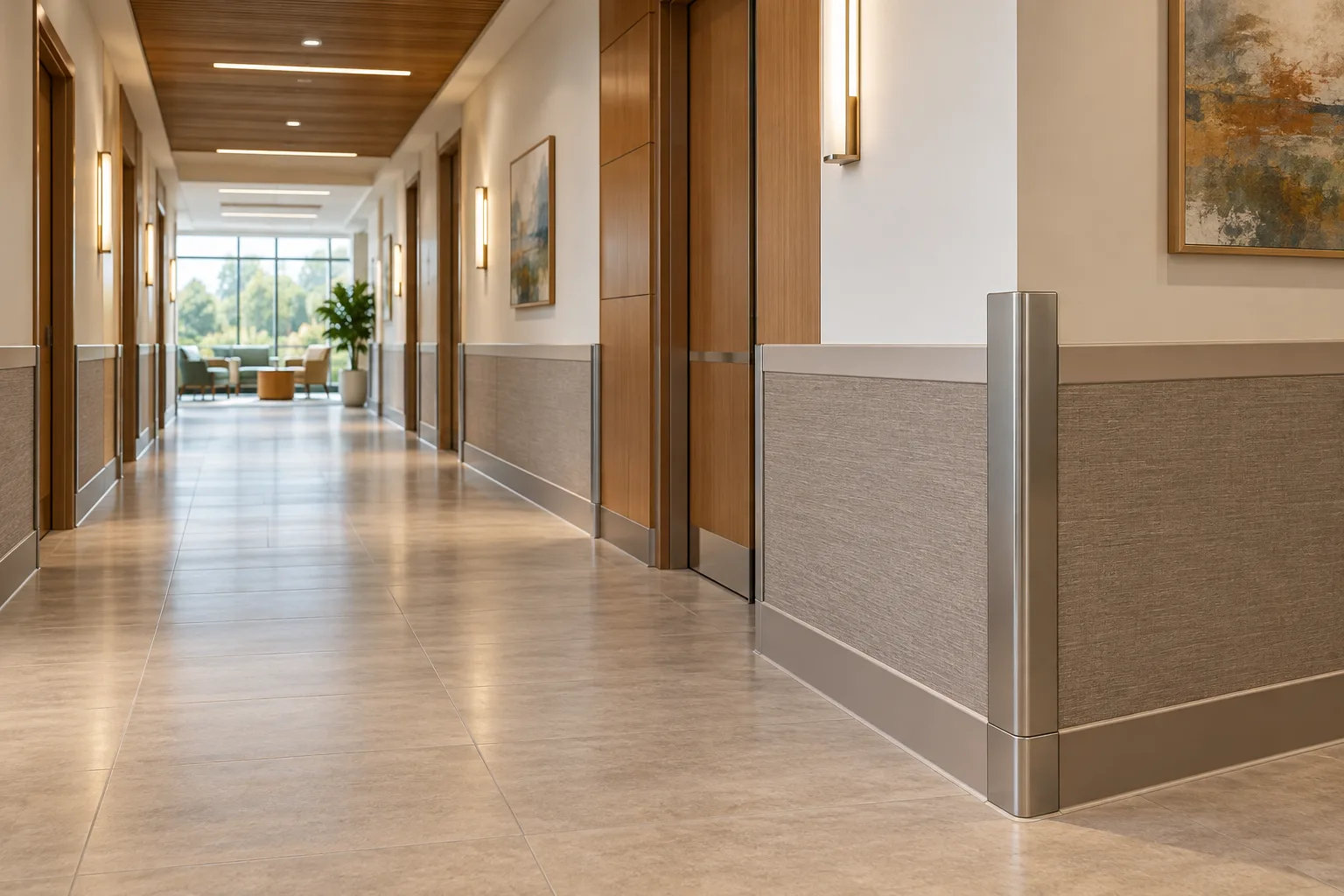
AI-generated illustrative design concept; not a completed CBD Projects project, approved drawing or technical compliance detail.
Damaged corners and scuffed walls often reveal a mismatch between the design and everyday movement. A commercial interior design company in Dubai should identify contact points before selecting protective finishes. Covering every wall with a harder material is rarely a substitute for understanding the operation.
Map likely impacts, review the underlying cause and specify a coordinated protective assembly where appropriate. Compare maintenance and local repair as well as appearance.
Observe the objects that contact walls
Record trolleys, furniture, luggage, cleaning equipment and deliveries that use the space. Check turning points, door openings and temporary storage locations. Include the dimensions and movement of actual equipment.
For an illustrative hotel service route, repeated corner damage may arise from a trolley turning beside a poorly placed cabinet. A layout adjustment may reduce the problem before additional protection is considered.
Choose protection for the actual condition
Compare the relevant impact, cleaning, moisture and appearance requirements with product information from suppliers. Have the responsible designers review applicable technical requirements, including the complete wall assembly where relevant.
Do not assume that a hard-looking panel provides the required performance. Record the product, substrate, fixing and joint details so the intended solution can be priced and installed consistently.
Coordinate junctions and accessible routes
Show returns, corners, door frames, skirtings and service interfaces on the drawings. Check projections and transitions with the project designers so protection does not introduce a new obstruction or difficult cleaning edge.
Test a representative detail with the operator’s equipment and cleaning method. Review the visual result under the final lighting rather than approving only a loose material sample.
Plan local repair and replacement
Ask how damaged sections can be removed, whether fixings remain accessible and what matching components will be available. Agree spare quantities where appropriate and record product references.
The maintenance-access guide supports the wider review. A durable finish can still be expensive to maintain if one damaged panel requires dismantling a whole wall.
Review performance after use
At handover, record the intended operating assumptions and care instructions. After occupation, review actual contact patterns with facilities staff and determine whether operating changes or further assessment are needed.
A fit-out company in Dubai should avoid promising that protection will eliminate every mark. The useful outcome is a documented detail suited to a defined use, with a practical method for inspection and repair.
Frequently asked questions
Should every commercial corridor have the same protection?
No. Assess actual equipment, traffic, cleaning and technical requirements for each location.
Can protection solve a poor delivery route?
It may reduce damage, but review the route and operating cause first; protection alone may leave the underlying conflict unresolved.
Plan your commercial fit-out planning project with one accountable team
Share your circulation plans, equipment sizes and recurring damage locations with CBD Projects for a wall-protection review.
Send Your Project BriefBack to BlogRelated ServiceView Real ProjectsContact CBD Projects